
Wealth Planning for People Who Hate Math
You Don’t Have to Be a Math Genius to Build Wealth
Personal finance and investing are the two most powerful tools you have for building a secure financial future — and neither requires a finance degree or a love of spreadsheets.
Here’s a quick overview of the core strategies that actually work:
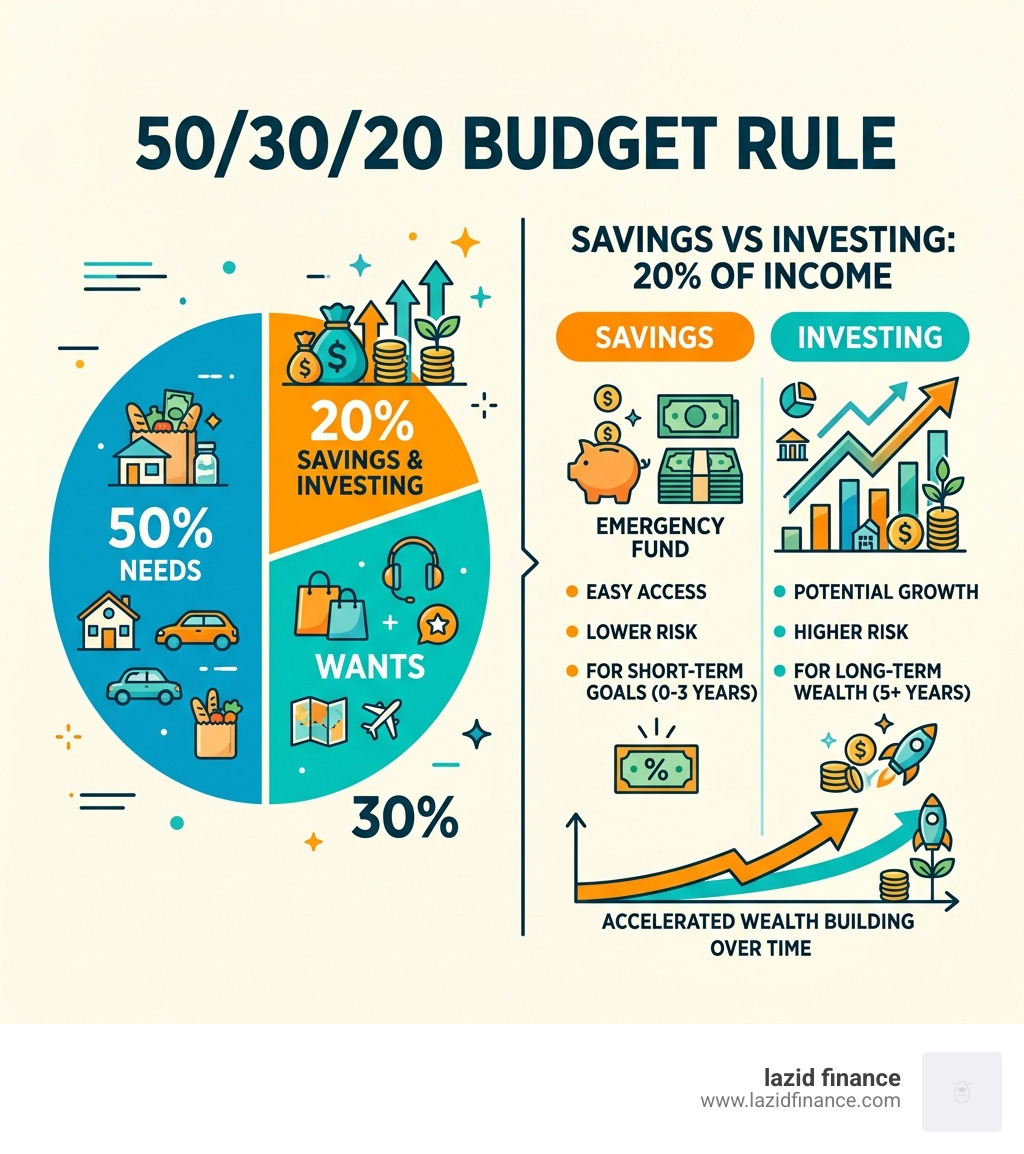
- Budget your money — A simple rule like 50% needs, 30% wants, 20% savings keeps things manageable
- Build an emergency fund — Aim for enough to cover several months of expenses before investing
- Pay down high-interest debt — Credit card debt costs more than most investments earn
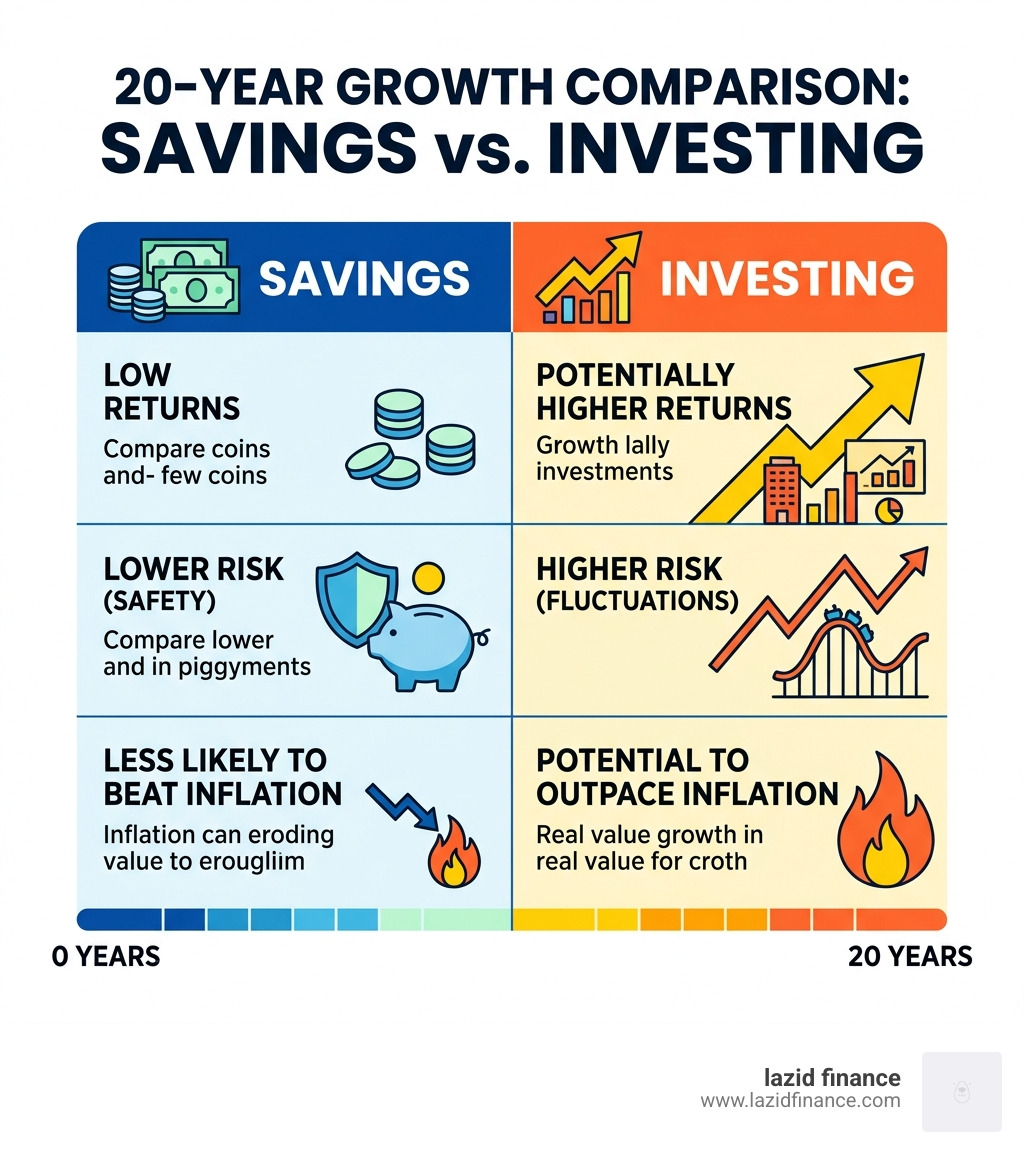
- Start investing early — Long-term investments have historically averaged around 8% annual returns, versus less than 0.50% in a standard savings account
- Use tax-advantaged accounts — 401(k)s, IRAs, and Roth IRAs let your money grow faster
- Diversify and stay consistent — Spreading investments and contributing regularly reduces risk over time
Here’s the honest truth: most people avoid managing their money not because it’s hard, but because it feels overwhelming. The jargon, the charts, the endless options — it’s a lot.
But the stakes are real. Research shows that most U.S. workers are far behind on retirement savings. Meanwhile, people who participate in a 401(k) hold roughly 29% more in retirement funds than those who don’t. The gap between doing something and doing nothing is enormous.
The good news? You don’t need to optimize every decision perfectly. You just need a simple, repeatable system — and that’s exactly what this guide is built around.
Whether you’re starting from zero or trying to make sense of accounts you already have, this guide will walk you through everything in plain language.
The Foundation of Personal Finance and Investing

When we talk about the foundation of your money, we are really talking about two things: literacy and awareness. You don’t need to be able to calculate complex interest rates in your head, but you do need to understand the “flow” of your money.
At its core, personal finance and investing is the practice of managing your individual and family resources to meet your life goals. This involves tracking your cash flow (what comes in vs. what goes out) and your net worth (the total value of what you own minus what you owe). Think of your net worth as a snapshot of your financial health. If you update this once a year, you can see if you are moving in the right direction without obsessing over daily fluctuations.
According to Personal Finance: The Complete Guide, getting control of these basics is what protects you when life gets messy. Without a solid foundation, you are essentially building your house on sand.
Why Personal Finance and Investing Matter in 2026
As of April 2026, we have seen how quickly the global landscape can shift. Between memories of the 2020 pandemic and more recent geopolitical tensions like the war in Ukraine, the world has given us several “wake-up calls.” These events prove that stock market crashes and job losses can happen abruptly.
Financial resilience is no longer a luxury; it’s a necessity. We believe that being prepared means having an emergency fund that can cover at least three to six months of essential bills. This fund acts as your “financial shock absorber,” preventing you from having to sell your investments or go into debt when a crisis hits. At Lazid Finance, we advocate for Sobre Nós—a philosophy of mindful choices that prioritize security just as much as growth.
Mastering Personal Finance and Investing Through Automation
If you hate math, automation is your best friend. In 2026, technology has made it easier than ever to manage money without lifting a finger.
- Smart Switching: This is a trending practice where savvy consumers move money between different bank accounts to maximize interest rates or rewards automatically.
- Friction Maxxing: This involves intentionally adding “friction” to your spending—like removing saved credit card info from shopping apps—to make it harder to spend impulsively.
- Two-Factor Authentication (2FA): As Warren Buffett famously realized when he finally switched to a smartphone in 2020, mobile tech is essential for security. Using 2FA on all your financial apps is the simplest way to protect your wealth from fraud.
Setting Goals Without a Calculator
The biggest mistake people make is trying to save “as much as possible” without a specific goal. This leads to burnout. Instead, we suggest breaking your goals into three simple buckets:
- Short-term goals (0-1 year): This includes your emergency fund, a vacation, or a new laptop. Keep this money in a high-yield savings account where it is safe and liquid.
- Mid-term goals (1-5 years): Buying a home or starting a business. This might involve a mix of high-yield savings and conservative investments.
- Long-term goals (5+ years): Retirement or education funding for children. This is where you let the stock market do the heavy lifting.
Budgeting for the Math-Averse
You don’t need a 50-tab spreadsheet to budget. We recommend a simple paycheck allocation strategy. When your money hits your account, slice it up immediately.
A popular method is the 50/30/20 rule:
- 50% for Needs: Rent, groceries, insurance, and utilities.
- 30% for Wants: Dining out, hobbies, and that streaming subscription you forgot to cancel.
- 20% for Savings and Debt Repayment: This is your “future self” fund.
If you struggle with overspending, try soft switching—using different accounts for different purposes so you don’t accidentally spend your rent money on a new pair of shoes. For more tips on these fundamentals, check out Personal Finance and Financial Basics.
Managing Debt and Protecting Your Future
Debt isn’t always “bad,” but high-interest debt (like credit cards) is a wealth-killer. If you are paying 20% interest on a card, no investment in the world is going to “beat” that. Your first priority should be aggressive repayment of anything with an interest rate higher than 7% or 8%.
Protecting your future also means having the right insurance. We recommend:
- Liability Insurance: At a minimum, carry your state’s required auto liability.
- Umbrella Policies: If you have assets to protect, an umbrella policy provides extra coverage beyond your standard auto or home insurance. It’s an inexpensive way to prevent a single lawsuit from wiping out your life savings.
Building Your Portfolio: Accounts and Assets

Investing is simply the process of putting your money to work to generate a profit. The “magic” behind this is the Time Value of Money and compounding interest. Albert Einstein reportedly called compounding the “8th wonder of the world” because it allows your earnings to earn their own earnings.
The earlier you start, the less math you have to do later. A student who starts with $50 a month can often end up with more than a 40-year-old who starts with $500 a month, simply because they gave their money more time to grow.
Retirement Vehicles and Tax Advantages
In 2026, the government provides several “buckets” to help you save for the future with tax breaks. Choosing the right one is key:
- 401(k) and 403(b): These are employer-sponsored plans. For 2026, the contribution limit is $24,500. If your employer offers a “match,” take it! It is literally free money.
- Traditional IRA: Contributions may be tax-deductible, meaning you pay less in taxes today, but you’ll pay taxes when you take the money out in retirement.
- Roth IRA: You pay taxes upfront, but your money grows tax-free, and you pay zero taxes when you withdraw it in retirement. For 2026, the limit is $7,500 (or $8,600 if you’re over 50).
For a deeper dive into these accounts, visit Personal Finance: The Complete Guide.
Understanding Stocks, Bonds, and Index Funds
You don’t need to pick individual stocks like a Wall Street pro. In fact, most pros fail to beat the market average anyway. Here is the simple breakdown of what you are buying:
- Stocks (Equities): You own a tiny piece of a company. You make money through capital gains (selling the stock for more than you paid) or dividends (a share of the company’s profits paid to you in cash).
- Bonds (Debt): You are essentially acting as the bank and lending money to a government or corporation. They pay you back with interest. These are generally safer but offer lower returns than stocks.
- Index Funds: This is the “easy button.” An index fund buys a little bit of every company in a specific market (like the S&P 500). Instead of trying to find the next big winner, you own the whole market.
The Investing – Personal Finance: A Resource Guide from the Library of Congress notes that a “buy and hold” strategy using low-cost index funds is often the most effective way for individuals to build wealth.
Simple Strategies for Long-Term Growth
Successful personal finance and investing isn’t about being smart; it’s about being disciplined. You need to balance three things:
- Risk Tolerance: How much can the market drop before you start losing sleep?
- Liquidity: How quickly can you turn your investment back into cash?
- Diversification: Don’t put all your eggs in one basket. If you own an index fund, you are naturally diversified.
The Power of Dollar-Cost Averaging
Market volatility is scary, but Dollar-Cost Averaging (DCA) takes the fear out of it. With DCA, you invest a fixed amount of money (say, $200) every single month, regardless of whether the market is up or down.
When prices are high, your $200 buys fewer shares. When prices are low (a “sale”), your $200 buys more shares. Over time, this averages out your purchase price and prevents you from trying to “time the market,” which is a losing game for most. As Personal Finance | Morningstar suggests, staying consistent is more important than being “right” about the market’s direction.
Reevaluating Your Strategy Over Time
While we love automation, you shouldn’t “set it and forget it” forever. We recommend a “check-in” once or twice a year to:
- Rebalance: If your stocks have grown so much that they now make up 90% of your portfolio (and you only wanted 70%), sell some stocks and buy bonds to get back to your target.
- Adjust for Life Changes: Did you get a raise? Increase your 401(k) contribution. Did you have a child? Look into a 529 education savings plan.
- Review Your Crisis Plan: Ensure your emergency fund still covers your current lifestyle.
We take your security seriously, which is why we encourage you to review our Política de Privacidade to see how we handle your data while you use our tools.
Frequently Asked Questions about Personal Finance
How much should I save for an emergency versus retirement?
Priority one is a “starter” emergency fund (at least $1,000 or one month of bills). Once you have that, contribute enough to your 401(k) to get your employer match. After that, build your full emergency fund (3-6 months) before maxing out other retirement accounts. The ideal retirement target for most is between $1 million and $2 million.
What is the difference between a 401(k) and an IRA in 2026?
A 401(k) is offered through your job and has much higher contribution limits ($24,500). An IRA is an account you open yourself at a brokerage. IRAs often have more investment options, while 401(k)s are convenient because the money is taken directly from your paycheck.
How do external economic crises impact my investments?
In the short term, crises like pandemics or wars cause “volatility” (prices swinging wildly). However, historically, the market has recovered and continued to grow. The key is having a “crisis investment plan”—which mostly involves not selling your stocks when they are down.
Conclusion
Building wealth isn’t a math problem; it’s a habit problem. By focusing on mindful choices and intelligent tools, you can secure your future without ever needing to touch a graphing calculator. At Lazid Finance, we believe in providing smart solutions for those who want to live consciously today while planning for tomorrow.
Ready to take the next step? Explore our Termos de Uso to understand how our platform supports your journey.
More info about intelligent financial tools

