
Stop Living Paycheck to Paycheck Using a Budget Forecasting App
Still Guessing What Your Bank Balance Will Be Next Month?
Most budgeting apps tell you where your money went. A budget forecasting app tells you where your money is going — before you get there.
Here’s a quick look at the top types of budget forecasting apps in 2026:
| App Type | Best For | Forecast Range | Starting Price |
|---|---|---|---|
| Long-Term | Future-focused individuals | Up to 30 years | $4.99/month |
| Privacy-First | Security-conscious planners | Up to 15 years | $4.99/month |
| Collaborative | Couples and families | Ongoing tracking | $14.99/month |
| AI-Driven | Automated zero-based budgeting | Monthly projections | Varies |
| Short-Term | Safe-to-spend clarity | Short-term forward view | $7.50/month |
Living paycheck to paycheck often has less to do with how much you earn and more to do with visibility. When you can’t see what’s coming, you can’t prepare for it.
Traditional budgeting apps show you last month’s spending. They’re useful — but reactive. By the time you notice a problem, it’s already happened.
Forecasting flips that. Instead of reviewing the past, you’re looking ahead — seeing your projected account balance days, months, or even years from now. You can spot a cash crunch before it hits. You can test a “what if I take that trip?” scenario without any real-world consequences.
In 2026, this kind of forward-looking clarity is no longer just for financial advisors with expensive software. It’s built into apps that cost less than a cup of coffee per week.
The difference between budgeters who struggle and those who thrive often comes down to one thing: knowing what’s coming.
What is a Budget Forecasting App?

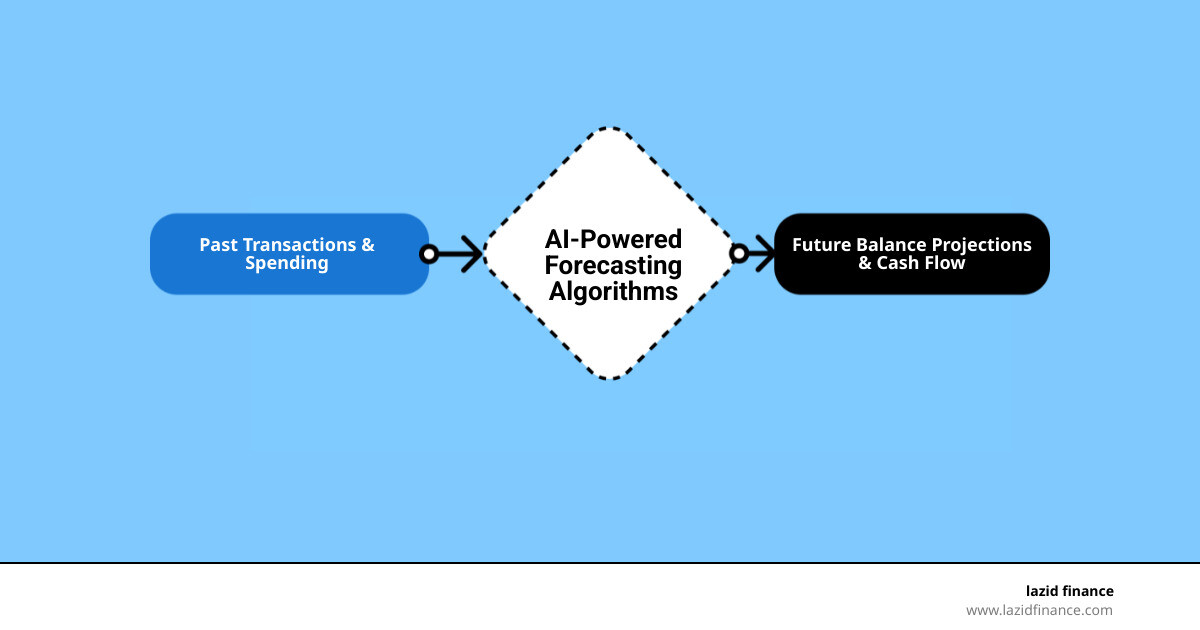
At its core, a budget forecasting app is a financial “crystal ball.” While a traditional budgeting app acts like a rearview mirror—showing you the coffee you bought yesterday or the rent you paid last week—a forecasting tool looks through the windshield. It focuses on your future balance projections rather than just your retrospective tracking.
Think of it as the evolution of personal finance tools. In the early 2000s, we had spreadsheets. In the 2010s, we had automated expense trackers. In 2026, we have cash flow management systems that simulate your entire financial life. These apps take your current account balances, add your expected income, subtract your scheduled bills, and show you exactly how much money you will have at any given point in the future.
Why a Budget Forecasting App Beats Traditional Tracking
The primary reason forecasting wins is the ability to make proactive decisions. Traditional apps tell you that you overspent on dining out after the month is over. A budget forecasting app shows you that if you go out to dinner tonight, you might not have enough for the electric bill three weeks from now.
Modern forecasting tools allow for weekly tracking and account projections that stretch up to 30 years into the future. This allows for confident spending because you aren’t just hoping there is enough money in the bank; you are looking at a mathematical projection that confirms it. Instead of just seeing “Spent: $50,” you see “Ending Balance on June 15th: $1,200.”
How Forecasting Enables Long-Term Financial Clarity
We often overestimate what we can do in a month but underestimate what we can do in a decade. Forecasting changes your perspective from surviving the week to building a legacy. With advanced tools, users can access a 15-year outlook, while others provide a 30-year outlook.
This long-term future balance visibility replaces stressful, clunky spreadsheets with automated, visual trajectories. You can see the moment your mortgage is paid off or the day your savings account hits that magic six-figure number. It’s about more than just numbers; it’s about visualizing your financial trajectory and realizing that your goals are actually within reach.
Essential Features of a Top-Tier Budget Forecasting App

When shopping for the right tool, you shouldn’t just look for a pretty interface. A high-quality budget forecasting app needs specific “under-the-hood” features to be truly effective.
One of the most powerful features is “what-if” scenarios. This allows you to simulate a major life change—like buying a new car, taking a sabbatical, or moving to a higher-rent area—without actually spending a dime. You can see how that $500 monthly car payment affects your bank balance three years from now.
Other essential features include:
- Safe-to-Spend Clarity: A single number that tells you what’s left after all bills, debts, and savings goals are covered.
- Debt Payoff Projections: Visualizing exactly when you will be debt-free based on your current payment velocity.
- Transaction Statuses: The ability to mark items as “pending” or “paid” so your forecast remains accurate in real-time.
- Bill Reminders: Proactive alerts so you never get hit with a late fee again.
Advanced Scenario Testing and Debt Reduction
For those focused on getting out of the red, a budget forecasting app acts as a debt-free roadmap. Advanced apps include loan payoff simulators and financial calculators that show you how much interest you’ll save by adding an extra $50 to your monthly payment. It turns the abstract goal of “paying off debt” into a concrete timeline. This is vital for planning for major life milestones like weddings or home purchases, where every dollar of interest saved counts toward your future down payment.
Handling Recurring and Irregular Cash Flow
Life isn’t always a steady paycheck. Many of us deal with variable income or “lumpy” expenses like annual insurance premiums. Modern apps solve this through:
- Subscription Detection: Automatically finding those forgotten $9.99 charges that drain your account.
- Paycheck Visibility: Mapping out exactly when money hits your account.
- Manual vs. Automated Syncing: Some users prefer the control of manual reconciliation to avoid conflicts with forecasted numbers, while others want the ease of automated bank syncing via secure aggregators like Plaid, MX, or Mastercard.
How AI and Automation Drive Accuracy in 2026
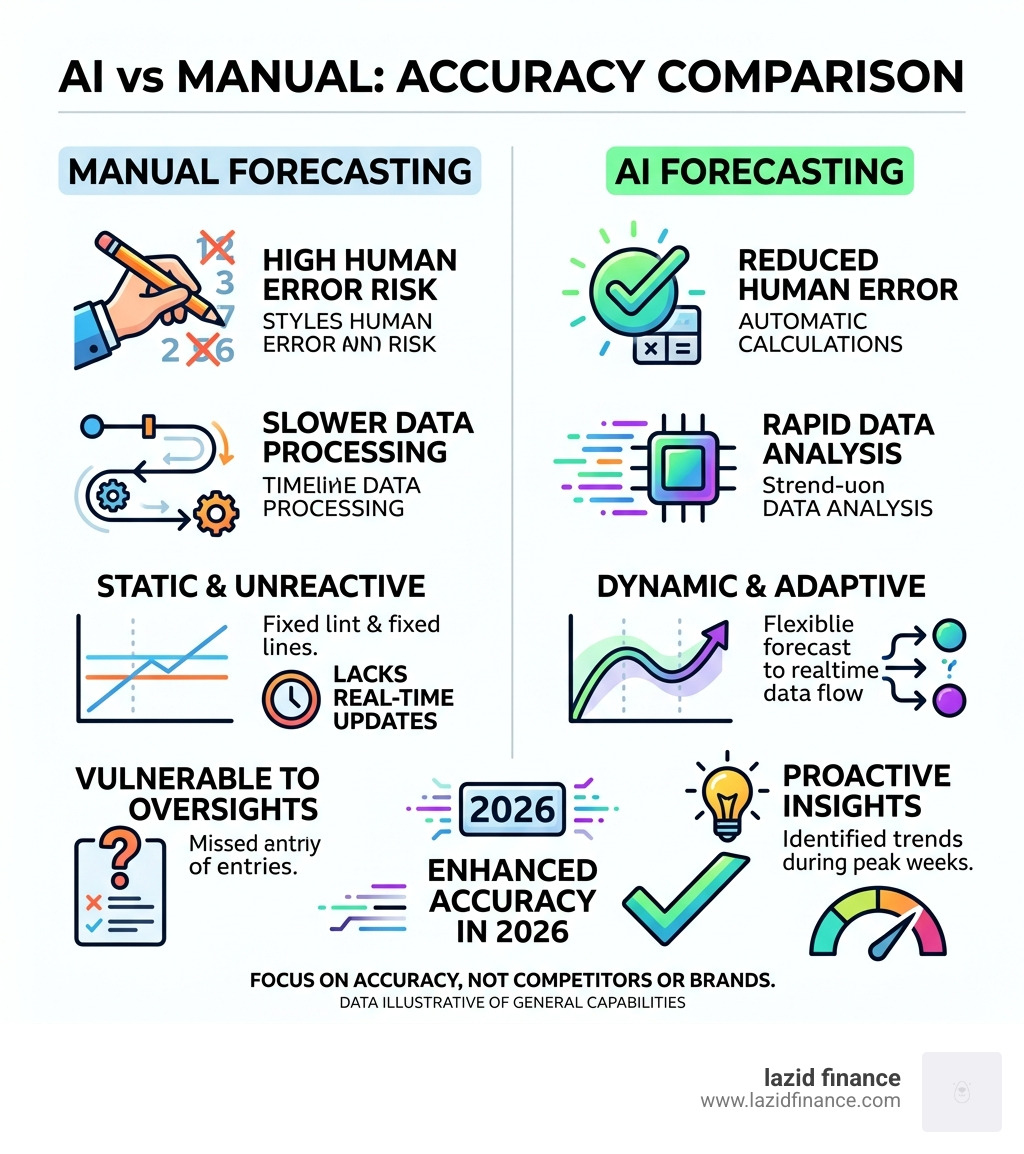
In 2026, AI has moved beyond being a buzzword. In finance, AI-powered insights are the difference between a static plan and a living strategy. Advanced forecasting tools use sophisticated AI models to dive deep into your data.
Predictive analytics can now flag spending spikes before they happen. For example, if the AI notices your utility bills usually jump 30% in July, it will bake that into your June forecast so you aren’t caught off guard. It can also identify earning opportunities or suggest a personalized savings plan based on your leanest weeks. Automated categorization and AI-powered CSV matching mean you spend less time “sorting” and more time “planning.”
Choosing the Right Budget Forecasting App for Your Lifestyle
Not every app is built for every user. Your choice should depend on your specific financial “pain points.”
- For Individuals: Look for apps with high automation and “safe-to-spend” metrics.
- For Couples: Collaborative platforms are a standout here, offering features that allow partners to manage shared finances and goals without extra fees.
- For Families: Group sharing features in advanced household tools help coordinate expenses and split-bill workflows.
- For Beginners: Choose a tool with a “Knowledge Hub” and a simple, beginner-friendly interface that doesn’t overwhelm you with 30-year charts on day one.
Pricing Models in 2026: Most apps have moved toward a subscription model to support ongoing bank syncing and AI updates. You’ll typically see prices around $4.99/month or $49.99/year. Some providers offer lifetime access for a one-time fee, which is a great option for those who hate recurring subscriptions.
Security and Privacy Standards for Financial Data
We understand that linking your bank account to an app can feel nerve-wracking. However, the security standards in 2026 are more robust than ever. Most reputable apps use AES 256-bit encryption—the same level used by major banks.
Key security features to look for include:
- Multi-Factor Authentication (MFA): Ensuring that even if someone has your password, they can’t access your data.
- SOC 2 Compliance: An industry-standard audit that proves the company handles your data with extreme care.
- Read-Only Access: The app can see your transactions to forecast them, but it cannot move your money.
- On-Device Storage: Leading privacy-focused apps often keep data on your device or in your private iCloud, meaning the developers never even see your financial details.
Frequently Asked Questions about Budget Forecasting
How do forecasting apps handle irregular income or expenses?
Most apps allow you to set “recurring intervals” that aren’t just monthly. You can set an expense for “every 2 weeks,” “every quarter,” or even “annually.” For variable income, AI categorization can estimate an average, or you can use manual line items to enter your lowest expected amount to stay conservative. The update flexibility ensures that if your commission check is higher than expected, you can adjust the forecast in seconds.
Can I forecast my budget for more than a year?
Absolutely. While traditional apps stop at the end of the month, a dedicated budget forecasting app is designed for the long haul. Projections often range from 15-year to 30-year timelines. This makes them excellent tools for retirement planning and long-term wealth building, allowing you to navigate your future balance years before you actually get there.
Is it safe to sync my bank accounts with these apps?
Yes, provided the app uses bank-level security and trusted third-party aggregators like Plaid. These services use secure tokens, meaning the app never actually stores your bank login credentials. Furthermore, many of these apps have strict “no data selling” policies, ensuring your financial habits aren’t being auctioned off to advertisers.
Conclusion
The era of “guessing and hoping” is over. Using a budget forecasting app is the fastest way to transition from financial stress to conscious decisions. Whether you are an individual looking for a simple “safe-to-spend” number or a couple planning a 30-year future, these tools provide the clarity needed for mindful choices.
At Lazid Finance, we believe that smart finance solutions should be tailored for the way you actually live. By looking forward instead of backward, you can join the 1,000,000+ members of the forecasting movement who are finally taking control. Some users have reported saving over $2,000 in a single month just by seeing their future cash flow clearly for the first time.
Ready to see your financial future? Stop looking at where your money went and start deciding where it will go.
Explore more about Lazid Finance services and smart financial tools

