
How to Stuff Your Way to Wealth with an Envelope Wallet
Why an Envelope System Wallet for Cash Budgeting Actually Works
An envelope system wallet for cash budgeting is one of the most effective tools you can use to stop overspending and take real control of your money. Here’s what you need to know at a glance:
- What it is: A physical wallet with divided compartments or envelopes, each assigned to a specific spending category (groceries, transport, entertainment, etc.)
- How it works: You fill each section with a set amount of cash at the start of every budget period — when the cash is gone, spending in that category stops
- Who it’s for: Anyone who overspends, lives paycheck to paycheck, or wants a hands-on way to manage monthly expenses
- Popular options: Wallets range from slim nylon styles to full leather organizers with 8–12 envelopes, RFID blocking, budget sheets, and coin pockets
- Cost: Most quality options fall between $25 and $50
The idea isn’t new. Your grandparents probably used paper envelopes to sort their grocery money from their gas money. But in April 2026, this old-school method is having a serious comeback — largely thanks to the cash stuffing trend that exploded on TikTok.
And there’s a real reason it works: physical cash creates friction. When you hand over a $20 bill, you feel it leaving. Swiping a card? Not so much. That small psychological difference is enough to make most people think twice before buying something they don’t need.
The right wallet makes the whole system practical enough to actually stick with.
What is the Envelope Budgeting System?
At its core, the envelope system is a method of “giving every dollar a job.” We often recommend starting with a foundational strategy like the 50/30/20 rule: 50% of your income goes to needs, 30% to wants, and 20% to savings or debt repayment. While fixed costs like rent or mortgage are usually handled digitally, the envelope system shines when managing variable expenses—those sneaky categories like groceries, dining out, and “target runs” where it’s all too easy to overspend.
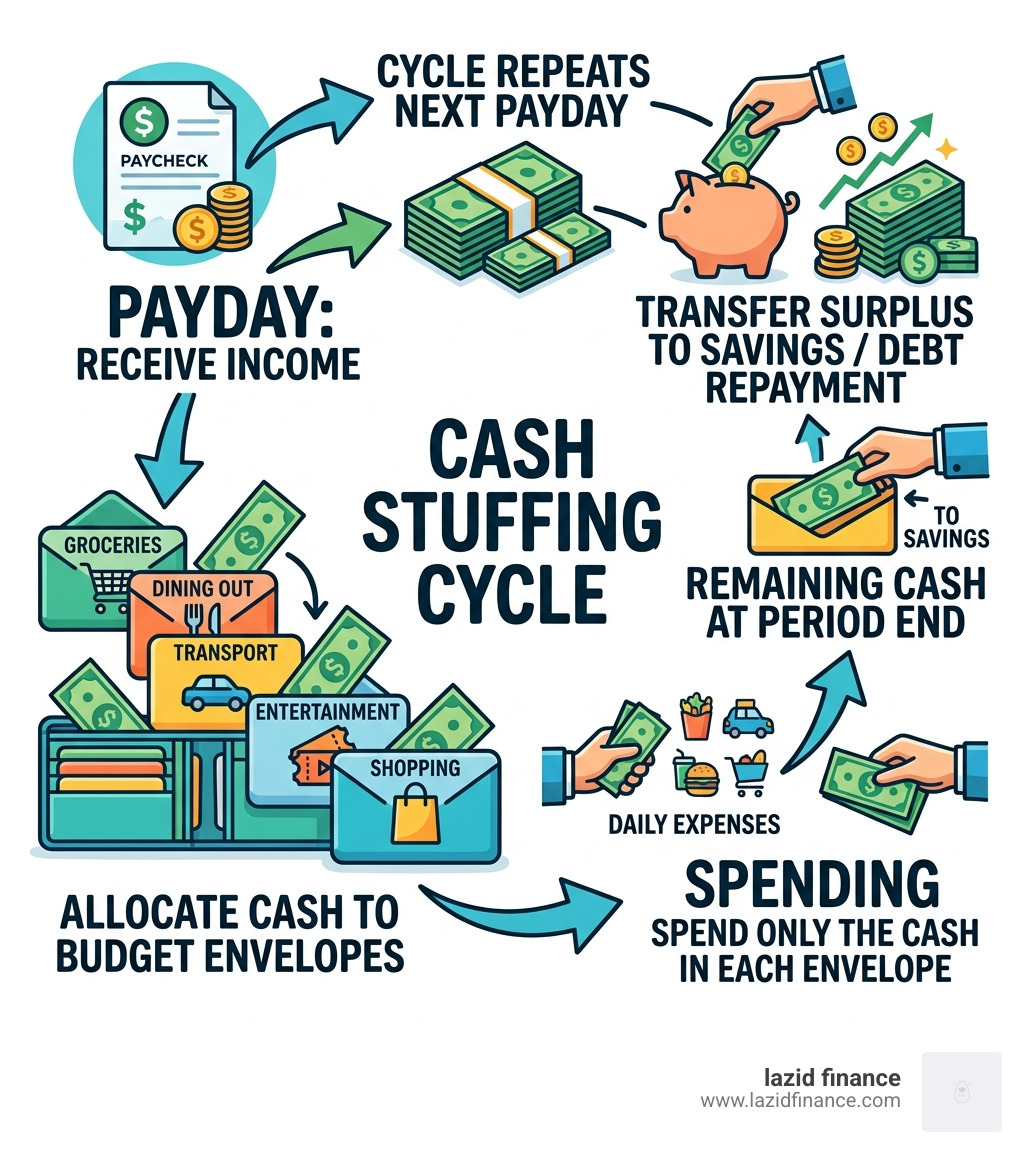
The process is simple but disciplined. On payday, you withdraw the exact amount of cash allocated for your variable categories. You then “stuff” this cash into labeled envelopes or wallet slots. This creates a tangible boundary. If you’re at the grocery store and your “Food” envelope is empty, you can’t just swipe a card and hope for the best. You either put the extra snacks back or find the money in another “wants” category.
This tangible money management approach provides immediate impulse control. It transforms budgeting from a math problem into a physical reality. By April 2026, many of us have found that digital numbers on a screen don’t carry the same weight as a dwindling stack of five-dollar bills. This payday routine leads to what financial experts call “financial peace”—the quiet confidence that comes from knowing exactly where your money is going before the month even begins.
Choosing the Best Envelope System Wallet for Cash Budgeting
If you’ve ever tried using plain white office envelopes, you know they last about three weeks before they turn into confetti in your purse. A dedicated envelope system wallet for cash budgeting is a much-needed upgrade. These wallets are designed to be durable, organized, and—most importantly—portable.
When choosing a system, you’ll generally find three main styles:
| Feature | PU Leather / Leather | High-Density Nylon | Binder-Style (PVC) |
|---|---|---|---|
| Durability | High; looks like a standard clutch | Very high; resists stains and tears | Moderate; envelopes are replaceable |
| Portability | Excellent; fits in most bags | Excellent; often slim and light | Bulkier; usually A5 or “personal” size |
| Organization | Integrated slots or tabbed inserts | Integrated slots or paper envelopes | Clear zip-pouches on rings |
| Style | Professional/Classic | Sporty/Casual | Crafty/Customizable |
For those who want an all-in-one organizer, look for a “clutch” style. Brands like Bella Taylor offer wallets with 8 interior labeled slots, which eliminates the need for loose envelopes entirely. If you prefer a more “hands-on” feel, a binder-style system (like those popular on Amazon) uses clear, waterproof envelopes that allow you to see your cash growing (or shrinking) in real-time.
Consider portability carefully. If the wallet is too big to fit in your everyday bag, you won’t use it. Many modern designs now include wrist straps or detachable cross-body chains, allowing the budgeter to carry their entire financial “command center” as a standalone piece.
Essential Features of a Quality Cash Envelope Wallet
Not all wallets are created equal. When you’re shopping for your envelope system wallet for cash budgeting, look for these non-negotiable features:
1. RFID Protection
Even though you are focusing on cash, you’ll still likely carry an ID and perhaps one “emergency” credit card or a debit card for gas. In 2026, digital pickpocketing is a real concern. RFID-blocking technology is essential for protecting your sensitive card information from unauthorized scanners while you’re out and about.
2. Tabbed Dividers and Waterproof Materials
If your system uses inserts, they should be tabbed for quick identification. There is nothing more stressful than fumbling through six identical paper envelopes at a busy checkout line. Waterproof materials (like laminated paper or PVC) are a lifesaver if you happen to spill your latte during a budget review session.
3. Integrated Tracking Tools
The best wallets come as a complete set. This includes:
- Integrated budget sheets: To record every transaction immediately.
- Pen loops: Because you’ll never find a pen when you actually need to record a purchase.
- Coin compartments: Cash spending creates change. A secure, zippered coin pocket prevents your wallet from becoming a noisy maraca.
- Magnetic clasps or sturdy zippers: To ensure your cash stays put, even if the wallet is dropped.
How to Get Started with Your New Budgeting Tool
Getting started is often the hardest part, but once the system is in place, it becomes a rewarding monthly habit.
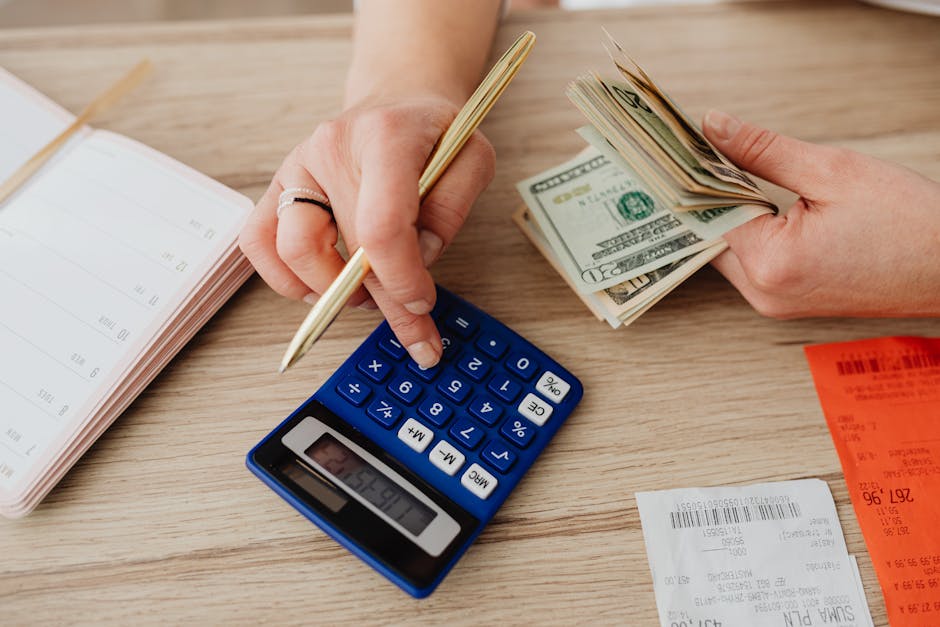
- Identify Your Categories: Start with the areas where you struggle most. Common categories include Groceries, Dining Out, Gas, Entertainment, and Personal Care.
- Label Everything: Use the category stickers or pre-printed labels that come with your wallet. If you’re using a system like the DebtorEdu wallet, you’ll have 12 envelopes to work with, giving you plenty of room for “Sinking Funds” (savings for non-monthly expenses like car registration or Christmas).
- The Cash Withdrawal: On payday, go to the bank. Yes, a real bank or an ATM. Withdraw your total variable budget in the denominations that make sense (lots of $1s and $5s help!).
- Stuff and Track: Place the cash in the slots. Every time you spend, take the cash out, put the change back, and immediately record the transaction on your ledger sheets.
- Monthly Reviews: At the end of the month, look at what’s left. If you have extra money in your “Dining Out” envelope, you can move it to your Emergency Fund or use it to fuel your Debt Snowball (paying off your smallest debts first).
Frequently Asked Questions about Envelope Wallets
Can I use an envelope system wallet for cash budgeting with digital apps?
Absolutely. Many people use a “hybrid” approach. You might use a digital app to track your overall bank balance and fixed bills, while using the physical envelope system wallet for cash budgeting for daily spending. When you “stuff” your envelopes, you simply mark that total as “spent” in your digital tracker. This gives you the best of both worlds: digital oversight and physical discipline.
How many categories should my envelope system wallet for cash budgeting have?
Most standard wallets offer between 8 and 12 slots. We recommend starting with 5–7 core categories to avoid feeling overwhelmed. You can always use the extra slots for “buffer” categories or long-term savings goals like a vacation fund.
What are the best materials for long-term durability?
For daily use, genuine leather or high-density, water-resistant nylon are the gold standards. While PU (vegan) leather is more affordable (often under $30), it may begin to peel after a year of heavy use. If you choose a binder-style system, ensure the rings are metal rather than plastic, as you’ll be opening and closing them frequently to adjust your envelopes.
Conclusion
At Lazid Finance, we believe in providing intelligent financial tools for conscious decisions. Transitioning to an envelope system wallet for cash budgeting is a powerful way to practice mindful spending. It’s not about restricting your life; it’s about giving yourself the freedom to spend on what truly matters without the guilt of “where did all my money go?”
By choosing a high-quality, RFID-protected wallet and committing to the cash-stuffing method, you are taking a proactive step toward wealth building and long-term financial clarity. Ready to take the leap? Start your journey to financial clarity today and turn your spare change into a secure future.

