
Stop Guessing with These Household Budget Tools
Your Money Deserves Better Than Guesswork
Free budgeting tools online give you a real-time picture of where your money goes – without paying a dime. Here are the top options worth your time in 2026:
- Privacy-First Apps – 100% free, no bank connection required, supports envelope and zero-based budgeting
- Digital Envelope Tools – Digital envelope budgeting, great for shared household budgets
- Wealth Trackers – Free spending tracking plus investment and net worth monitoring
- Subscription Managers – Automatic subscription detection and bill negotiation
- Open-Source Software – Free open-source desktop software, ideal for small business owners and privacy-focused users
- Automated Transaction Trackers – Free transaction tracking across thousands of financial institutions
- Google Sheets – Fully customizable, completely free, works with downloadable budget templates
Most people have a rough idea of what they earn. Fewer know exactly where it goes.
That gap – between what you think you spend and what you actually spend – is where financial stress lives. Missed savings goals, surprise overdrafts, debt that never seems to shrink. Sound familiar?
The good news: you don’t need an expensive financial advisor or a paid app to close that gap. A solid free budgeting tool can do the heavy lifting, which is a key component of financial literacy.
And there are more good ones than ever in 2026.
Since legacy apps shut down, a wave of free alternatives has stepped up – from privacy-first apps that never touch your bank login, to automated trackers that categorize every transaction for you. The challenge now isn’t finding a free tool. It’s knowing which one fits your life.
That’s exactly what this guide covers.
Top-Rated Categories of Free Budgeting Tools Online for 2026
When we look for free budgeting tools online, we aren’t just looking for a digital version of a checkbook. We want tools that provide deep financial insights. In 2026, the landscape is divided into four main categories, each serving a different type of money manager.
| Tool Category | Best For | Typical Features |
|---|---|---|
| Automated Syncing Apps | Convenience seekers | Auto-categorization, real-time alerts |
| Open-Source Software | Privacy enthusiasts | Local data storage, no ads, no fees |
| Bank-Integrated Trackers | Simplicity lovers | Direct connection to existing accounts |
| Spreadsheet Templates | Control freaks | 100% customization, manual entry |
Automated Syncing and Net Worth Monitoring
Leading wealth management platforms have changed the game. These tools currently serve millions of customers by combining daily transaction tracking with high-level investment monitoring. If you want to see your 401(k) and your grocery bill in the same dashboard, this is the way to go. Subscription management tools, on the other hand, have saved users significant amounts by identifying forgotten subscriptions and negotiating bills.
Open-Source and Privacy-First Options
For those of us who are a bit wary of linking bank accounts, open-source desktop software offers a professional-grade alternative. It uses double-entry accounting-the same standard used by small businesses-to ensure every penny is accounted for. Similarly, privacy-focused tools prioritize security by allowing CSV or OFX file imports instead of requiring direct bank logins.
The Power of Transaction Tracking
The most effective free budgeting tools online share a common goal: total transparency. Whether it’s tracking net worth or monitoring monthly spending habits, these tools help us realize that money is a tool for self-actualization. When we see that we’ve saved an average of $6,000 in our first year of disciplined budgeting, we stop seeing “restriction” and start seeing “freedom.”
Comparing the Best Free Budgeting Tools Online for Families
Budgeting as a household is a different beast than budgeting solo. You need a platform that supports “sync and share” capabilities so both partners are on the same page regarding the electric bill or the “fun money” fund.
Digital envelope systems remain a champion for families because they modernize the time-tested envelope budgeting method. Instead of carrying paper envelopes, you and your partner share virtual ones. When one person spends $50 on groceries, the shared “Grocery Envelope” updates instantly on both phones. This transparency is likely why shared platforms often see a 93% recommendation rate among family and friends.
Another standout for families are privacy-centric apps. They offer distinct budgeting styles-Simple, 50/30/20, Zero-Based, and Envelope-allowing households to switch methods as their financial situation evolves. They are built for “everyday earners,” focusing on simplicity rather than complex financial jargon.
How to Get Started with Free Budgeting Tools Online Today
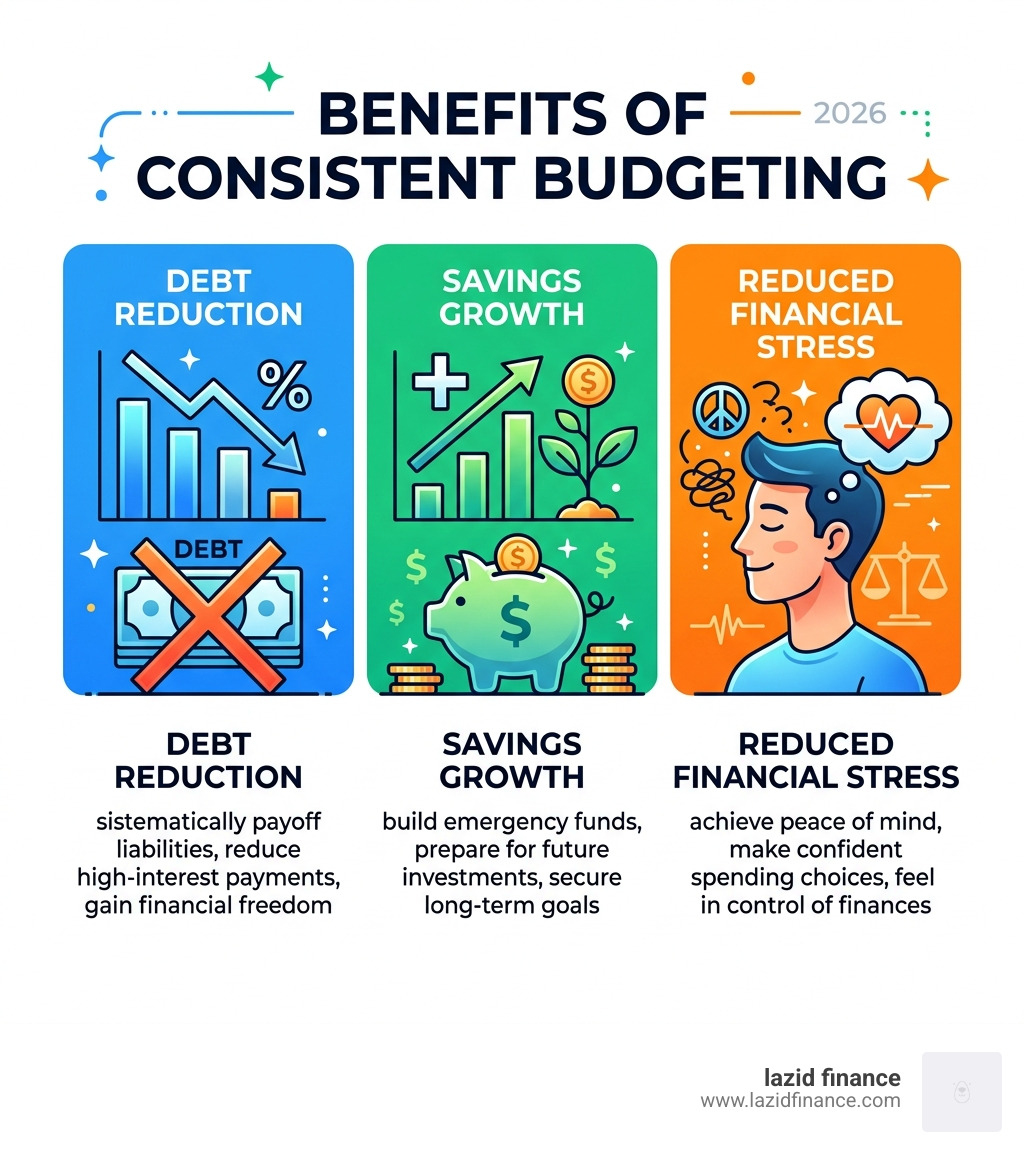
Getting started is often the hardest part, but the data shows it’s worth the effort: 92% of people feel less stressed once they start using a proactive budgeting method. Here is how we recommend jumping in:
- Calculate Your Net Income: Don’t use your gross salary. Use the actual amount that hits your bank account after taxes and insurance.
- Choose Your Tool: If you want automation, look at automated trackers. If you want privacy, choose open-source software or privacy-focused apps.
- Secure Account Linking or Data Import: If the tool supports bank syncing, it will likely use a secure service like Plaid, which connects to over 17,000 financial institutions. If you prefer manual entry, download a CSV file from your bank and upload it to your chosen tool.
- Set Up Your Categories: Start with the basics: Housing, Transportation, Food, and Utilities. Don’t forget a “Miscellaneous” category for those weird expenses that always pop up.
- The “Budget Bootcamp” Approach: For the first month, just track. Don’t try to change your habits yet. Just see where the money goes. This creates the baseline you need for a realistic plan.

Essential Features and Security Standards
When we entrust our financial data to free budgeting tools online, security isn’t just a “nice to have”-it’s a requirement. In 2026, the standard for any reputable tool is bank-level encryption (AES-256) and multi-factor authentication (MFA).
What to Look For in a Free Tool
A truly helpful budgeting tool should offer more than just a list of transactions. We look for:
- Expense Categorization: The ability to tag a purchase as “Dining Out” vs. “Groceries” automatically.
- Debt Payoff Planners: Tools that help us visualize the “Snowball” or “Avalanche” methods.
- Net Worth Tracking: Seeing our total assets minus our total liabilities.
- Subscription Management: A way to see all those $9.99 charges that we forgot we signed up for.
The Security Question
Is it safe to link your bank? Most modern apps do not store your bank credentials. Instead, they use encrypted APIs. However, for those who want 100% certainty, local storage options or file-import models ensure that your data never leaves your device or a secure, private cloud. With a 98% satisfaction rate among users of these privacy-focused tools, it’s clear that you don’t have to sacrifice security for functionality.

Budgeting Methods Supported by Free Tools
The “best” budgeting method is the one you actually stick to. Fortunately, free budgeting tools online in 2026 support a variety of philosophies:
The Envelope Method
Perfect for those who tend to overspend in specific categories. You assign a set amount of money to “envelopes” (like Dining Out or Clothing). Once the envelope is empty, you’re done spending in that category for the month. Digital envelope systems are the leader here, offering a digital version of this classic system.
Zero-Based Budgeting
This method requires you to “give every dollar a job.” If you earn $4,000, you assign all $4,000 to categories (including savings and debt payoff) until there is $0 left. This ensures that no money “leaks” out of your budget.
The 50/30/20 Rule
A simpler approach for beginners:
- 50% for Needs: Rent, groceries, utilities.
- 30% for Wants: Hobbies, dining out, Netflix.
- 20% for Savings and Debt: Emergency funds, retirement, extra credit card payments.
Managing the Unexpected
One of the biggest benefits of these tools is building a “savings cushion.” Research shows that 70% of consistent budgeters could live for three months or more on their savings alone. Whether you are dealing with irregular paychecks or saving for a big purchase, these tools help you overestimate expenses and underestimate income to create a safety net.
Frequently Asked Questions
What are the best free budgeting tools online for beginners?
For those just starting, we recommend mobile-first apps or the free version of popular zero-based tools. These tools offer simple categorization that doesn’t overwhelm you with complex charts. They focus on the “why” behind your spending, which is essential for building a long-term habit.
Are free budgeting apps truly free or are there hidden costs?
“Free” can mean a few things in the app world. Some tools are 100% free with no upsells. Others offer a free tier but charge for “premium” features like bill negotiation or automated cancellations. Some apps are ad-supported, while others may charge a tiny fee only if you choose to use third-party bank syncing services to cover their own costs. Always check if the “core” features you need are behind a paywall.
What is the best free replacement for discontinued legacy apps in 2026?
Since the transition of legacy apps, automated trackers have become the primary destination for users who want that familiar automated experience. They support thousands of financial institutions and provide the same spending insights and net worth tracking that users loved. If you prefer a more “hands-on” approach, wealth management platforms are the top choice for tracking assets and investments.
Conclusion
At Lazid Finance, we believe that financial freedom isn’t about how much you make; it’s about how much you keep and how mindfully you spend it. Choosing the right free budgeting tools online is the first step toward making conscious decisions that align with your life goals.
Whether you are paying off debt, building an emergency fund, or simply trying to understand where your paycheck goes each month, there is a free tool designed for your specific needs. We encourage you to try a few—perhaps a syncing app for convenience and a spreadsheet for total control—to see which one helps you feel the most empowered.
Intelligent financial tools are about more than just numbers; they are about peace of mind. Start your journey toward mindful choices today by picking a tool and giving every dollar a purpose.
For more smart finance solutions tailored for mindful choices, visit us at https://www.lazidfinance.com/.

