
Easy Budgeting Worksheets That Won’t Cost You a Dime
Stop Guessing Where Your Money Goes
Free budgeting worksheets are ready-to-download tools that help you track income, plan expenses, and reach financial goals — at zero cost.
Here are some of the best free sources to grab one right now:
| Source | Format | Best For |
|---|---|---|
| Consumer.gov | Printable PDF | Simple monthly tracking |
| Lazid Finance | Digital Tools | Mindful financial planning |
| Microsoft Excel | Spreadsheet | Customizable templates |
| Google Sheets | Spreadsheet | Free digital budgeting |
Most people know they should budget. But staring at a blank page — or a confusing app — makes it easy to put off.
A good worksheet removes that friction. It tells you exactly what to write down and where.
The result? You stop wondering where your paycheck went and start telling it where to go.
Whether you want a simple printable or a spreadsheet with automatic calculations, there’s a free option that fits how you think about money.
Why Use free budgeting worksheets for Your Finances?

When we talk about financial mindfulness, we aren’t just talking about being “careful” with money. We are talking about having a clear, conscious roadmap for every dollar we earn. Using free budgeting worksheets is the most accessible way to bridge the gap between “I hope I have enough for rent” and “I know exactly how much I’m saving for my next vacation.”
The primary utility of a budgeting worksheet lies in its ability to centralize your financial life. Instead of checking three different banking apps and a credit card portal, a single document provides a bird’s-eye view of your income tracking and expense management. By listing everything in one place, you can identify “money leaks”—those small, recurring subscriptions or daily habits that quietly drain your bank account.
Beyond just tracking, these worksheets are essential for:
- Achieving Financial Goals: Whether you are saving for a house or a new car, a worksheet allows you to create “savings buckets.” This ensures that your goals aren’t just an afterthought but a line item in your monthly plan.
- Debt Payoff: Seeing your debts and interest rates written down helps you prioritize which balances to knock out first.
- Building Emergency Savings: Most experts recommend a buffer of $100–$300 for small hiccups, eventually building up to several months of expenses. A worksheet helps you find that margin.
- Tracking Net Worth: Some advanced free budgeting worksheets include sections to track your assets versus your liabilities, giving you a long-term view of your growing wealth.
A great starting point is the Budget Worksheet provided by Consumer.gov. It’s a straightforward, government-backed tool designed for anyone who wants to see their monthly spending without any fluff.
Popular Types of Budgeting Templates

Not all budgets are created equal because not everyone’s brain works the same way. When searching for free budgeting worksheets, you’ll generally find three main philosophies. Choosing the right one depends on how much control you want over your money.
Zero-Based free budgeting worksheets
The zero-based budget is built on a simple but powerful premise: Income – Expenses = Zero. This doesn’t mean you have zero dollars in your bank account; it means every single dollar has a “job” to do. If you earn $4,000 this month, you allocate all $4,000 into categories like rent, groceries, savings, and even a “giving” category.
This method is highly effective for those who want total control. It forces you to be intentional with “planned spending” before the month even begins. This proactive approach is a cornerstone of achieving what many call “financial clarity”—the feeling of security that comes from knowing you are in charge of your money, rather than the other way around.
The 50/30/20 Rule in free budgeting worksheets
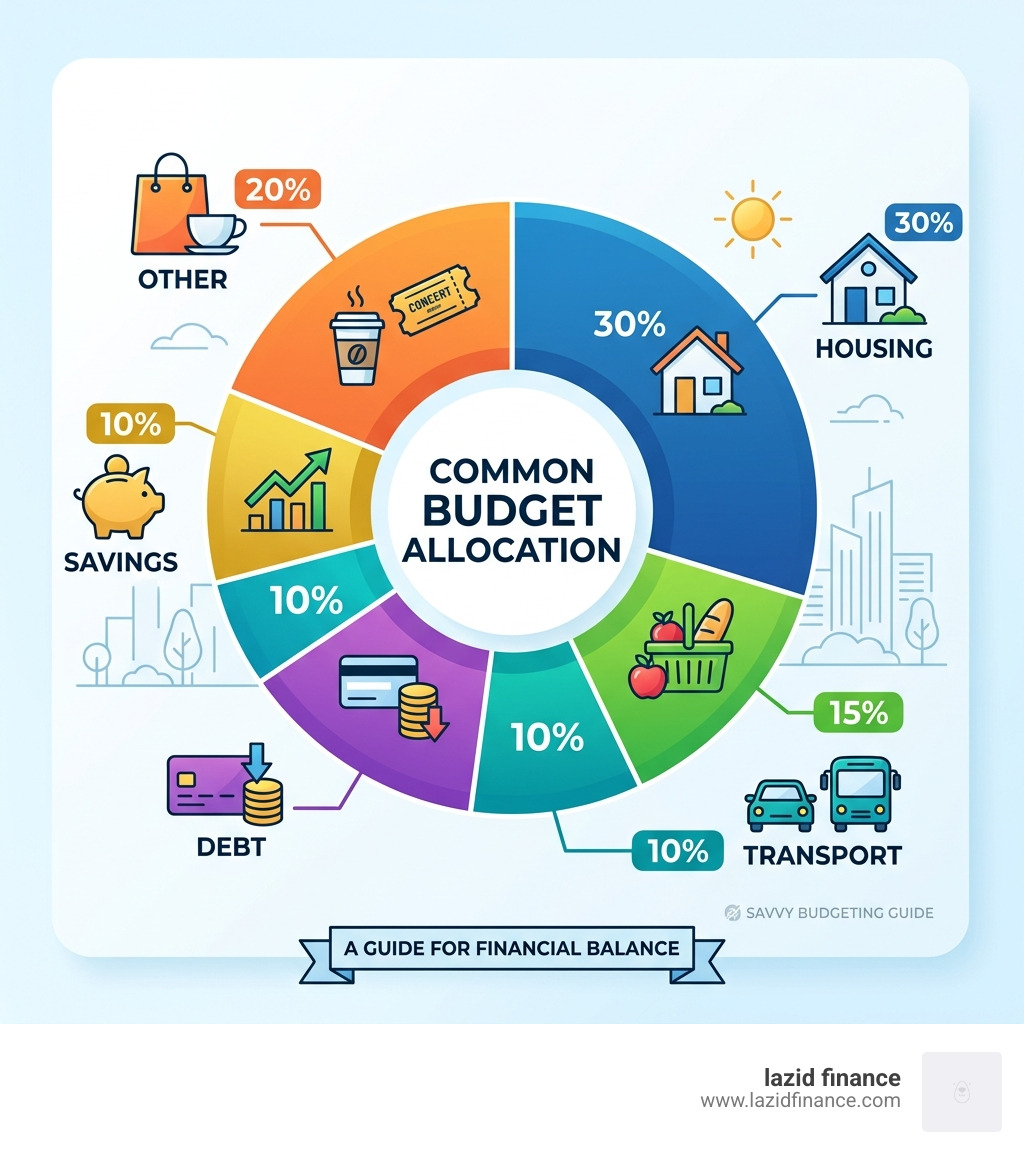
If zero-based budgeting feels too restrictive, the 50/30/20 rule is a fantastic alternative. It splits your take-home pay into three broad buckets:
- 50% for Needs: Housing, utilities, groceries, and basic transportation.
- 30% for Wants: Dining out, hobbies, and streaming services.
- 20% for Savings and Debt Repayment: Emergency funds, retirement, and paying off credit cards.
This method provides clear spending limits without requiring you to track every cent spent on a pack of gum. It’s perfect for those who want a balanced lifestyle while still making progress on their financial health.
The Envelope System
While traditionally done with physical cash and paper envelopes, many digital free budgeting worksheets now mimic this system. You “fill” digital envelopes for specific categories. Once the “Food” envelope is empty, you stop spending in that category for the month.
| Feature | Printable PDF | Digital Spreadsheet |
|---|---|---|
| Setup Time | 5–10 Minutes | 15–20 Minutes |
| Calculations | Manual (Mental or Calculator) | Automatic (Built-in Formulas) |
| Accessibility | Physical (Fridge/Folder) | Cloud-based (Phone/Laptop) |
| Best For | Tactile learners, beginners | Tech-savvy users, detailed tracking |
For those who prefer a digital approach, you can find Free budget template spreadsheets to customize | Microsoft Excel that come with pre-populated formulas. These are incredibly “clutch” for sticking to goals because they do the math for you.
How to Choose the Right Worksheet for Your Needs
Choosing a worksheet is like choosing a pair of shoes—it has to fit your specific “walk” of life.
- For Beginners: Look for simplicity. A worksheet like the one from consumer.gov is ideal because it focuses on the basics: what’s coming in and what’s going out.
- For Families: You need something with more categories. Household budgeting involves “Four Walls”—food, utilities, housing, and transportation—plus childcare, school fees, and family entertainment.
- For Irregular Income: If you are a freelancer or commission-based worker, your worksheet needs to allow for “frequency adjustments.” You might need to budget based on your lowest expected monthly income and then use a “surplus” category for months when you earn more.
- For Goal-Seekers: If you are laser-focused on a specific milestone, look for templates that emphasize net worth tracking or debt snowball progress.
At Lazid Finance, we believe in smart finance solutions tailored for mindful choices. We recommend looking for worksheets that allow for customization. You shouldn’t have to fit your life into a template; the template should fit your life. Whether you need to add a category for “Pet Grooming” or “Side Hustle Expenses,” flexibility is key.
Step-by-Step Guide to Filling Out Your Worksheet
Ready to get your financial life in order? Follow these steps to fill out your chosen free budgeting worksheets accurately.
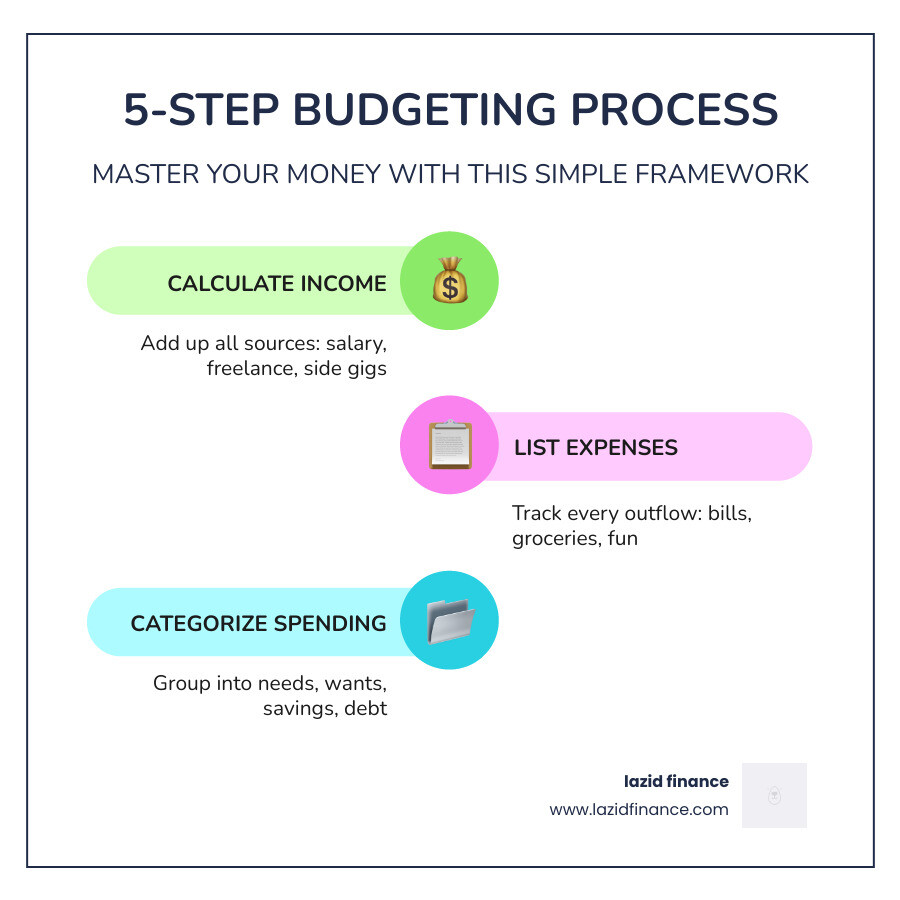
Step 1: Calculate Your Total Income
Start with your take-home pay (the amount that actually hits your bank account after taxes). Include all sources: your main job, side hustles, child support, or any “other” income. If your income varies, use a conservative estimate.
Step 2: List Your Fixed Expenses
These are the “must-haves” that usually cost the same every month.
- Housing: Rent or mortgage payments.
- Utilities: Electricity, water, internet, and phone.
- Transportation: Car payments, insurance, and fuel.
- Health: Insurance premiums and regular medications.
Step 3: Estimate Variable Expenses
This is where most people get tripped up. Look at your past bank statements to guesstimate what you spend on:
- Food: Groceries and dining out.
- Personal Care: Toiletries, haircuts, and clothing.
- Entertainment: Streaming services and hobbies.
Step 4: Include Debt and Savings
Don’t forget to list your minimum debt payments and your savings goals. If you want to build an emergency fund, treat that “payment” to yourself just like a bill.
Step 5: The Balance Calculation
Subtract your total expenses from your total income.
- If you have a surplus: Congratulations! You have money left to save, invest, or put toward debt.
- If you have a deficit: Don’t panic. This is a “looks good” vs. “needs help” moment. Review your variable expenses and find areas to cut. Maybe you can meal prep instead of ordering delivery to save $100 a week (that’s $400 a month!).
For a comprehensive tool, you can check out the Financial Budget Worksheet | Lazid Finance which provides a clear path to identifying your surplus or deficit.
Frequently Asked Questions about Budgeting
Are printable or digital worksheets better?
This is entirely a matter of user preference. Printable worksheets are excellent for tactile learners. There is a psychological benefit to physically writing down a number; it makes the spending feel more “real.” They are also great for beginners who might find Excel intimidating.
On the other hand, digital worksheets (like Google Sheets or Excel) offer automatic formulas. You change one number, and the whole budget updates instantly. They are also accessible from your phone, making it easier to track transactions on the go.
How do I handle irregular expenses?
Irregular expenses—like a $600 auto insurance premium due every six months or annual holiday spending—can wreck a budget if you aren’t prepared. One effective strategy suggests a simple fix: divide the total cost by 12. If that insurance bill is $600 twice a year, that’s $1,200 annually. Set aside $100 every single month into a “sinking fund” or a separate savings bucket. When the bill arrives, the money is already there.
How often should I update my budget?
At a minimum, you should do a monthly planning session before the new month begins. However, for the best results, we recommend a weekly review. Spend 10 minutes every Sunday recording your actual spending against your “planned” numbers. This financial accountability prevents you from reaching the 20th of the month and realizing you’ve already spent your entire grocery budget.
Conclusion
Budgeting isn’t about restriction; it’s about freedom. It’s about making conscious decisions today so you can have more choices tomorrow. By using free budgeting worksheets, you remove the financial barrier to entry and start building a foundation for long-term well-being.
At Lazid Finance, we are committed to providing intelligent financial tools for conscious decisions. We know that the best budgeting method is the one you actually stick with. Whether you choose a simple PDF from Consumer.gov or a complex Excel spreadsheet, the act of tracking your money is the first step toward a more mindful financial life.
Stop wondering where your money went. Download a worksheet today, give every dollar a job, and start your journey with Lazid Finance toward true financial clarity.

