
Never Lose a Container Again with Smart Asset Tracking
Why Every Business Needs a Smart Asset Tracking App
A smart asset tracking app is software that lets you monitor, locate, and manage physical assets in real time — using your smartphone, barcode scans, Bluetooth, or GPS.
Here are the top smart asset tracking apps worth knowing in 2026:
| App | Best For | Free Tier | Key Technology |
|---|---|---|---|
| Ezist | Small businesses, restaurants | Yes | Cloud, QR, maintenance alerts |
| AssetTiger | Offices, basic inventory | Yes | Barcode, cloud |
| ThingTracker | Teams, simple setups | 100% free | Photos, Google Sheets |
| Smartpin | Field teams, logistics | 90-day trial | Bluetooth (90M+ access points) |
| Cube Tracker | Personal + small business | Partial | GPS + Bluetooth |
| SMART|TRAXX | Enterprise, supply chain | No | RFID, barcode, offline sync |
| WholeTracker | Operations + security | Demo only | GPS, NFC, AI insights |
Think about how much time your team wastes hunting down equipment. Or the cost when a piece of machinery breaks down because no one caught the warning signs early enough.
For businesses that depend on physical assets — tools, vehicles, kitchen equipment, IT hardware, containers — losing visibility is losing money.
Restaurant operators in Hyderabad, for example, report losing the equivalent of roughly ₹50,000 every month just from equipment downtime. That’s not a small number. And it’s a problem that better asset tracking can directly solve.
The good news? You no longer need expensive hardware or a dedicated IT team. Today’s smart asset tracking apps run on the phone already in your pocket.
This guide breaks down the best options available right now, who they’re built for, and how to choose the right one.
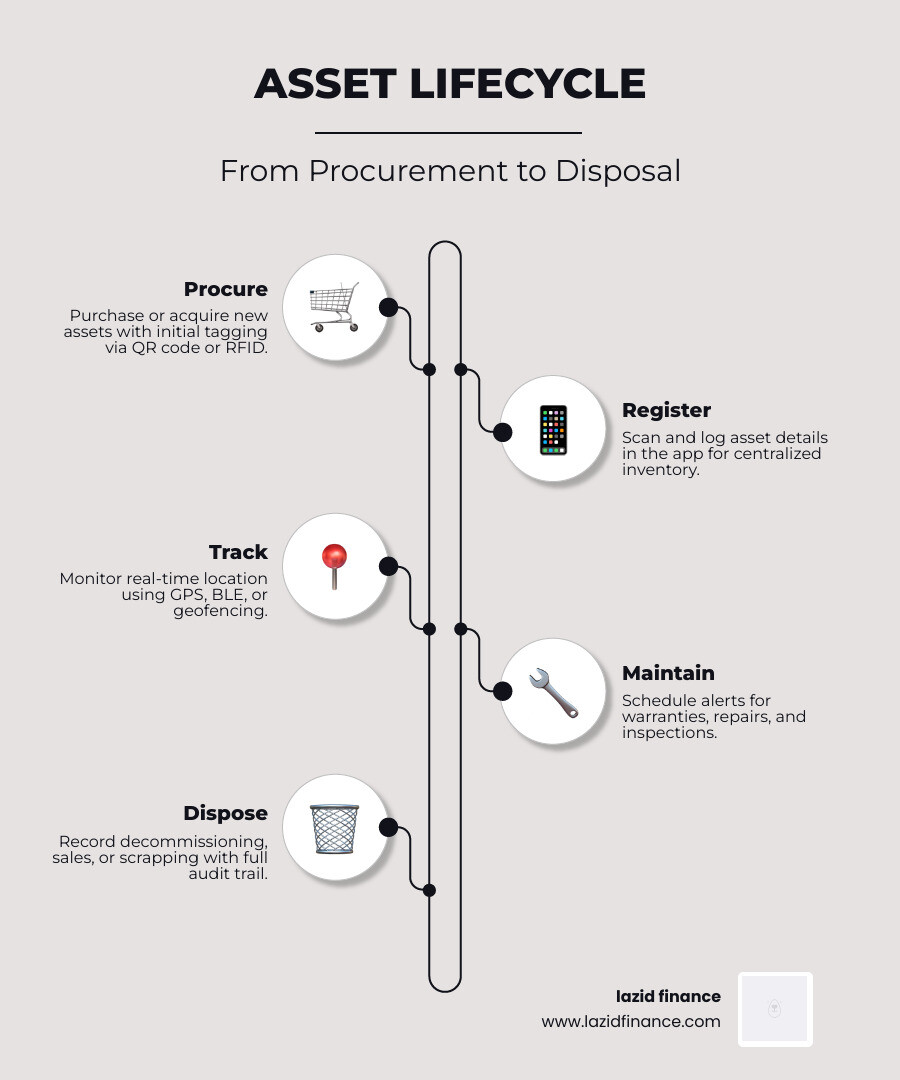
The Evolution of the Smart Asset Tracking App
Gone are the days when inventory management meant a clipboard, a pen, and a prayer. We’ve moved past the era of manual spreadsheets that are outdated the moment you save them. The digital transformation of the warehouse and the job site is here, and it’s powered by the cloud.
A modern smart asset tracking app differs from traditional methods by offering real-time updates and centralized visibility. Instead of waiting for a weekly audit, we can now see exactly where a piece of equipment is at this very second. Apps like Smart Asset Tracker – App Store allow IT departments and operations managers to move away from static data and toward a living, breathing map of their resources.
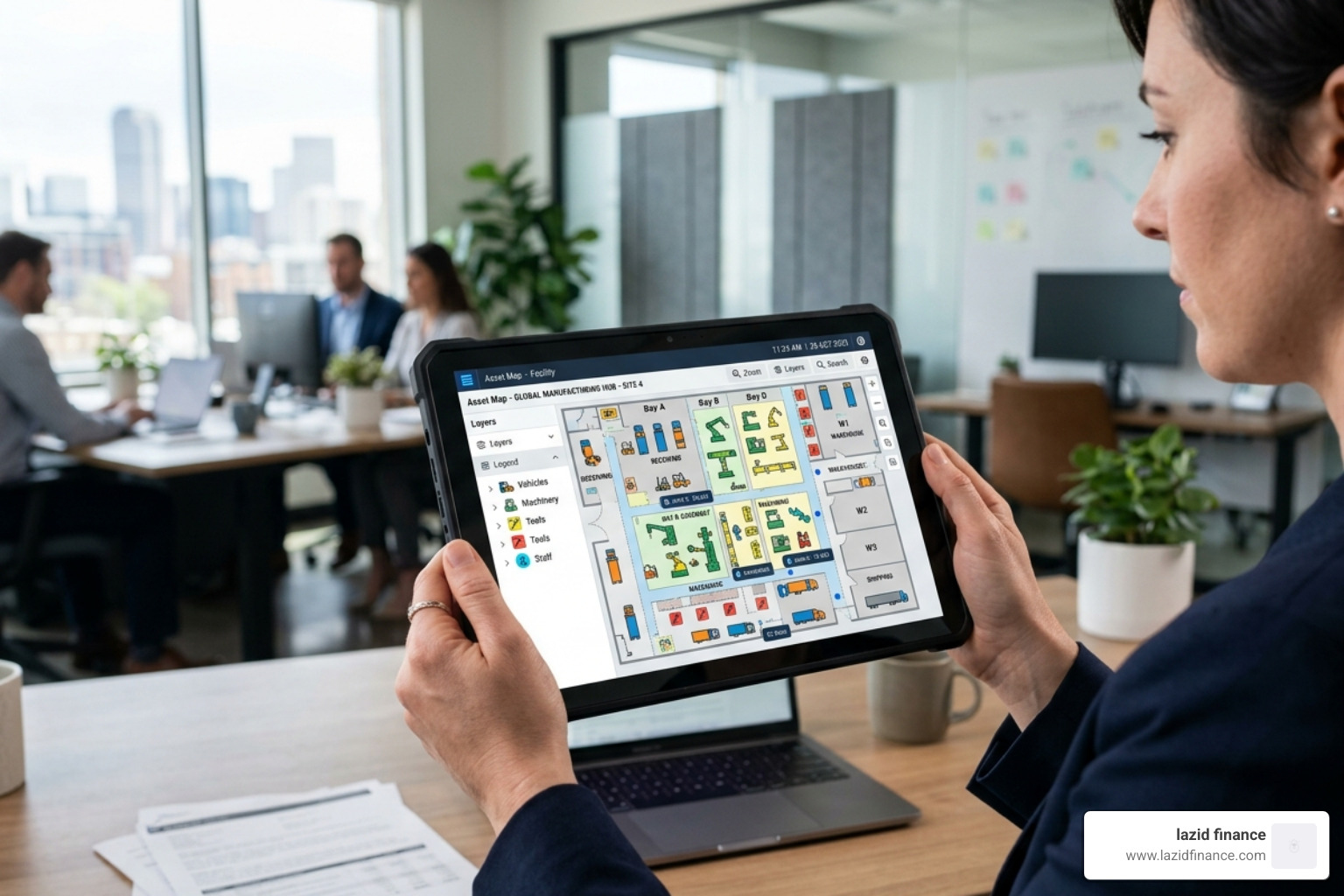
By using cloud-based storage, these apps ensure that every member of the team—from the technician in the field to the accountant at HQ—is looking at the same data. This eliminates the “silos” that often lead to double-ordering equipment or losing track of high-value items during transit.
How a smart asset tracking app uses BLE and GPS
The “smart” in these apps comes from the underlying technology. Bluetooth Low Energy (BLE) and Global Positioning System (GPS) are the heavy lifters here.
BLE tags act as intelligent beacons. They are low-power, meaning they can last for years on a tiny battery, and they communicate seamlessly with your mobile device. Bluetooth Asset Tracking for Business | Smartpin leverages an infrastructure-free network with over 90 million access points worldwide. This means you don’t need to install expensive gateways; the network already exists.
GPS, on the other hand, provides nationwide tracking for assets that move long distances, like trailers or vehicles. Many apps now allow us to set “geofencing” boundaries. If a tracked item leaves a pre-defined area—say, a construction site or a logistics hub—the app sends an immediate alert to our phones.
Scanning with QR codes and RFID
While BLE and GPS are great for location, scanning technologies like QR codes, 1D/2D barcodes, and RFID (Radio Frequency Identification) are the kings of accountability. Every time an asset is handed over from one person to another, a quick scan creates a digital “chain of custody.”
Apps like Smart Asset Track – Apps on Google Play are designed specifically for these workflows. By scanning a code, we can instantly see the asset’s history, who had it last, and its current maintenance status. This creates a forensic audit trail that is invaluable for compliance and preventing internal theft.
Top Solutions to Manage Your Inventory in 2026
When choosing a smart asset tracking app, the “best” one depends entirely on your scale. Some businesses need a simple way to track a few dozen laptops, while others need to manage thousands of shipping containers across global supply chains.
Best smart asset tracking app for small businesses
For small businesses, the barrier to entry is often cost and complexity. You don’t want a system that takes three months to learn.
ThingTracker is a standout for simplicity. It’s 100% free and uses a clever “photo-based” tracking system. If you can take a picture of it, you can track it. It integrates directly with Google Drive and Google Sheets, making it incredibly easy for small teams to share visibility without any new hardware.
Other options like Smart Asset – Apps on Google Play focus on field mobility. These apps are designed for workers who are always on the go, allowing them to add remarks, store digital receipts, and set maintenance reminders right from the job site. This is a game-changer for service providers who need to keep track of warranties and repair schedules for client equipment.
Enterprise-grade tracking for logistics
At the enterprise level, the requirements shift toward integration and ruggedness. You need software that can talk to your existing Mobile Device Management (MDM) systems and handle complex supply chain data.
SMART | TRAXX Asset Tracking Mobile Apps | AssetSmart is built for this environment. One of its most critical features is “Store & Forward” offline mode. In a massive warehouse or a remote shipping yard where Wi-Fi is spotty, the app collects data locally and performs a bi-directional sync once the connection is restored. This ensures data integrity even in the most challenging environments.
Enterprise solutions also offer role-based access, ensuring that sensitive data is only seen by those who need it. This level of control is essential for large organizations managing thousands of assets across multiple regions.
Maximizing ROI and Industry Impact
The financial argument for a smart asset tracking app is overwhelming. In the UK, the facilities management (FM) market is worth a staggering 7.5% of GDP. In such a massive sector, even small efficiencies lead to huge savings.

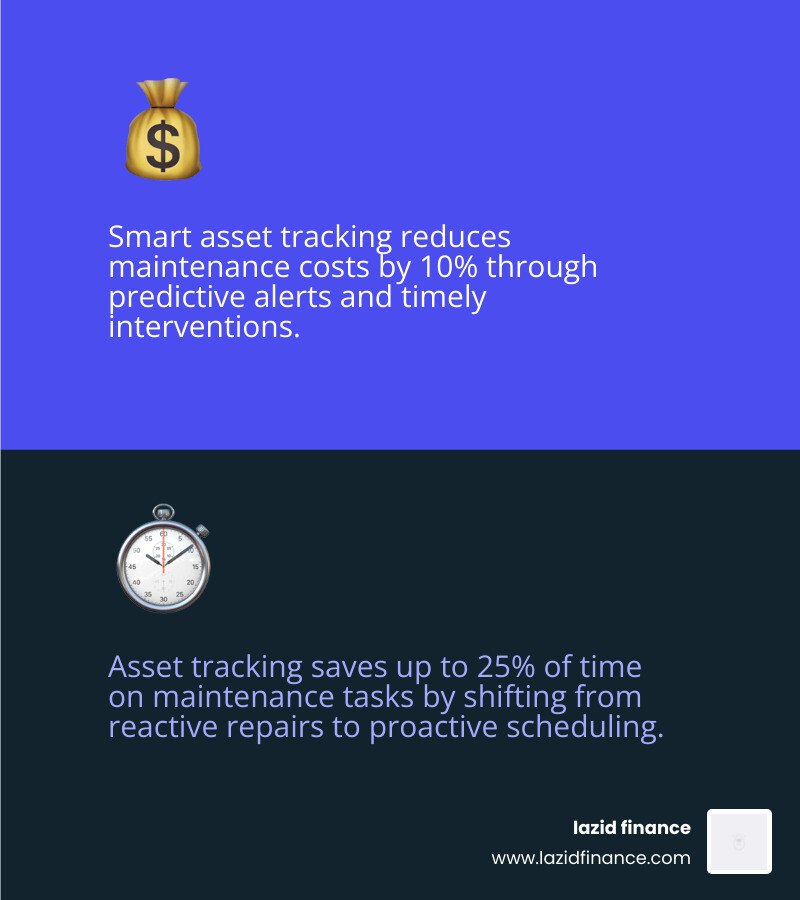
Take the hospitality industry as an example. We’ve seen that smart tracking can help reduce maintenance costs by 10% and save up to 25% of the time usually spent on maintenance tasks. By using an “all-in-one” platform like WholeTracker – Asset Tracking & Operational Intelligence Platform, businesses can move from reactive repairs to predictive maintenance.
Instead of waiting for a freezer to break (and losing ₹50,000 in spoiled stock), the system uses AI to surface patterns and flag risks before they become catastrophes. This shift from “fixing” to “preventing” is where the real ROI lives.
Security, Privacy, and Future Trends
As we entrust more of our business data to these apps, security is naturally a top concern. Most leading apps now prioritize data encryption in transit and at rest. When reviewing an app’s privacy policy, look for those that explicitly state they do not share data with third parties.
The future of the smart asset tracking app is intertwined with AI and the Internet of Things (IoT). We are moving toward a world of “operational intelligence.” This means your assets won’t just tell you where they are; they will tell you how they are doing.
Imagine a smart thermometer in a shipping container that doesn’t just record temperature but automatically triggers a workflow to redirect the shipment if a cooling unit fails. This level of automated oversight is the “final frontier” of asset management, enabling businesses to scale without needing to hire massive fleets of human monitors.
Frequently Asked Questions about Asset Tracking
What is the best free smart asset tracking app for a small business?
For absolute simplicity, ThingTracker is excellent because it uses your phone’s camera and Google Sheets. If you need more robust features like maintenance alerts and warranty tracking, Ezist offers a powerful free tier specifically designed for small business owners and restaurant operators.
How do these apps handle data privacy and security?
Top-tier apps use enterprise-grade encryption for all data transfers. Many apps, such as those from CloudLeaf or AssetSmart, are designed for internal company use and have strict policies against sharing data with third parties. Always check if the app allows you to request data deletion and if it supports role-based permissions.
Can I track assets in areas without an internet connection?
Yes, but you need an app with “offline mode” or “store and forward” capabilities. SMART | TRAXX is a leader in this area, allowing field workers to scan and update assets in “dead zones” and then automatically syncing that data once they return to a connected area.
Conclusion
At Lazid Finance, we believe in providing intelligent tools that empower you to make conscious, mindful decisions—both in your personal finances and your business operations. Managing your physical assets shouldn’t be a source of stress or “guesswork.” It should be a source of ground truth.
By adopting a smart asset tracking app, you aren’t just buying software; you’re investing in accountability and operational efficiency. Whether you’re a small retailer looking to track inventory or a logistics manager overseeing a global fleet, the right technology can transform your bottom line.
Start managing your assets wisely at Lazid Finance and take the first step toward a more organized, profitable future.

