
The Cheap Loan Comparison Guide for Savvy Borrowers
Understanding Personal Loans and How They Work
Before we dive into the nitty-gritty of a cheap loan comparison, we need to understand exactly what we are comparing. A personal loan is a type of installment debt. Unlike a credit card, which is “revolving” (meaning you can spend, pay back, and spend again), a personal loan gives you a lump sum of cash upfront. You then pay it back in fixed monthly installments over a set period, usually ranging from one to seven years.
Most personal loans are unsecured, meaning you don’t have to put up your house or car as collateral. Because the lender is taking on more risk, they rely heavily on your credit history to decide your interest rate. Once you’re approved, the loan proceeds are deposited directly into your bank account—sometimes as quickly as the same day. This speed makes them a popular choice for those who need to act quickly on financial opportunities or obligations.
We see people use these loans for a variety of “savvy” moves:
- Debt Consolidation: This is the heavy hitter, accounting for about 31.3% of all loan requests. By rolling high-interest credit card debt into one lower-interest loan, you can simplify your life and save a fortune. It turns multiple stressful deadlines into one manageable monthly payment.
- Home Improvement: Whether it’s a new roof or a kitchen remodel, personal loans let you upgrade your space without tapping into home equity or risking your primary residence.
- Emergency Expenses: When the HVAC dies in mid-July or an unexpected medical bill arrives, a personal loan can provide faster funding than many other traditional banking options.
- Major Purchases: From weddings to moving costs, these loans provide a predictable way to pay for life’s big moments without draining your emergency savings.
The beauty of the personal loan is the fixed interest structure. Your rate won’t vanish or spike like a variable-rate credit card might. You know exactly when you’ll be debt-free from day one. This predictability is a cornerstone of mindful financial planning. When you know exactly what is leaving your account every month, you can build a robust budget that accounts for savings and investments without the fear of a sudden interest rate hike.
The Importance of a Cheap Loan Comparison Strategy
Why do we emphasize a cheap loan comparison so much? Because the lending market is incredibly diverse. One bank might offer you 12% APR, while an online lender looks at your specific career path and offers you 8%. Without a strategy, you’re just guessing, and guessing with your finances can lead to thousands of dollars in unnecessary interest payments.
As of April 15, 2026, the average personal loan interest rate is 12.27%. However, “average” is a wide net. Borrowers with excellent credit might see offers starting around 7%, while those with lower scores might see rates climb toward 36%.
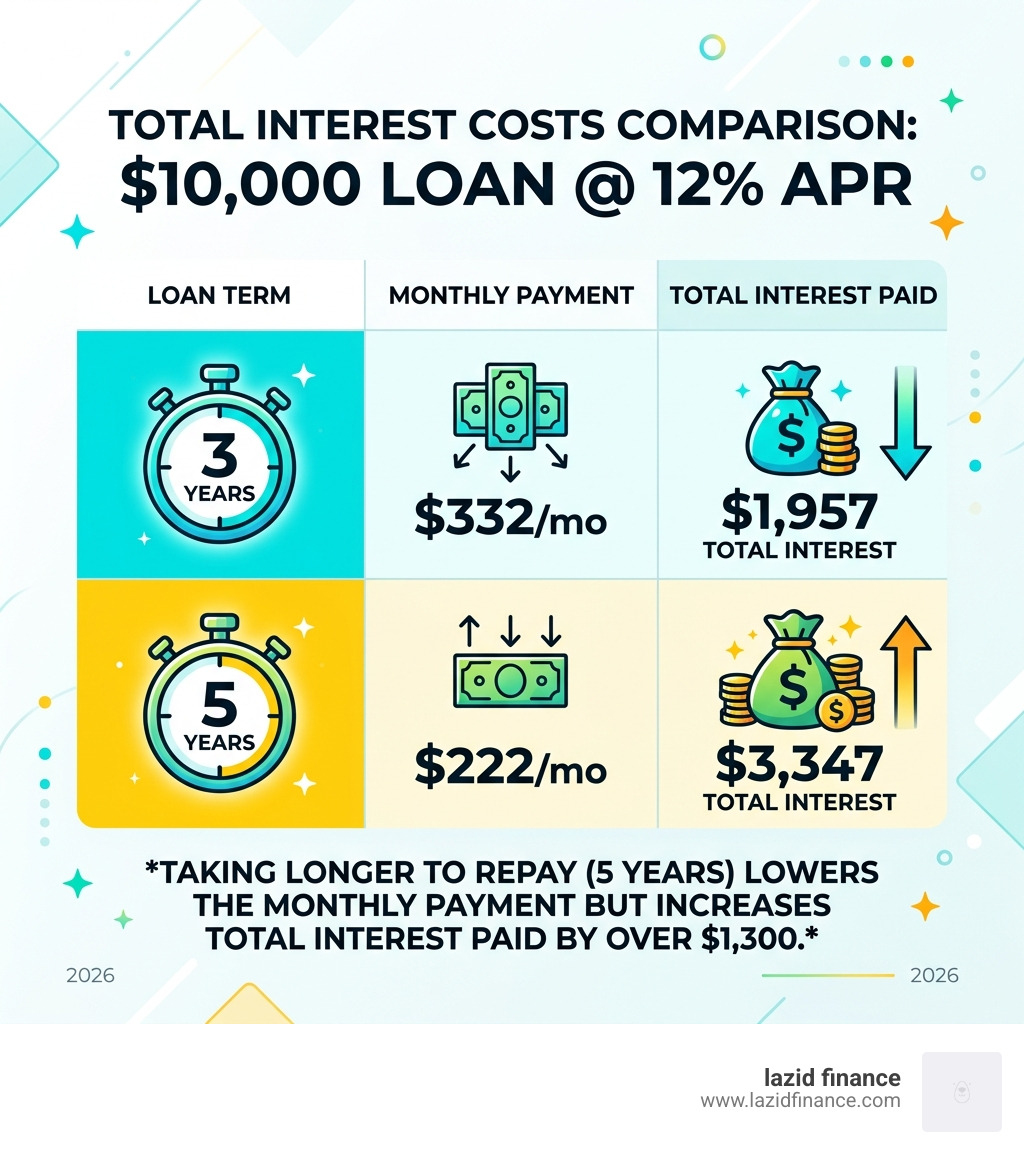
As shown above, the term length—how long you take to pay it back—drastically changes the “cheapness” of the loan. A lower monthly payment on a 5-year plan might look attractive for your monthly cash flow, but you’ll end up paying over $1,300 more in interest than you would on a 3-year plan. This is why looking at the total cost of borrowing is just as important as the monthly installment.
Key Factors in a Cheap Loan Comparison
When we help our community evaluate offers, we look at these six pillars:
- Interest Rates vs. APR: The interest rate is the base cost to borrow the money. The Annual Percentage Rate (APR) is the interest rate plus any fees. Always compare APRs to see the true cost, as a low interest rate can be masked by high upfront fees.
- Origination Fees: Some lenders charge a fee just for processing the loan, often between 1% and 10% of the loan amount. This is usually deducted from your payout. If you need exactly $10,000 and the fee is 5%, you’ll only receive $9,500, meaning you might need to borrow more than you originally planned to cover the gap.
- Loan Amounts: Ensure the lender actually offers what you need. Some specialize in “micro-loans” of $600, while others won’t talk to you for less than $5,000. Matching your needs to the lender’s specialty is a key part of a smart comparison.
- Term Length: Shorter is cheaper in the long run because you pay interest for less time. Longer is easier on your monthly budget but more expensive overall.
- Hidden Fees: Look for “non-sufficient funds” (NSF) fees or late fees. Thankfully, prepayment penalties—fees for paying your loan off early—are rare in 2026, but always double-check the fine print to ensure you aren’t punished for being financially responsible.
- Lender Transparency: A legitimate lender will never guarantee approval before seeing your info or ask you to pay “insurance” fees upfront via wire transfer or gift cards. Transparency in their fee structure is a hallmark of a trustworthy financial partner.
Using Tools for Cheap Loan Comparison
You don’t have to do the math on a cocktail napkin. We recommend using a multi-loan comparison calculator. These tools allow you to plug in the details of up to four different offers to see the side-by-side impact on your wallet, including the total interest paid over the life of the loan.
The most powerful tool in your arsenal is pre-qualification. Most modern lenders allow you to see your potential rate using a “soft credit pull.” This gives you a real quote without knocking a single point off your credit score. We suggest getting at least three to six offers. Data shows that savvy borrowers who compare multiple quotes save an average of $1,659 just by picking the best of their available offers.
How Your Credit Score Impacts Loan Affordability
Your credit score is the primary “price tag” for your loan. Lenders use it to predict how likely you are to pay them back. A higher score signals lower risk, which translates directly into lower interest rates for you.
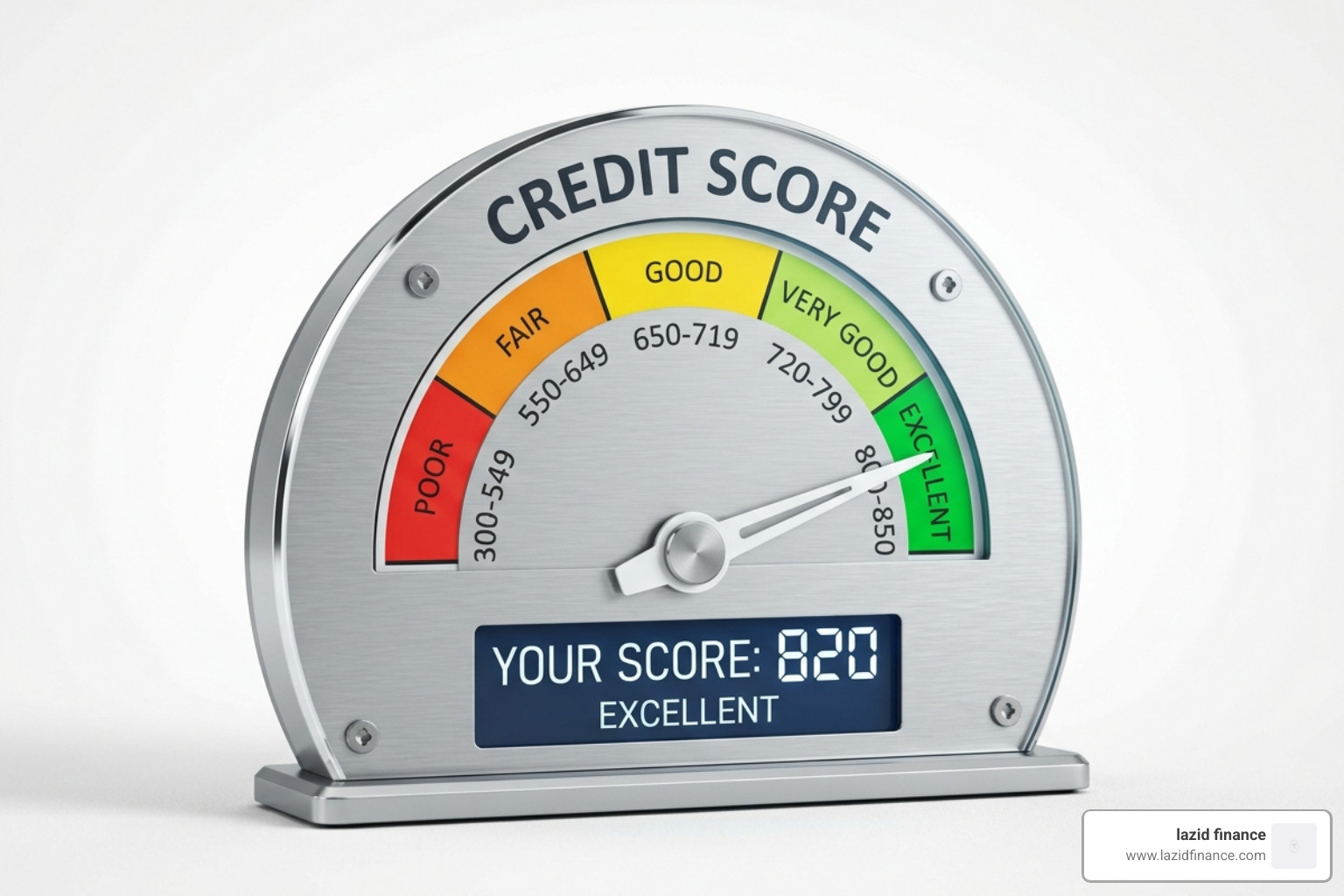
Here is how the tiers generally break down in the current 2026 market:
- Excellent (720-850): You are the belle of the ball. You can expect rates between 7% and 15%, and you will likely have your choice of lenders.
- Good (690-719): Very solid. Average rates sit around 18.78%, and you’ll still qualify for most competitive products.
- Fair (630-689): You’ll qualify, but rates will likely jump to 22-27%. You may need to look at specialized lenders who focus on this tier.
- Bad (Under 629): Options are limited, and rates often exceed 30%. In this tier, focusing on credit repair before borrowing is often the smartest move.
Beyond the score, lenders look at your Debt-to-Income (DTI) ratio. Even with an 800 credit score, if 60% of your monthly income already goes to debt, a lender might worry you’re overextended. Most prefer a DTI below 50%. To calculate your DTI, add up all your monthly debt payments and divide them by your gross monthly income. For example, if your debt payments total $2,000 and your gross income is $6,000, your DTI is 33%.
To maximize your approval chances, check your credit report for errors at least three months before applying. Fixing a simple reporting mistake, like an incorrectly reported late payment, can jump your score from “Fair” to “Good,” potentially saving you over $1,804 in interest over the life of a loan.
Qualifying for a Loan with Fair or Bad Credit
If your score isn’t where you want it to be, a cheap loan comparison is even more vital because the “bad” offers can be truly predatory. You must be extra vigilant about reading the terms and conditions.
Your options include:
- Secured Loans: You back the loan with an asset (like a car or a savings account). These are easier to get and usually have lower rates because the lender has a safety net.
- Joint Applications or Co-signers: Adding someone with better credit to your application can slash your APR and help you qualify for higher amounts. However, the co-signer is equally responsible for the debt.
- Alternative Data Lenders: Some online lenders look at your education, employment history, and cash flow rather than just your FICO score. They might analyze your bank statements to see consistent income and responsible spending habits.
Frequently Asked Questions about Cheap Loan Comparison
How can I calculate my potential monthly loan payments?
To find your monthly payment, you need three numbers: the principal (how much you borrow), the interest rate, and the term (how many months). You can use a standard amortization formula, but it’s much easier to use an online calculator. For example, a $15,000 loan at 13.99% APR over 36 months results in a monthly payment of roughly $513. By multiplying that payment by 36, you can see the total cost ($18,468) and the total interest paid ($3,468). For more information on how interest and lending regulations work, you can visit the Consumer Financial Protection Bureau.
Will checking my personal loan rates affect my credit score?
Not if you do it correctly! When you “pre-qualify” on a comparison platform or a lender’s website, they perform a soft credit inquiry. This is like a background check that doesn’t leave a mark on your credit report. A hard inquiry, which can drop your score by a few points, only happens when you officially submit a final application for a specific loan. Savvy borrowers use soft pulls to “rate shop” and compare multiple offers before committing to the one hard pull that matters for the final contract.
What are the pros and cons of online lenders versus traditional banks?
Online lenders are often the kings of the cheap loan comparison because they have lower overhead (no physical branches to heat and cool). They typically offer faster funding—sometimes within 24 hours—and more flexible underwriting for people with “thin” credit files or non-traditional income sources.
Traditional banks and credit unions, however, excel at “relationship discounts.” If you’ve had a checking account at a bank for ten years, they might shave 0.25% to 0.50% off your rate as a loyalty perk. Credit unions, being member-owned, often have caps on how much interest they can charge, making them excellent for fair-credit borrowers. They are not-for-profit entities, so their primary goal is to serve members rather than maximize shareholder profits, which often leads to lower fees and more personalized service.
Conclusion
At Lazid Finance, we believe that financial freedom isn’t about how much you make, but how mindfully you manage what you have. Finding a “cheap” loan isn’t just about hunting for the lowest number; it’s about understanding the total impact on your future self.
By using a cheap loan comparison strategy—checking your credit, pre-qualifying with multiple lenders, and prioritizing the shortest term you can afford—you take control of the narrative. You transition from a “borrower” to a “savvy strategist.”
The best time to save money on a loan is the moment before you sign the contract. Take your time, use the tools available, and make a choice that aligns with your long-term goals. For more intelligent financial tools for conscious decisions, stay tuned to our latest guides. Happy borrowing!

