
Mastering Your Money with a Conscious Budget Plan
Why Comparing Your Conscious Budget vs Actuals Changes Everything
Conscious budget vs actuals is the practice of comparing what you planned to spend — using a values-based spending framework — against what you actually spent, so you can close the gap between intention and reality.
Here is a quick breakdown of the key differences:
| Conscious Budget | Actuals | |
|---|---|---|
| What it is | Your planned spending by category | What you really spent |
| Purpose | Align money with your values | Reveal real habits |
| Format | Percentages + broad categories | Bank and card statements |
| Review frequency | Set once, adjust quarterly | Check weekly or monthly |
| Goal | Intentional allocation | Spot gaps and fix them |
Most people have made a budget at some point. They wrote down the categories, set the numbers, felt good about the plan — and then life happened.
A stressful week. A sale. A dinner out. And just like that, the budget fell apart.
The problem is not a lack of discipline. It is a system design problem.
Traditional budgets track where your money went. A conscious spending plan decides where it goes before you spend a single dollar. But even the best plan needs a reality check — and that is exactly where comparing your conscious budget against your actuals comes in.
Without that comparison, you are flying blind. With it, you gain real clarity on whether your spending actually reflects what you care about.
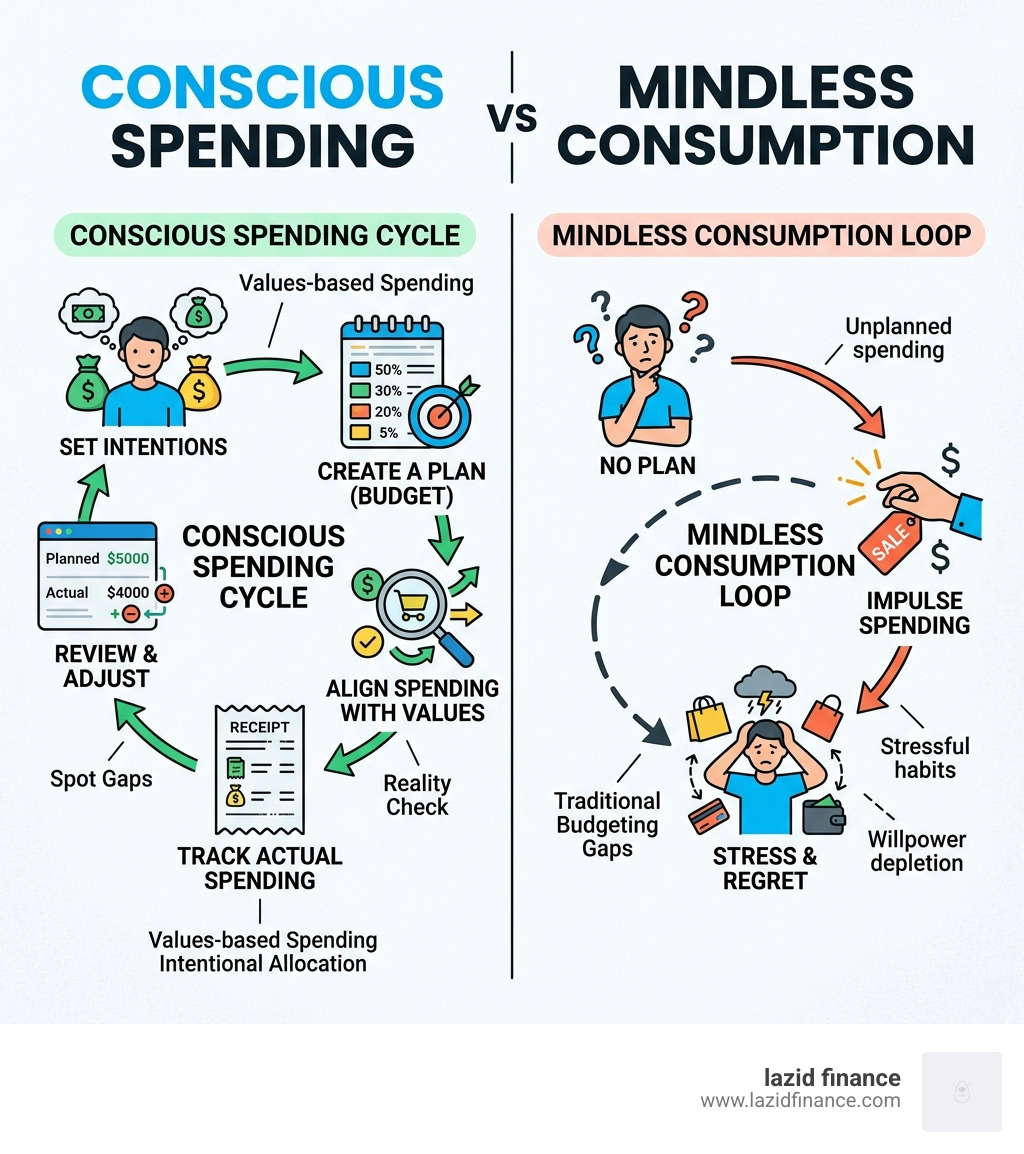
Conscious Spending vs. Traditional Budgeting: Why the Old Way Fails
At Lazid Finance, we often see people approach us after years of “budgeting burnout.” They’ve tried the spreadsheets, the tiny line items for “laundry detergent,” and the guilt of overspending by $4 on a latte. Traditional budgeting fails because it focuses on restriction, which eventually leads to willpower depletion.
Think of a traditional budget like a crash diet. You tell yourself you can’t have anything “fun,” and eventually, you snap and binge-spend. This is where mental budgeting and conscious spending plans (CSP) offer a breath of fresh air. Instead of nickel-and-diming yourself, a CSP focuses on big-picture categories.
The research shows that people hate traditional budgets because they don’t account for the messiness of real life. As we look at the What I Learned From Tracking Every Dollar I Spent For 1 Year — The Conscious Potato, we see that while manual tracking can create awareness, it often becomes obsessive “pixel fucking” — a term for getting so lost in the tiny details of a spreadsheet that you lose sight of your “Rich Life.”
A conscious spending plan is a behavioral architecture. It recognizes that we are not machines. We have spending triggers—emotions or situations that make us want to open our wallets. By designing a system that automates the boring stuff and gives us permission to spend on the things we love, we stop fighting our own nature.
| Feature | Traditional Budget | Conscious Spending Plan |
|---|---|---|
| Primary Emotion | Guilt and Restriction | Freedom and Intentionality |
| Focus | Past mistakes (Tracking) | Future goals (Planning) |
| Complexity | High (Every penny) | Low (Four main buckets) |
| Success Rate | Low (Willpower-based) | High (System-based) |
The Science of Financial Well-being: Mental Budgeting and Self-Control
We aren’t just making this up to be nice; there is hard science behind why this works. Recent empirical research, including a notable study of 449 university students, has quantified exactly how these cognitive factors impact our bank accounts.
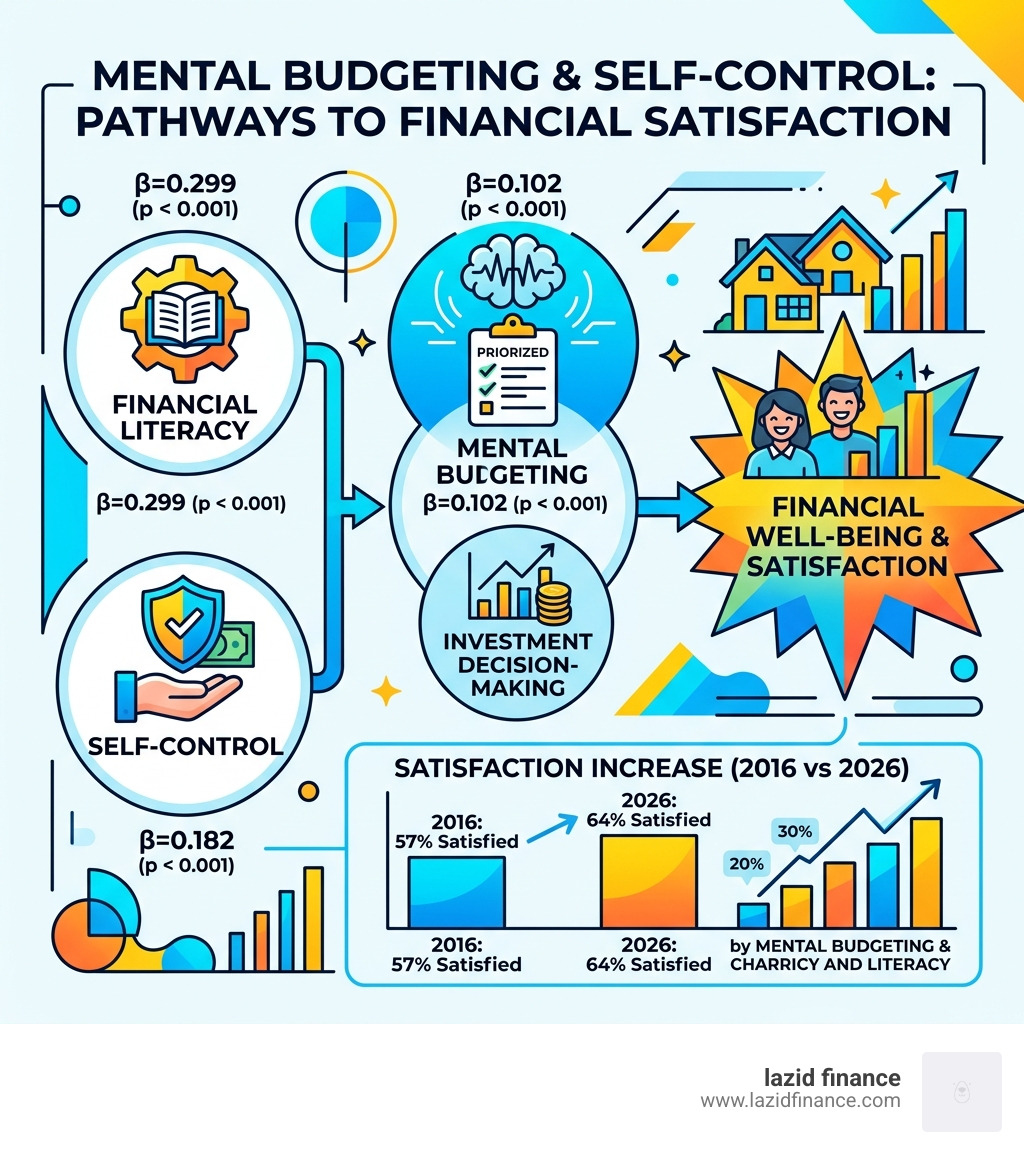
Scientific data reveals that financial literacy has a direct positive impact on financial well-being with a path coefficient of β = 0.299 (p < 0.001). But here is the kicker: mental budgeting — the cognitive process of organizing and tracking financial activities — also has a direct positive impact (β = 0.102, p < 0.001).
What does this mean for you in April 2026? It means that just the act of categorizing your money in your head (and your apps) makes you feel better and perform better financially. The study found that investment decision-making partially mediates this relationship. Basically, when you use a Conscious Spending Plan, you make better investment choices, which leads to higher financial satisfaction.
Self-control also plays a massive role, directly influencing well-being (β = 0.182, p < 0.001). Interestingly, 64% of people in recent surveys reported being satisfied with their finances, a jump from 57% in 2016. This shift is largely attributed to better financial literacy and the adoption of mental budgeting practices over rigid, old-school spreadsheets.
Analyzing Your Conscious Budget vs Actuals for Financial Clarity
In April 2026, financial clarity isn’t about knowing you spent $12.52 at the pharmacy. It’s about knowing if your conscious budget vs actuals are in alignment. This process is called variance analysis.
When we look at Budget vs. Actuals Analysis Explained: Key to Financial Clarity, we see that the goal is to identify why the numbers differ. Are your fixed costs higher than you thought? Is your discretionary income (the money left over after bills) lower than you expected?
We recommend the “85% solution.” Don’t try to get your actuals to match your budget perfectly. If you are within 15% of your targets, you are winning. Life is too short to worry about a $10 variance.
Identifying Trends in Your Conscious Budget vs Actuals
To truly master your money, you need to look for patterns. If you consistently overspend in your “Guilt-Free” category, don’t beat yourself up. Instead, use it as real-time feedback. Maybe you just value dining out more than you thought!
We suggest using two powerful tools to manage these trends:
- The 72-Hour Rule: If you see an “actual” expense that was an impulse buy over $100, implement a rule to wait 72 hours before similar future purchases.
- Life Energy Cost: Calculate how many hours you had to work to pay for that expense. If that $300 jacket cost you 10 hours of “life energy,” was it worth it?
According to Tracking Budget vs Actuals: The Key to Project Profitability – Bigsun, tracking these variances is the only way to ensure long-term profitability—whether for a business or your household.
Reconciling Your Conscious Budget vs Actuals Without Spreadsheets
You don’t need to be a bookkeeper to stay on track. We believe in “system design” over “manual labor.”
Start by defining your Worry-Free Number. This is an amount (say, $20) that you can spend on anything without even looking at your bank account. If it’s under $20, it doesn’t count against your “actuals” in a way that requires a meeting with yourself.
Next, identify your Guilt-Free Number. This is the total amount you have left each month after fixed costs, savings, and investments are covered. If your actual spending stays under this number, you are successful. Period. No “pixel fucking” required.
How to Implement a Conscious Spending Plan in 2026
Ready to build your own? In April 2026, the world is more expensive than it used to be, but the percentages for a healthy “Rich Life” remain remarkably stable. We recommend the following targets for your take-home pay:
- Fixed Costs (50-60%): This includes rent/mortgage, utilities, insurance, and minimum debt payments. If you live in a high-cost city, this might creep toward 70%, but try to keep it lower by auditing subscriptions and recurring costs.
- Investments (10%): This is for your future self. Think 401(k)s, IRAs, and index funds.
- Savings Goals (5-10%): This is for short-term stuff like vacations, an emergency fund (aim for 6-12 months of expenses), or a down payment.
- Guilt-Free Spending (20-35%): This is the fun part! Dining out, movies, and hobbies.
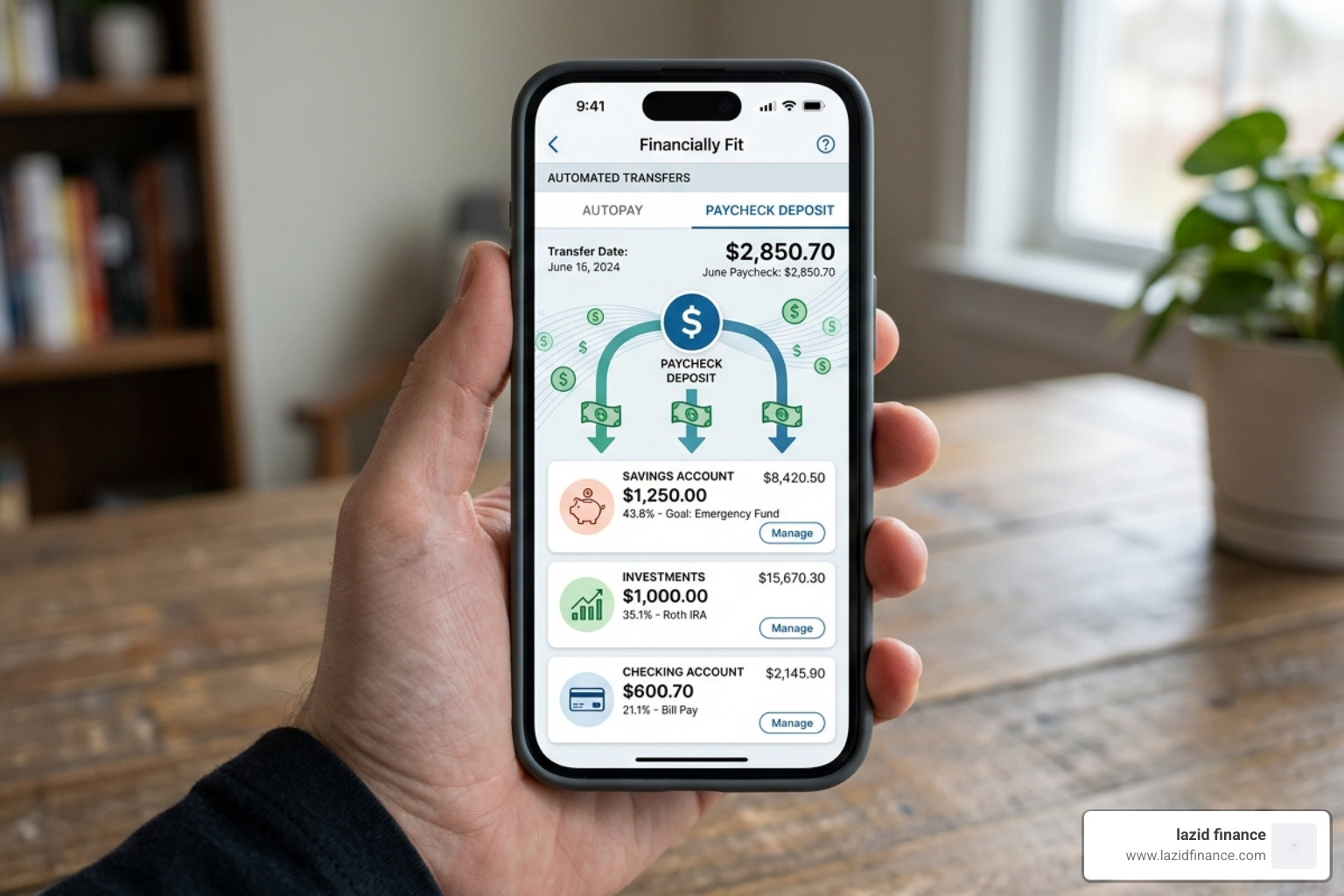
To make this work, you must automate. Set up transfers so that as soon as your paycheck hits, money flies into your investment and savings accounts. What’s left in your checking account is yours to spend. This turns your “actuals” into a self-regulating system.
We also suggest monthly “money dates.” Sit down for 30 minutes, grab a drink, and look at your conscious budget vs actuals. Did you hit your 10% investment goal? Great. Did you spend 40% on guilt-free fun? Maybe adjust next month.
Customizing Your Conscious Budget vs Actuals Categories
The secret to a plan you’ll actually stick to is values-based allocation. Instead of a category called “Dining Out,” call it “Connection.” If you value time with friends, you’ll feel better about spending that money.
- Audit Subscriptions: We often underestimate recurring charges. In April 2026, the average person has over 10 active subscriptions. Cancel the ones that don’t bring you joy.
- Friction Design: Make it hard to spend mindlessly. Delete retail apps from your phone and remove saved credit card info from browsers.
- Default Behaviors: Set your savings to “auto-pilot” so you don’t have to choose to save every month.
Frequently Asked Questions about Conscious Spending
What are the limitations of conscious spending for different demographics?
While a CSP is powerful, we recognize it isn’t a magic wand for everyone. For those in the lowest income brackets, “Fixed Costs” often consume 90% or more of take-home pay, leaving little room for “Guilt-Free” spending or investments. In these cases, the focus must first be on increasing income or seeking structural support before the 50/60/10/10/20 percentages become realistic.
How does self-control directly influence financial well-being?
As mentioned in the research, self-control has a direct path coefficient of β = 0.182. It acts as a buffer. However, the goal of a conscious spending plan is to reduce the need for self-control by using automation. If the money is moved to savings automatically, you don’t need self-control to avoid spending it—the money simply isn’t there to be spent!
Can I use a conscious spending plan with irregular income?
Yes! If you are a freelancer or contractor in 2026, we recommend using your “floor” income (the minimum you make in a bad month) to set your fixed costs. Any “bonus” money from good months should be split between your “Actuals” for savings and a “Guilt-Free” splurge.
Conclusion
Mastering your money isn’t about being a math whiz or a spreadsheet guru. It’s about being honest with yourself and aligning your dollars with your values. By comparing your conscious budget vs actuals, you stop guessing and start knowing.
At Lazid Finance, we provide smart finance solutions tailored for mindful choices. We believe that once your system is set up, you should spend less than one hour per month managing your money. That leaves you more time to actually live your Rich Life.
Ready to stop budgeting and start living? Start making conscious decisions with Lazid Finance and build a financial architecture that works for you, not against you.

