
How to track daily expenses without losing your mind
Why Most People Lose Hundreds of Dollars Every Month (And How to Stop)
A daily budget tracker is a tool — app, spreadsheet, or web-based — that records your income and spending every day so you can see exactly where your money goes.
Quick answer: How to start tracking daily expenses
- Choose a tracker (app, spreadsheet, or browser-based tool)
- Log every expense as it happens — even small ones like coffee
- Set a daily spending limit based on your income minus fixed bills
- Review your spending weekly to spot patterns
- Adjust your budget based on what you find
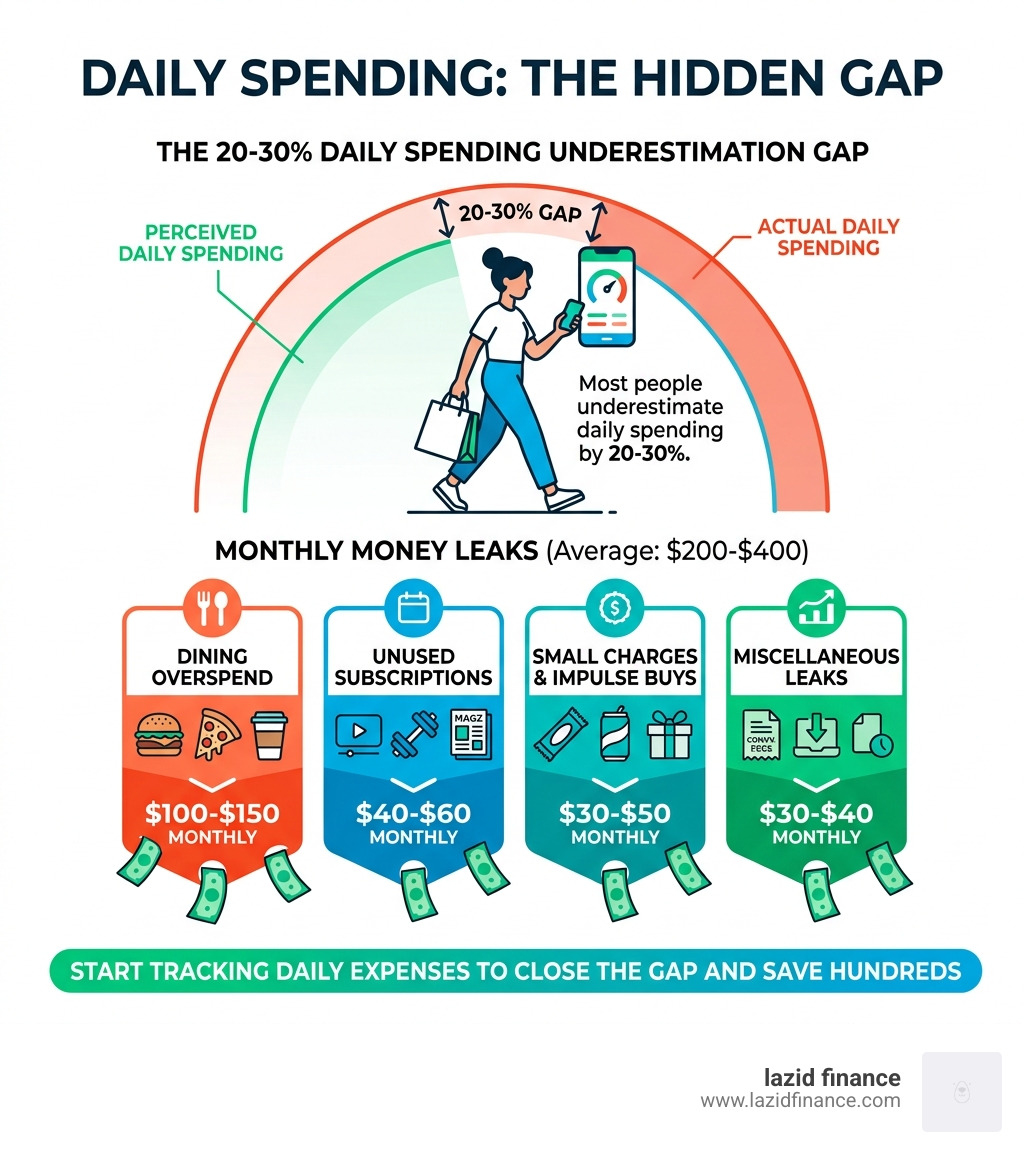
Here’s a number that stings a little: most people underestimate their daily spending by 20 to 30%.
That morning coffee. The lunch delivery. The impulse buy you forgot about by Tuesday. It all adds up — and most of us never see the full picture until it’s too late.
Research suggests the average person quietly leaks $200 to $400 every single month through unused subscriptions, dining overspend, and small charges that fly under the radar. That’s potentially $4,800 a year slipping through the cracks.
The fix isn’t complicated. It starts with awareness — and a simple system for tracking what you spend each day.
This guide walks you through exactly how to do that, without turning budgeting into a second job.
Why a daily budget tracker is essential for financial freedom
We often treat our bank balances like a surprise party—we peek through our fingers at the ATM, hoping there’s more left than we think. But financial freedom doesn’t come from guessing; it comes from knowing. A daily budget tracker acts as a financial awareness companion, turning the lights on so you can see exactly where your cash is going.
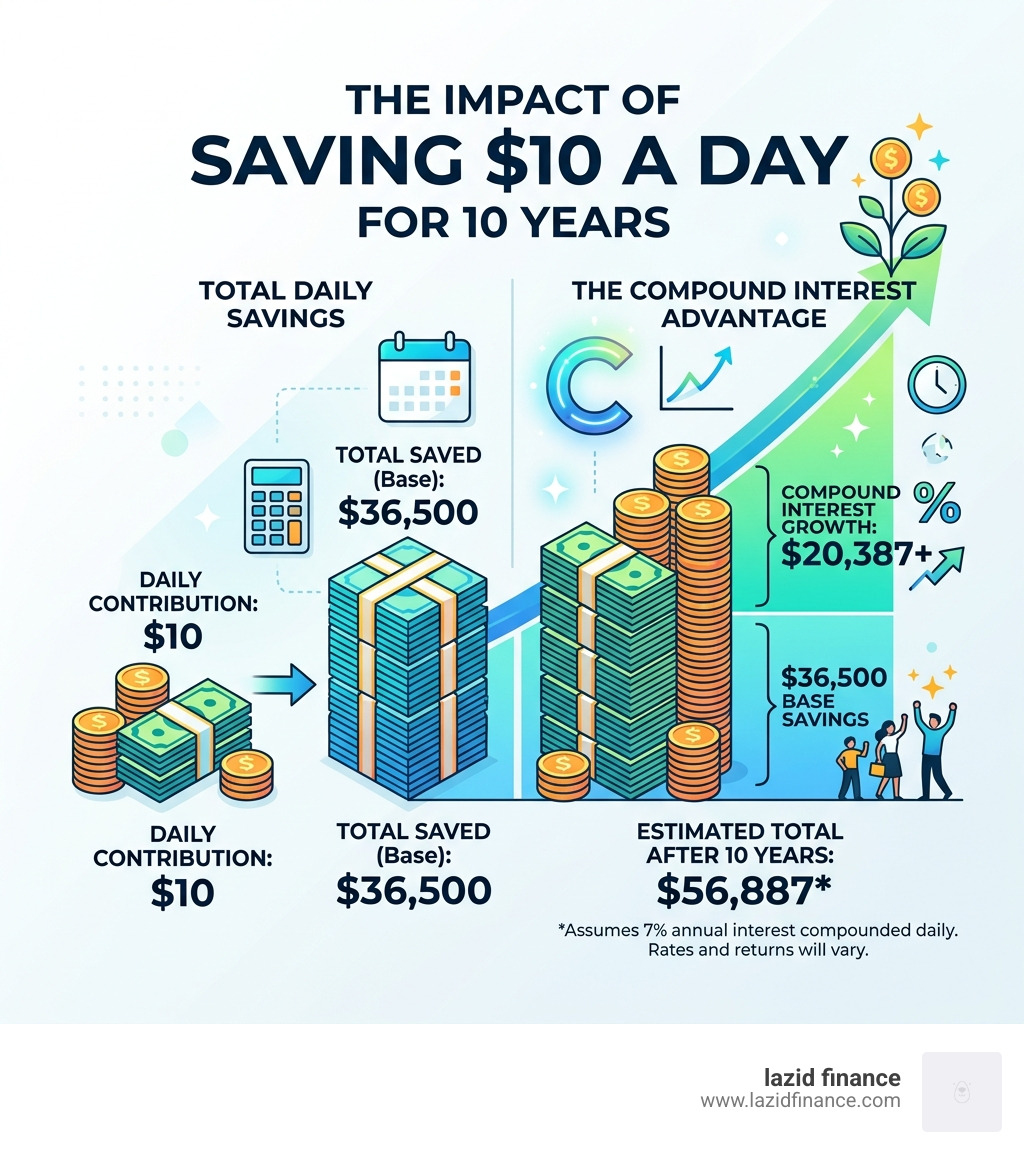
When we don’t track, we fall victim to “spending leaks.” As mentioned, these leaks often total $200-$400 monthly. To put that in perspective, saving just $40 a week by cutting back on unnecessary dining can add up to $2,000 in yearly savings. Over ten years, that same amount, if invested, could compound into nearly $9,000.
By identifying spending patterns—like the fact that many people spend 2.4 times more on Fridays than any other day—we can begin to form better habits. Tracking isn’t just about restriction; it’s about intentionality. It allows us to set realistic financial goals, whether that’s a vacation fund, an emergency stash, or a down payment on a home. When you use a daily budget tracker, you stop reacting to your bank statement and start directing your wealth.
Finding the right daily budget tracker for your lifestyle
The “best” tracker is the one you will actually use. For some of us, that’s a high-tech app that does the math for us; for others, it’s a simple, private tool that doesn’t require a login.
Digital apps vs. manual spreadsheets
In personal finance, the debate between automation and manual entry is heated. Manual spreadsheets, like those found in Microsoft Excel, are fantastic for customization. They come pre-populated with formulas and are often free. However, they require discipline. You have to remember to sit down and type in your data, which can feel like a chore.
Digital apps, on the other hand, focus on streamlining your workflow. Many allow you to link accounts from thousands of financial institutions, providing real-time updates and automatic transaction categorization.
| Feature | Manual Spreadsheet | Automated App |
|---|---|---|
| Setup Time | High (Customization) | Low (Syncing) |
| Data Entry | Manual | Automatic/One-tap |
| Privacy | High (Local file) | Variable (Cloud-based) |
| Real-time Updates | No | Yes |
| User Experience | Functional | Intuitive/Visual |
Privacy-first online tools and local storage
If you are wary of linking your bank accounts or sharing your data with a cloud server, you aren’t alone. Privacy is a major concern in April 2026. This is where browser-based tools with 100% local storage shine.
Some tools offer a no-login-required experience. Your data stays entirely on your device’s browser. This maintains financial anonymity while still providing the convenience of a digital interface. These tools are often mobile-responsive, meaning you can log that $5 latte while standing at the counter without ever creating an account or risking a data breach.
Must-have features for modern expense management
Budgeting has come a long way from the old “pen and paper” days. Modern tools now offer features that do the heavy lifting for you.
AI-powered insights in your daily budget tracker
Artificial Intelligence is no longer just for sci-fi. In the realm of budgeting, AI-powered assistants can generate personalized budgets based on a few simple questions about your lifestyle. These tools use AI categorization to learn your spending habits over time, often reaching 97% accuracy in identifying where your money went.
Predictive alerts are another game-changer. Imagine getting a notification before you overspend, warning you that your current pace will leave you short for rent at the end of the month. These smart budgets calculate your “allowable” daily spending automatically, helping you stay within your limits without needing a calculator.
Advanced functionalities for holistic wealth
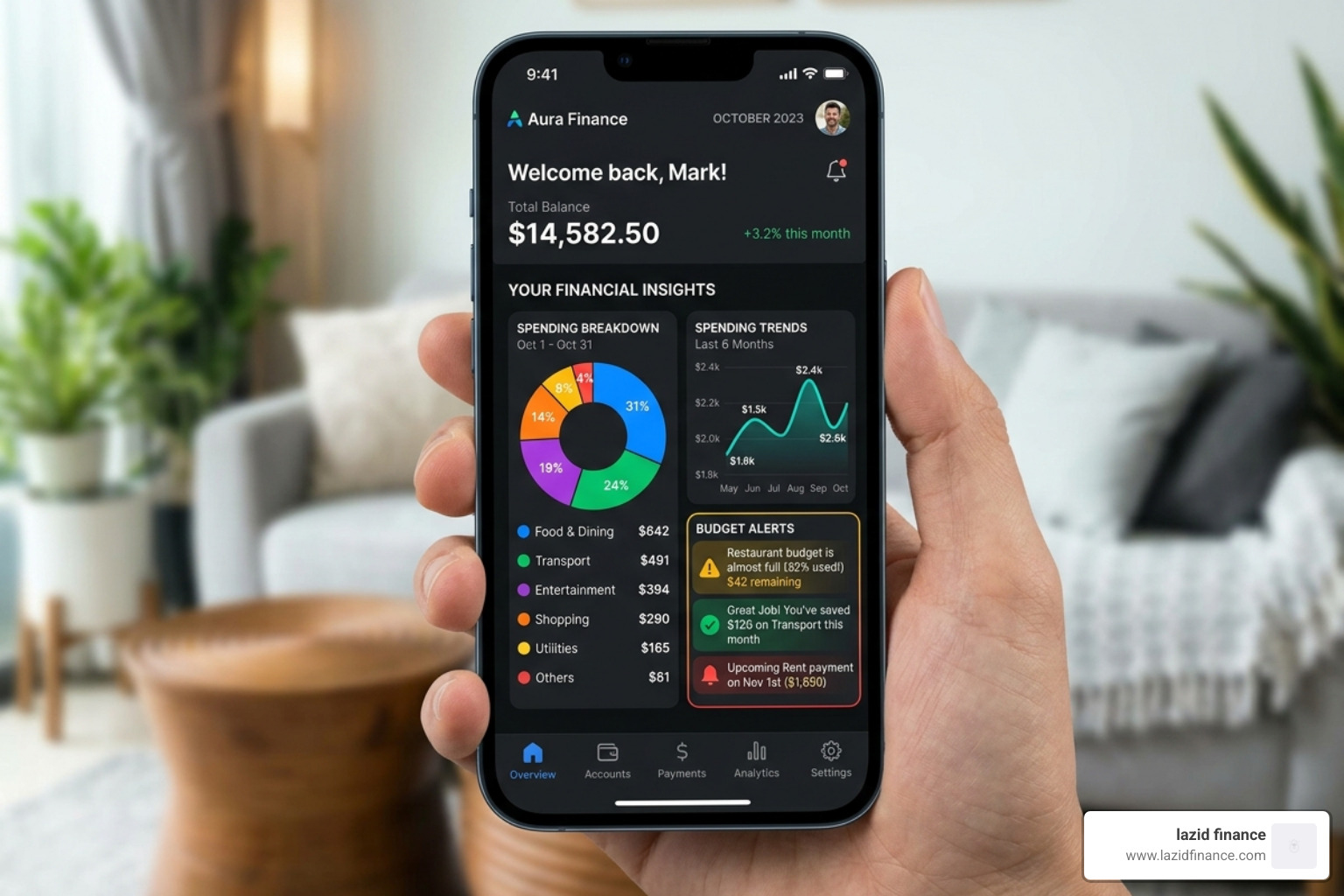
A great daily budget tracker should look beyond just your checking account. To get a true picture of your financial health, look for features that track:
- Net Worth: This combines your assets (cash, investments, real estate) and liabilities (debts, loans) into one number.
- Crypto Portfolios: Some advanced trackers now support over 20,000 coins with real-time price updates.
- Shared Budgeting: Perfect for couples or roommates, shared budgeting apps allow you to sync and share “virtual envelopes” so everyone is on the same page.
- Multi-currency Support: Essential for travelers, expats, or digital nomads managing money across different borders.
Practical tips to track daily expenses consistently
The secret to budgeting isn’t math—it’s consistency. If you only track your expenses once a month, you’ve already lost the battle. Here is how we recommend staying on top of it.
Mastering the “safe to spend” method
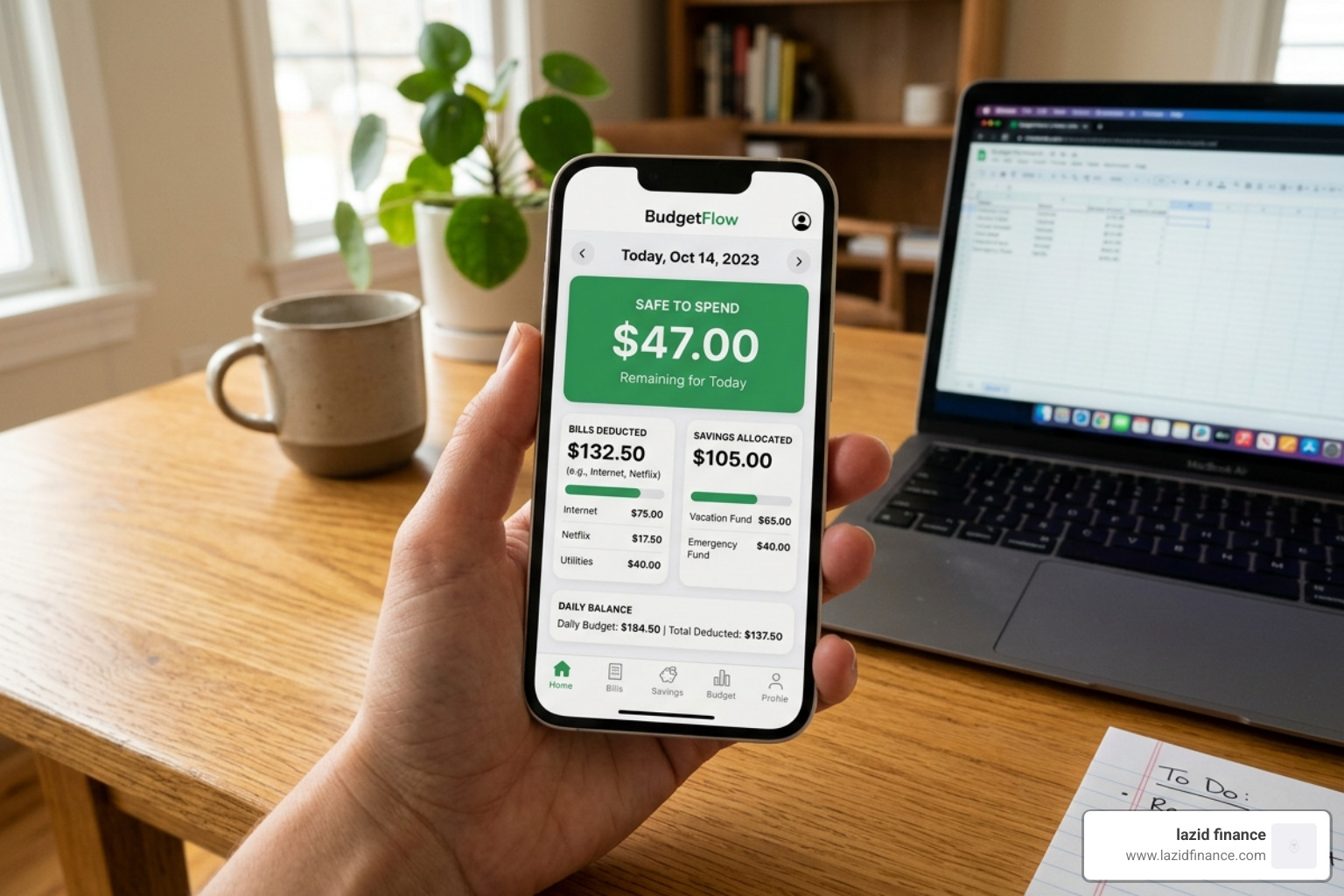
One of the most effective ways to manage daily life is the “Safe to Spend” (or Surplus) method. Instead of looking at your total bank balance, you calculate a single daily number.
The Formula: (Monthly Income – Fixed Bills – Debt Payments – Savings Goals) / Days Remaining in Month = Your Daily Safe-to-Spend Number.
By anchoring your budget to your actual income and subtracting the “must-haves” first, you know exactly what’s left for “wants.” If your number is $30 and you spend $50 today, you simply know you have a little less to spend tomorrow. This prevents the “overspending spiral” and keeps your financial health score high.
Building a 30-day logging streak
Research shows that if you can make it to 30 days of consistent logging, you are 73% more likely to stick with the habit long-term.
- Log Immediately: Use “Quick Log” features to enter expenses in 4 seconds or less. Do it at the cash register.
- Receipt Scanning: Use tools with OCR (Optical Character Recognition) to snap a photo of your receipt and let the app extract the data.
- Notification Alerts: Set a daily reminder for 8:00 PM to catch any expenses you missed during the day.
- Weekly Reviews: Spend 10 minutes every Sunday reviewing your “wins” and “leaks.”
Security and privacy considerations for financial tools
When choosing a daily budget tracker, security should be your top priority, especially if you plan to link your bank accounts. Look for tools that use 256-bit encryption, which is the same level of security used by major banks.
If an app uses a service like Plaid to connect to your bank, ensure it is read-only access. This means the app can see your transactions to categorize them, but it cannot move your money or change your account settings. Additionally, check the company’s data-selling policy. At Lazid Finance, we believe your financial data belongs to you, not to advertisers. Always opt for tools that offer multi-factor authentication (MFA) and features like FaceID or TouchID for an extra layer of protection on your mobile device.
Frequently Asked Questions about daily budgeting
How much do budget trackers typically cost?
Most trackers offer a “freemium” model. You can usually access basic manual tracking and simple reporting for free. Subscription plans (often ranging from $2.49 to $7.50 per month) typically provide advanced features like automatic bank syncing, AI insights, and shared accounts. For those on a strict budget, free browser-based tools or Excel templates are excellent starting points.
Is it safe to link my bank account to a tracker?
Yes, provided the app uses reputable aggregators and bank-level encryption. However, if you are uncomfortable with this, many of the best tools allow for manual data entry or CSV imports, giving you the benefits of the app without the direct link.
How do I handle irregular income or side hustles?
If your income fluctuates, budget based on your “baseline” (the minimum you expect to earn). Anything earned above that from side hustles can be treated as a “surplus” to be directed toward debt or savings goals. Some apps specifically allow you to adjust your budget month-to-month to account for these changes.
Conclusion
Tracking your daily expenses doesn’t have to be a headache. Whether you prefer the automation of a modern app or the privacy of a local browser tool, the goal is the same: clarity.
At Lazid Finance, we are dedicated to providing intelligent financial tools for conscious decisions. We believe that when you understand your spending, you regain the power to choose how your life unfolds. By closing those $400-a-month leaks and mastering your daily “safe to spend” number, you aren’t just managing money—you’re building a future.
Start your journey toward mindful money management

