
Why You Must Track Income and Expenses for Financial Health
? How to Track Income and Expenses
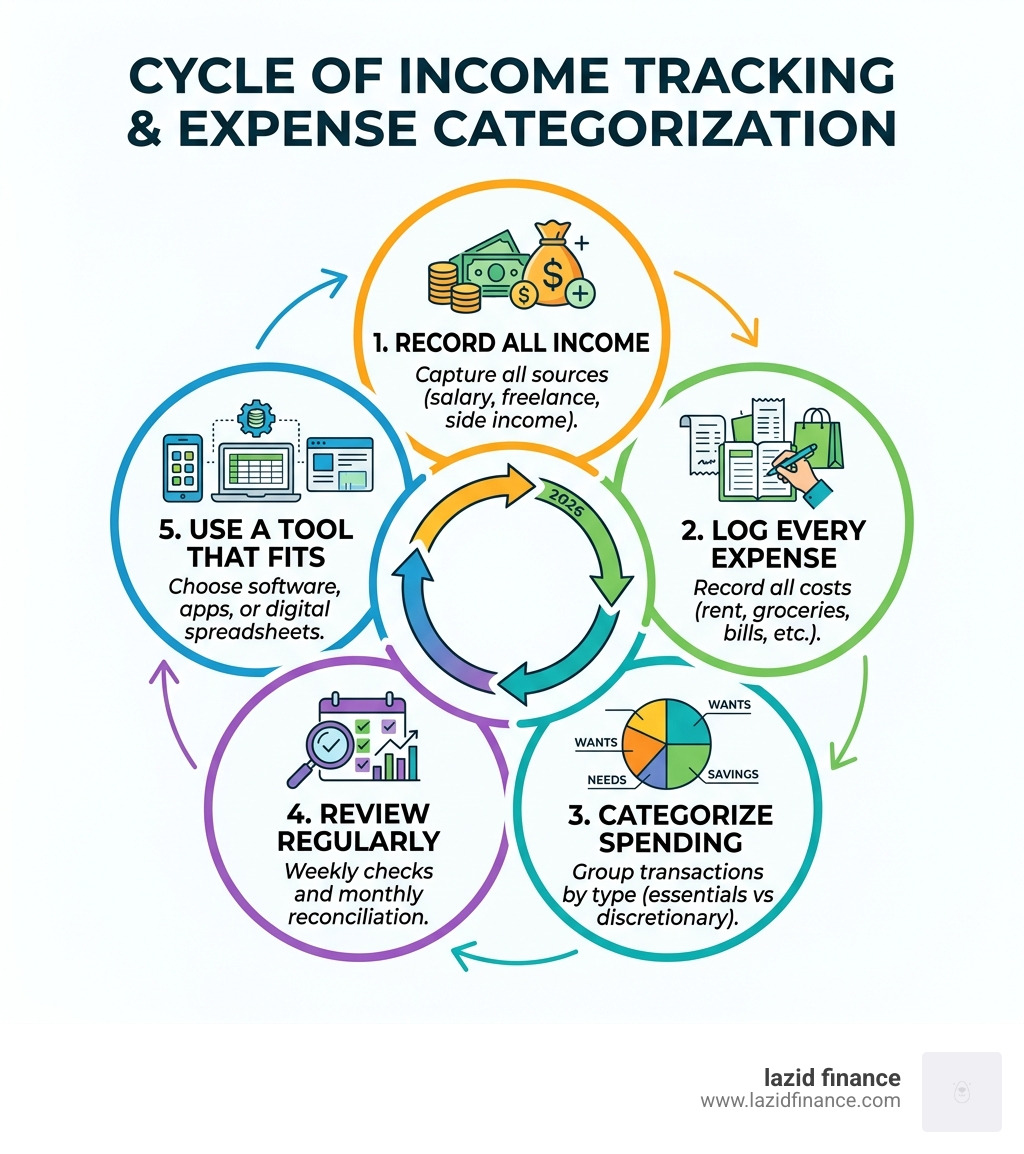
To track income and expenses effectively, follow these core steps:
- Record all income – note every source, including salary, freelance work, and side income
- Log every expense – fixed costs like rent, and variable ones like groceries or subscriptions
- Categorize your spending – group transactions into needs, wants, and savings
- Review regularly – check weekly and reconcile monthly against your bank statements
- Use a tool that fits you – an app, spreadsheet, or dedicated software like Lazid Finance
You check your bank account mid-month and wonder where it all went. Sound familiar?
Most people have a rough idea of what they earn. But expenses? That’s where things get fuzzy. A streaming service here, a lunch there, a “I don’t even remember buying that” charge somewhere else.
The gap between what you think you spend and what you actually spend is often startling.
The good news: you don’t need to be a finance expert to fix this. Tracking your money — both what comes in and what goes out — is one of the most powerful habits you can build. It takes less time than most people expect, and the clarity it brings is immediate.
Small business owners spend roughly 36% of their week on financial admin tasks. For individuals, the cost is different but just as real: it shows up as missed savings goals, surprise debt, and the nagging feeling that your money isn’t working for you.
This guide walks you through exactly how to change that.
At Lazid Finance, we believe that financial health isn’t just about how much you earn; it’s about how much you keep and how purposefully you spend it. When we don’t track income and expenses, we are essentially flying a plane without a dashboard.
Tracking provides a “truth serum” for your finances. It reveals patterns that are impossible to see when you’re just glancing at your bank balance. For instance, you might discover that those “small” $15 monthly subscriptions are actually costing you hundreds per year, or that your dining out habit is the primary reason you haven’t reached your vacation savings goal.

Beyond personal awareness, tracking is essential for several practical reasons:
- Debt Reduction: You cannot create an aggressive debt payoff plan if you don’t know how much “extra” money is available at the end of the month.
- Tax Preparation: Come April 2026, you’ll want your records organized. For freelancers and business owners, tracking ensures you don’t miss out on deductible expenses that could save you thousands.
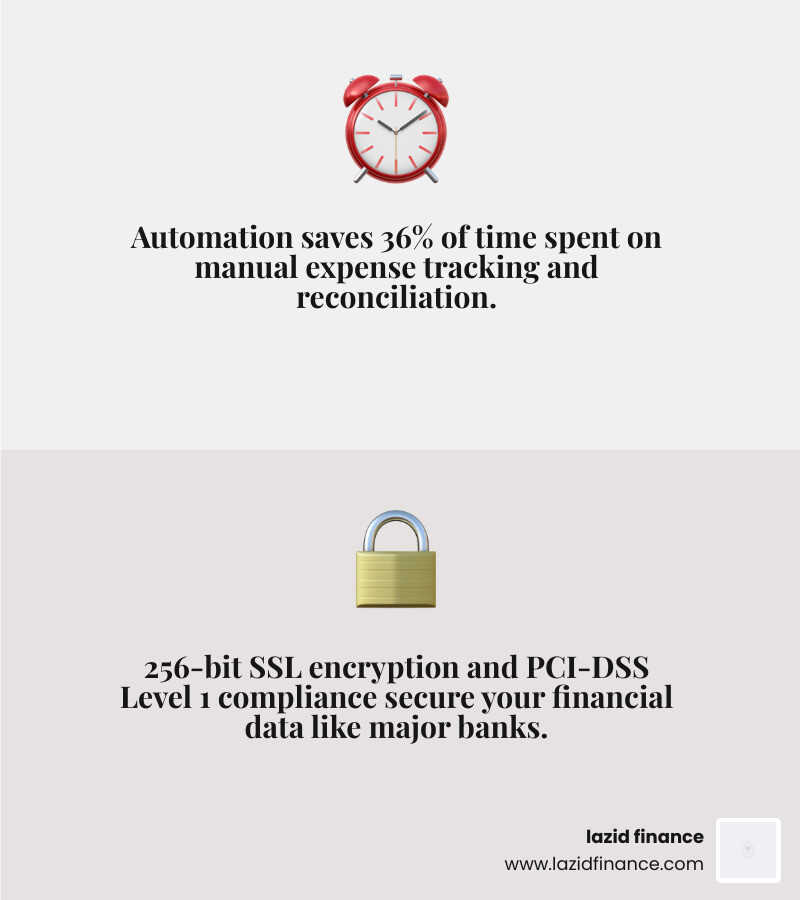
- Time Savings: While it feels like an “admin task,” using Efficient Expense Tracking – Lazid Finance can actually save you time. Research shows small business owners spend 36% of their week on admin; automation slashes this significantly, giving you back hours of your life.
- Savings Goals: Whether it’s a house deposit or retirement, tracking allows you to “pay yourself first” by ensuring your money is allocated to your priorities before it leaks away on impulse buys.
Essential Steps to Track Income and Expenses Effectively
Getting started doesn’t require a degree in accounting. It requires a system. To track income and expenses effectively, we recommend a structured approach that moves from high-level income down to the granular details of your spending.
First, determine your net income. This isn’t your gross salary; it’s the actual amount that hits your bank account after taxes, insurance, and retirement contributions. If you have multiple streams of income—like freelance gigs, rental income, or side hustles—make sure to log these as they arrive.
Next, you need a framework for your spending. Popular methods include:
- The 50/30/20 Rule: Allocating 50% to needs, 30% to wants, and 20% to savings or debt repayment.
- Envelope Budgeting: A traditional method (now available digitally) where you “stuff” virtual envelopes with specific amounts for different categories.
- Zero-Based Budgeting: Giving every single dollar a job so that your income minus your expenses equals exactly zero.
| Feature | 50/30/20 Rule | Zero-Based Budgeting |
|---|---|---|
| Complexity | Low – Broad categories | High – Every dollar tracked |
| Flexibility | High – Great for beginners | Low – Requires strict discipline |
| Best For | General financial health | Aggressive debt payoff/savings |
| Goal | Balanced lifestyle | Maximum efficiency |
Categorizing Your Spending for Meaningful Insights
Data is only useful if it’s organized. If you see a $4,000 total at the end of the month but don’t know where it went, you can’t make informed decisions. We suggest breaking your expenses into two main buckets:
- Fixed Costs: These are consistent and predictable, such as rent/mortgage, utilities, insurance, and debt payments.
- Variable Expenses: These fluctuate based on your choices, like groceries, entertainment, travel, and dining out.
For a deeper dive, use the Lazid Finance Dashboard to implement nested tags. This allows you to see, for example, not just “Food,” but how much of that was “Groceries” vs. “Fine Dining.” Visual spending breakdowns—like circular or line charts—help you spot “expense drift” before it becomes a crisis.

Reconciling Data to Track Income and Expenses Accurately
The biggest pitfall in tracking is the “missing transaction.” To track income and expenses with 100% accuracy, you must reconcile your tracked data with your bank statements.
Modern tools can link with over 17,000 financial institutions, providing a centralized view of your transactions. However, technology isn’t perfect. We recommend a “Weekly Review” where you:
- Check for double-billings or errors.
- Ensure AI has categorized transactions correctly (e.g., making sure that Costco trip was “Groceries” and not “Office Supplies”).
- Confirm that all income sources have been received.
Modern Tools: Automation, Apps, and Security
In 2026, manual entry is largely a thing of the past. Automation has transformed how we track income and expenses, making it easier to stay consistent.
SmartScan and OCR (Optical Character Recognition) allow you to simply snap a photo of a receipt. The software automatically extracts the date, merchant, and amount, attaching the digital image to the transaction. This is a lifesaver for audits and tax season.
The Role of AI and OCR in Financial Management
AI-powered “Concierge” services now act as your personal financial assistant. They can:
- Automate Categorization: Learning from your habits to tag recurring expenses.
- Flag Policy Violations: For business users, AI can catch expenses that don’t meet company guidelines.
- Real-Time Alerts: Notifying you the moment you’re about to exceed a category budget.
- Identify Subscriptions: Highlighting recurring charges you might have forgotten to cancel.
How to Track Income and Expenses Across Multiple Currencies
For the digital nomad, frequent traveler, or international freelancer, tracking becomes complex when multiple currencies are involved. You need a tool that doesn’t just record the number, but understands the value.
Using Multi-Currency Support – Lazid Finance, you can manage transactions in over 100 currencies with live conversion rates. This ensures your “Total Net Worth” and “Monthly Spending” reports are accurate regardless of where in the world you spent the money.
Frequently Asked Questions about Financial Tracking
What are the most common mistakes to avoid when tracking?
The most frequent error is inconsistency. Tracking for three days and then stopping for two weeks makes the data unreliable. Other mistakes include:
- Ignoring Cash: Small cash purchases add up. If you use cash, log it immediately.
- Forgetting “Invisible” Subscriptions: Always check your bank statement for automated monthly drafts.
- Manual Entry Errors: Transposing numbers (e.g., $54 instead of $45) can throw off your entire reconciliation.
Is it better to use a spreadsheet or a dedicated app?
It depends on your personality. Spreadsheets (like Excel or Google Sheets) offer ultimate customization and are often free. They are great for people who love data manipulation. However, dedicated apps provide automation, bank syncing, and mobility that spreadsheets can’t match.
From a security standpoint, ensure any app you use employs 256-bit SSL encryption and is PCI-DSS Level 1 compliant. This ensures your financial data is as secure as it would be with a major bank.
How often should I reconcile my accounts?
We recommend a “10-minute weekly check-in.” This is frequent enough that you’ll remember what your purchases were, but not so frequent that it feels like a chore. At the end of the month, do a deeper “Monthly Audit” to see if you stayed within your 50/30/20 or envelope limits.
Conclusion
The journey to financial freedom doesn’t start with a massive windfall; it starts with a simple choice to pay attention. When you track income and expenses, you stop being a passive observer of your bank account and start becoming the architect of your future.
Whether you are an individual looking to save for a dream, a freelancer managing a global client base, or a small business owner trying to reclaim 36% of your work week, the tools available in April 2026 make financial clarity more accessible than ever.
At Lazid Finance, we provide the smart solutions you need to make mindful choices. Don’t let another month go by wondering where your money went. Take control today.
More info about financial tools

