
Stop your wallet from leaking with a weekly savings planner
Why Your Wallet Keeps Leaking (And How a Weekly Savings Planner Fixes It)
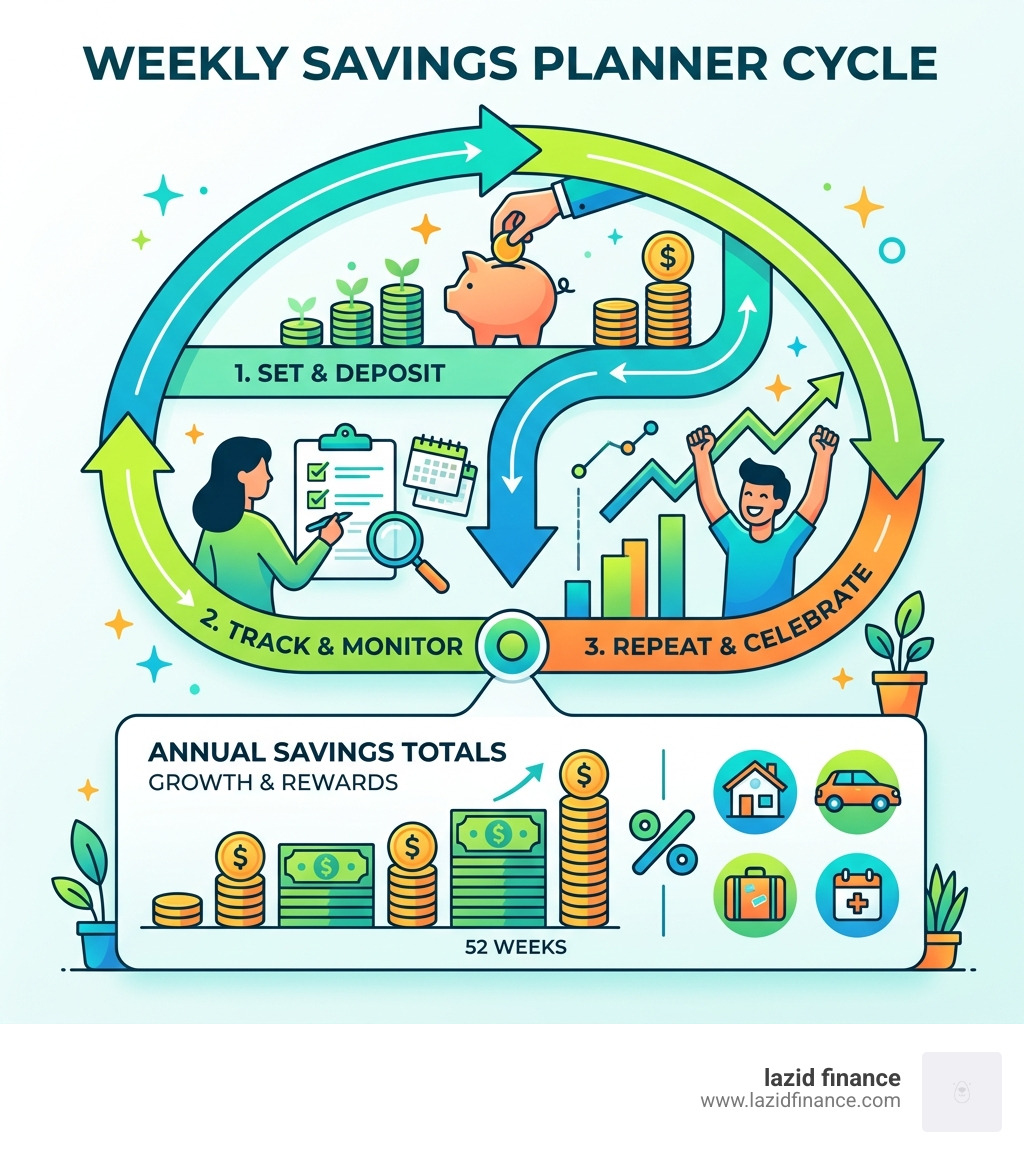
A weekly savings planner is a structured tool that helps you set, track, and hit savings goals on a week-by-week basis — instead of waiting until the end of the month to see where your money went.
Here’s how a weekly savings planner works at a glance:
- Set a weekly savings target — even $1 to start
- Track every deposit using a printable chart, app, or notebook
- Check off each week as you hit your goal
- Scale up gradually — small wins build real momentum
- Reach a meaningful total — the classic approach saves $1,378 in one year
Most people budget monthly. But by the time you review the numbers, the damage is already done. The money has leaked out — on forgotten subscriptions, impulse buys, or just the quiet drain of daily spending.
Weekly planning changes that. It gives you shorter feedback loops — so you catch problems early, not 30 days too late.
The math is also surprisingly encouraging. The classic 52-week savings challenge starts at just $1 in week one and increases by $1 each week. By week 52, you’ve saved exactly $1,378 — without ever feeling a dramatic pinch.
Small, consistent actions beat big, irregular ones every time.
And if $1,378 sounds modest, scaling the weekly increment to $5 pushes that total to $6,890 by year’s end. The structure stays the same — only the numbers change.
Whether you prefer a printed tracker on your fridge, a budgeting app on your phone, or a beautifully designed paper planner, a weekly savings system works because it turns saving from a vague intention into a concrete weekly habit.
Why a Weekly Savings Planner Beats Monthly Budgeting
We have all been there: it’s the 20th of the month, and you’re already checking the couch cushions for spare change. Traditional monthly budgeting often feels like a “doomsday” review. You look back at four weeks of spending and realize you overspent on takeout in week one, leaving you strapped for the rest of the month.
A weekly savings planner flips the script. Instead of a 30-day marathon, you are running a series of 7-day sprints. This shorter timeframe aligns better with how we actually live and spend. Think about it—most of our social plans, grocery trips, and gas station stops happen on a weekly rhythm. By planning weekly, we create an immediate feedback loop. If you overspend on Tuesday, you can catch it by Thursday and adjust, rather than finding out three weeks later.
The psychological momentum of a weekly system is its greatest strength. When you use The 52-Week Savings Plan Printable Chart – Mommysavers , you get the satisfaction of “checking off” a win every seven days. This builds “financial self-efficacy”—the belief that you actually can manage your money.
At Lazid Finance, we believe in making conscious decisions. Our mission, which you can learn more about on our Sobre Nós page, is to provide tools that turn these small weekly wins into long-term security. By breaking your “Safe-to-Spend” amount down into a weekly number, you remove the ambiguity that leads to “wallet leaks.”

Popular Challenges for Your Weekly Savings Planner
If you’re looking to add some structure to your savings, a challenge is the perfect way to gamify the process. Humans love finishing things, and a savings challenge provides a clear finish line. Here are the most popular variations we see people using in April 2026:
- The 52-Week Classic: You start with $1 in week one, $2 in week two, and so on. It’s the ultimate “low-barrier” entry to saving.
- The Reverse Challenge: You start with $52 in week one and work your way down to $1. This is fantastic if you have high motivation right now or want to get the “hard part” over with while you have the extra cash.
- The Biweekly (26-Week) Plan: Perfect for those who want to align their savings directly with their paychecks. You save every two weeks, which simplifies the transfer process for many.
- The Flexible/Pick-Your-Week: You print a tracker with all 52 amounts and pick which one to pay based on how your week went. Had a bonus? Pay the $52. Had an unexpected car repair? Pay the $1.
To help you decide which path to take, we’ve put together a comparison of what you can realistically save over a year:
| Challenge Type | Weekly Increment | Total Annual Savings |
|---|---|---|
| Classic 52-Week | +$1 each week | $1,378 |
| Double Scale | +$2 each week | $2,756 |
| Aggressive Saver | +$5 each week | $6,890 |
| Half-Scale (Budget) | +$0.50 each week | $689 |
| Flat $100 Challenge | Fixed $100/week | $5,200 |
For those who want to calculate their own custom goals, using a 52-Week Money Saving Challenge Tracker (Free Printable + Calculator) can help you visualize exactly how much you’ll have for that vacation or emergency fund by December.
Mastering the Classic 52-Week Savings Planner
The beauty of the classic plan is that it conditions your “savings muscle” over time. In the beginning, you won’t even notice the money is gone. By the time you reach week 30 or 40, you’ve already built the habit, making the larger deposits feel much more manageable.
To succeed with the classic method, we recommend using a 52 Week Money Saving Challenge + Printable Sheet and sticking it somewhere visible, like your refrigerator or your bathroom mirror. The physical act of crossing off a week creates a dopamine hit that keeps you coming back. It’s not just about the $1,378; it’s about the fact that you showed up for yourself 52 times.
Customizing Your Weekly Savings Planner for Irregular Income
If you are a freelancer, a gig worker, or someone with a fluctuating paycheck, the “fixed increment” model can feel intimidating. What happens if you have a “zero-income” week?
This is where the flexible mode shines. Instead of following a strict $1, $2, $3 order, you look at your tracker as a menu. On a high-earning week, cross off the $50, $51, and $52 spots. On a lean week, just do the $1 or $2. The goal is to cross off every bubble by the end of the year, regardless of the order.
For those paid every other week, a 26 Week Money Saving Challenge – Biweekly Custom Printable allows you to set higher biweekly targets that match your cash flow, ensuring you never feel “behind” just because your pay cycle doesn’t match the calendar week.
How to Start Your Weekly Savings Challenge in 10 Minutes
We often overcomplicate things. We think we need seventeen apps and a degree in accounting to start saving. In reality, you can set up a robust weekly savings planner in the time it takes to brew a pot of coffee.
Step 1: Define Your “Why” Are you saving for a $1,000 emergency fund? A 2027 summer vacation? Or maybe a “joy fund” for guilt-free spending? Giving your money a name makes you less likely to “borrow” from it later.
Step 2: Choose Your “Vault” Don’t keep your challenge money in your main checking account. It will get spent. Open a dedicated high-yield savings account. In April 2026, many digital-only banks offer great rates and allow you to “bucket” your savings so you can see your challenge progress separately from your other funds.
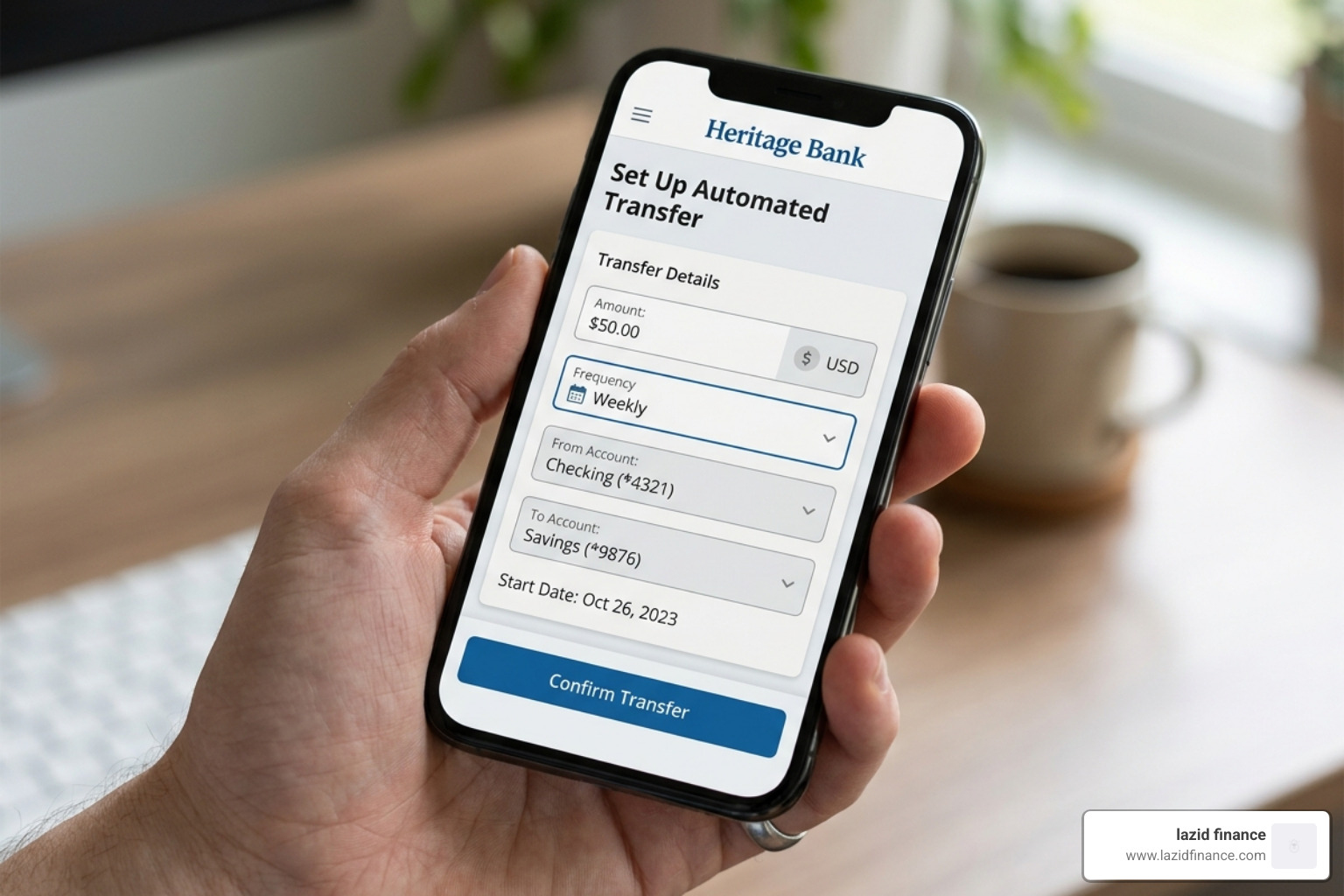
Step 3: Automate or Set a “Money Date” If you have a steady income, set up an automated transfer for your weekly amount. If you prefer the manual “pick-your-week” style, set a recurring alarm on your phone for Friday morning. Tie this habit to something you already do—like drinking your Friday coffee or checking your email.
Step 4: Grab Your Tracker Whether it’s a digital app or a printable chart, have your tracking method ready. If you run into any technical issues or need advice on which tool fits your specific goals, Contate Nos for guidance.
Digital vs. Paper: Choosing the Right Tracking Method
The “best” weekly savings planner is the one you will actually use. Both digital and paper methods have unique psychological benefits.
The Case for Paper (The Tangible Approach)
There is a growing movement toward “slow finance.” Using physical planners, like those from Ivory Paper Co or Erin Condren, creates a tactile experience that digital apps can’t replicate.
- Mindfulness: Writing down your spending and savings by hand forces you to slow down and acknowledge the transaction.
- Privacy: No data sharing, no targeted ads, and no security breaches. Just you and your notebook.
- Visual Satisfaction: Seeing a page full of stickers or checkmarks provides a sense of accomplishment that a digital progress bar often lacks. You can find many Free and customizable budget templates on Canva to print and put in a binder if you aren’t ready to invest in a premium leather-bound planner yet.
The Case for Digital (The Efficient Approach)
If you are someone who loses a piece of paper the moment it’s printed, digital is your best friend.
- Automation: Apps like Goodbudget or the Weekly app can sync with your bank accounts to track spending in real-time.
- Safe-to-Spend: These tools often calculate a single “Safe-to-Spend” number for the week, accounting for your bills and savings goals automatically.
- Portability: Your budget is always in your pocket. You can check if you have enough for that extra pair of shoes while you’re standing in the store.
Frequently Asked Questions about Weekly Savings
Can I start a weekly savings planner mid-year?
Absolutely! You don’t need a New Year’s resolution to start building wealth. If you are starting in April 2026, you can simply start at Week 1 and run your challenge through next April. Alternatively, you can “double up” for a few weeks to catch up to the current calendar week. The best time to start was yesterday; the second-best time is today.
What should I do if I miss a week?
Don’t quit! This is the most common mistake. If you miss a week, you have three options:
- The Double-Up: Save twice the amount next week.
- The Extension: Just pick up where you left off and finish the challenge a week later.
- The Forgiveness: Skip that week entirely and keep going. Saving 51 weeks out of 52 is still a massive win.
How do I combine weekly savings with a no-spend challenge?
This is a high-octane way to boost your results. During a “No-Spend Month” or “No-Spend Week,” you commit to only spending on essentials (rent, groceries, gas). Any money you would have spent on coffee, clothes, or entertainment gets funneled directly into your weekly savings planner. It’s like putting your savings on steroids!
Conclusion
Stopping your wallet from leaking isn’t about deprivation; it’s about direction. When you use a weekly savings planner, you are giving every dollar a job and ensuring that your hard-earned money is going toward things that actually matter to you.
Whether you’re starting with the classic 52-week challenge to save $1,378 or aiming for an aggressive $5,000 goal, the secret is consistency. At Lazid Finance, we are dedicated to helping you make those mindful choices. Our Lazid Finance Home page is full of resources designed to simplify your financial life.
Lazid Finance provides intelligent financial tools for conscious decisions. We operate in the personal finance industry with a simple USP: Smart finance solutions tailored for mindful choices. Start your weekly journey today, and by this time next year, you’ll be amazed at what those small weekly deposits have become.

