
The Ultimate Retirement Savings Planner Guide for Millennials and Beyond
What Is a Retirement Savings Planner and How Does It Work?
A retirement savings planner is a tool that helps you figure out how much money you need to save — and by when — so you can retire on your own terms.
Here’s a quick overview of how it works:
| Step | What You Do |
|---|---|
| 1. Enter your basics | Current age, income, and existing savings |
| 2. Set your goal | Target retirement age and monthly spending estimate |
| 3. Review projections | See if your current savings rate gets you there |
| 4. Adjust assumptions | Tweak return rates, inflation, and salary growth |
| 5. Add income sources | Include Social Security, pensions, or rental income |
The result? A clear picture of where you stand — and what you need to change.
Retirement planning can feel overwhelming, especially in your 20s or 30s when it seems so far away. But the math is unforgiving: starting late costs you far more than starting imperfect.
Consider this: putting away $5,000 a year starting at age 30 (at a 5% return) can grow to roughly $634,000 by age 70. Wait until age 50 to start, and that same effort yields only about $173,600 — less than a third. That’s the power of time.
Most experts recommend saving 10% to 15% of your pretax income for retirement. And research backs up the value of planning itself — people who actively plan for retirement are 54% more likely to live comfortably, and plan twice as likely to grow their overall net worth.
This guide walks you through everything you need to know to use a retirement savings planner effectively — from the inputs and assumptions to the account types, tax strategies, and common mistakes to avoid.
Why You Need a Retirement Savings Planner in 2026
As we navigate April 2026, the financial landscape has evolved. Relying on “vibe-based” saving is no longer enough. We need data-driven strategies. A retirement savings planner isn’t just a calculator; it’s a roadmap for your future self.
According to data from the CFP Board, people who plan are 54% more likely to live comfortably in retirement. Furthermore, statistics show that those who take the time to plan do 2.7 times better financially than those who don’t. Planning isn’t just about picking a number; it’s about building a strategy that accounts for life’s many variables.
When we use these tools, we aren’t just looking at a bank balance. We are looking at our net worth growth. In fact, 70% of proactive planners are more likely to grow their net worth over time because they understand the relationship between their current spending and their future freedom.

Essential Inputs for Your Retirement Savings Planner
To get an accurate projection from a retirement savings planner, you need to feed it high-quality data. If you put in “guesstimates,” you’ll get back “guesstimates.” Here are the non-negotiables:
- Current Age: This determines your “time horizon”—the number of years your money has to grow.
- Annual Household Income: Your pre-tax income is the baseline for calculating how much you can afford to save and how much you’ll need to replace later.
- Current Retirement Assets: This includes everything in your 401(k), IRAs, brokerage accounts, and even that old pension from a job you had five years ago.
- Monthly Contributions: How much are you currently tucking away? Don’t forget to include your employer’s matching contribution—it’s part of your total savings rate!
- Retirement Age: When do you want to hang up the “out of office” sign for good? For many, the default is 67 (full Social Security age), but you might be aiming for 55 or 60.
Understanding Default Assumptions and Projections
Most online tools use “default” settings to fill in the gaps. While these are helpful, we recommend adjusting them to be conservative. Here is what a typical retirement savings planner assumes in 2026:
- 6% Pre-Retirement Return: While the stock market has historically returned around 10% annually, using a 6% estimate accounts for taxes, fees, and the occasional market dip.
- 5% Post-Retirement Return: Once you retire, you’ll likely shift to safer investments like bonds, which offer lower growth but more stability.
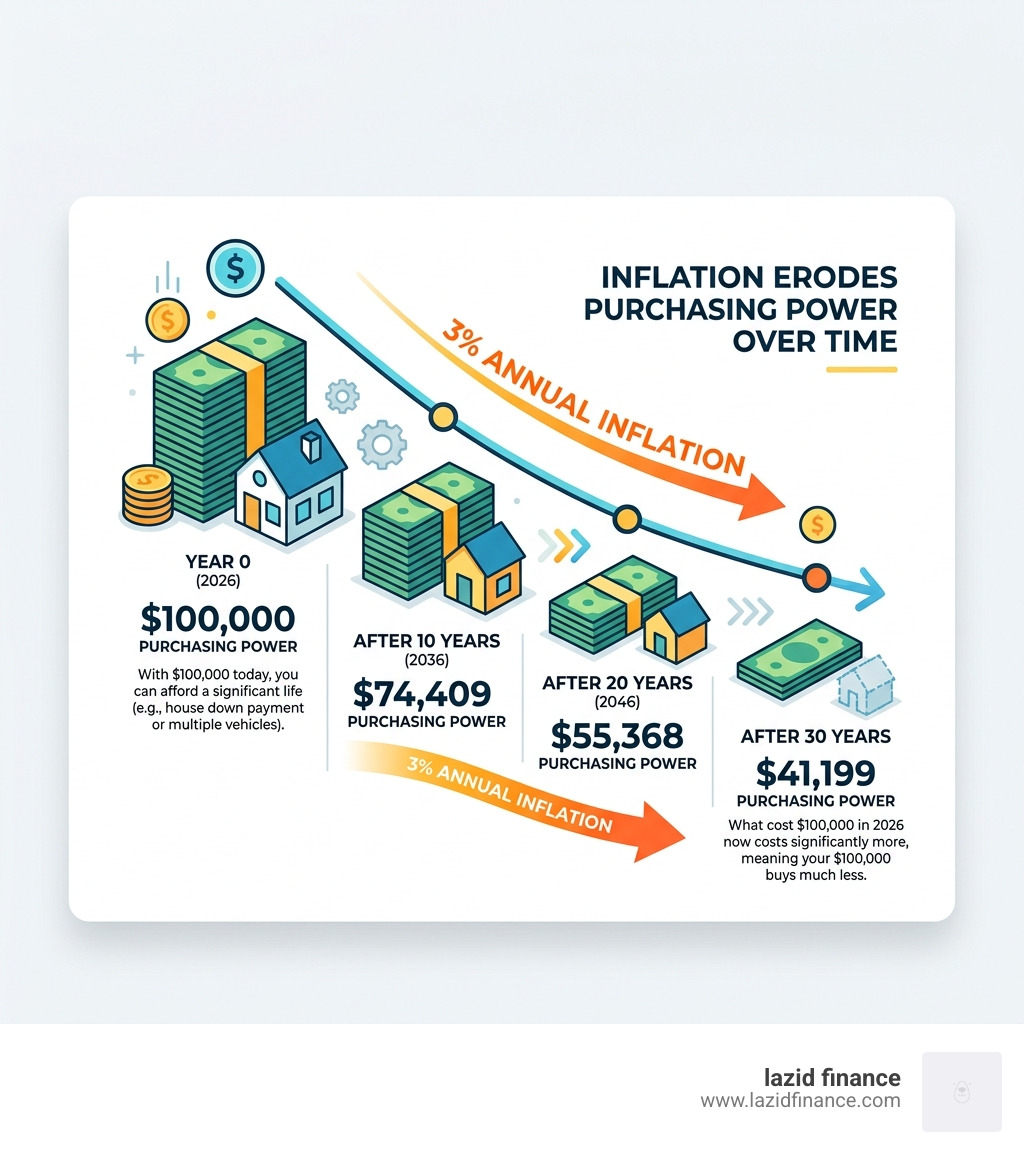
- 3% Inflation: This is the silent killer of purchasing power. A 3% assumption ensures your future “million dollars” is calculated in today’s buying power.
- 2% Salary Growth: This assumes you’ll get modest raises over your career to keep up with the cost of living.
- Life Expectancy of 95: It sounds old, but planning to live until 95 is a safety net. It’s much better to have money left over at 95 than to run out of cash at 85!
How to Use a Planner and Key Rules of Thumb
Once you have your inputs ready, it’s time to apply some “rules of thumb” to see if you’re on track. These aren’t laws, but they are great benchmarks for the average millennial or Gen X professional.

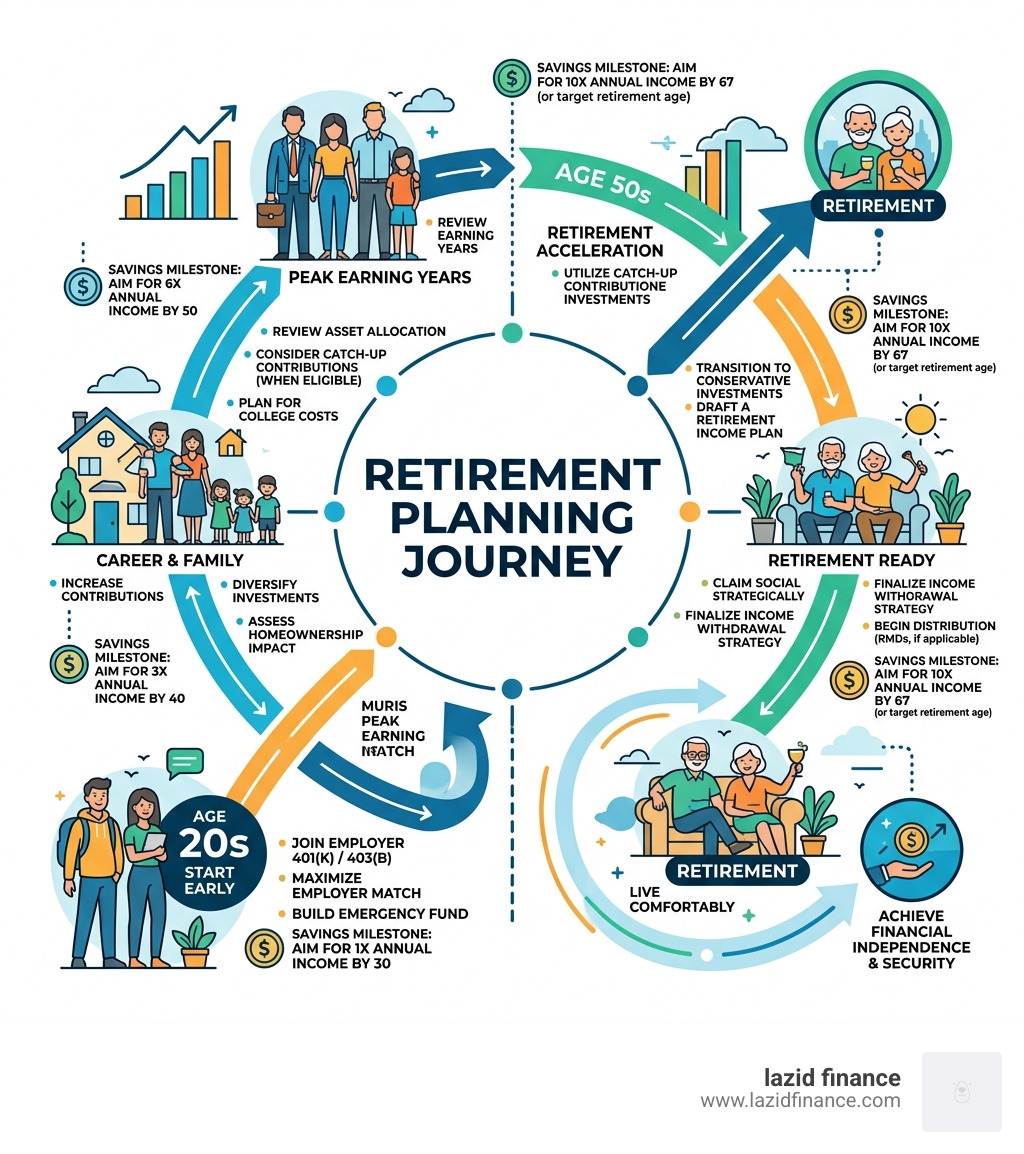
The most common benchmark is the 15% Rule: Aim to save at least 15% of your gross income. If that feels impossible right now, start at 6% and increase it by 1% every year. Another popular metric is the 10x Rule: By the time you retire, you should have 10 times your final annual salary saved up.
To help you visualize where you should be, check out this table of milestones:
| Age | Savings Target |
|---|---|
| 30 | 1x your annual salary |
| 40 | 3x your annual salary |
| 50 | 6x your annual salary |
| 60 | 8x your annual salary |
| 67 | 10x your annual salary |
Running ‘What-If’ Scenarios with a Retirement Savings Planner
One of the coolest features of a modern retirement savings planner is the ability to play “What If?” This is where planning becomes fun (yes, we said fun).
- Early Retirement: What happens to your “number” if you retire at 58 instead of 67? You’ll likely see a significant jump in the required monthly savings because you have fewer years to save and more years to spend.
- Healthcare Costs: Healthcare is often the largest expense in retirement. You can model scenarios where you include a dedicated Health Savings Account (HSA) to cover these costs.
- Debt Paydown: What if you pay off your mortgage before you retire? Your required “income replacement” might drop from 70% to 50% because your housing costs are gone.
- Real Estate: If you plan to sell your large family home and downsize, you can input that future cash infusion into your planner to see how it extends your portfolio’s longevity.
- Tax Implications: Money in a Traditional 401(k) is taxed when you take it out. A good planner will help you estimate your “after-tax” spending power.
Navigating Account Types and Income Sources
Where you put your money is just as important as how much you save. Different accounts have different “tax personalities.”
Maximizing Savings with Tax-Advantaged Accounts
- 401(k) and 403(b): These are employer-sponsored plans. If your employer offers a “match,” that is a 100% return on your money. Always contribute enough to get the full match.
- Traditional vs. Roth: With a Traditional account, you get a tax break now, but pay taxes later. With a Roth, you pay taxes now, but your withdrawals in retirement are tax-free. For many millennials, the Roth is a powerful tool because it protects you from future tax hikes.
- HSA (Health Savings Account): We call this the “triple-threat” account. It’s tax-deductible going in, grows tax-free, and is tax-free coming out for medical expenses. After age 65, it can even function like a traditional IRA for non-medical expenses.
- SEP IRA: If you are a freelancer or small business owner, the SEP IRA allows you to contribute much higher amounts than a standard IRA.
Deciding on Social Security and Pensions
Social Security is a major component of any retirement savings planner. The age you claim your benefits makes a massive difference, and you can estimate your future payments directly through the Social Security Administration:
- Age 62: The earliest you can claim. Your monthly check will be reduced by up to 30% permanently.
- Age 67: Full Retirement Age (for those born in 1960 or later). You get 100% of your earned benefit.
- Age 70: If you wait, your benefit increases by about 8% for every year you delay past age 67.
If you are lucky enough to have a pension, ensure you understand if it has a Cost-of-Living Adjustment (COLA). Without a COLA, that $2,000 monthly check will buy a lot less in 2056 than it does in 2026.
Frequently Asked Questions about Retirement Planning
When is the best age to retire?
There is no “perfect” age, but there are financial milestones. Age 67 is the full retirement age for Social Security for most people reading this. However, you must also consider Medicare, which typically starts at age 65. If you retire at 60, you’ll need a plan to cover private health insurance for five years—which can be incredibly expensive. The best age is whenever your retirement savings planner shows your assets can support your lifestyle for 30+ years.
How much should I save for retirement?
As a general rule, we recommend saving 15% of your gross income. However, your specific “number” depends on your desired lifestyle. A common goal is to replace 70% to 80% of your pre-retirement income. If you earn $100,000 now, you should aim for a portfolio that generates $70,000 to $80,000 a year in today’s dollars.
What common mistakes should I avoid?
- Underestimating Inflation: Assuming things will cost the same in 30 years is a recipe for disaster.
- Ignoring Taxes: If all your money is in a Traditional 401(k), the government owns a significant chunk of your balance.
- Being Too Conservative: Keeping all your money in a savings account might feel safe, but it won’t grow enough to beat inflation. You need some exposure to the stock market for long-term growth.
- Starting Late: Every year you wait to start using a retirement savings planner and acting on it, the “cost” of retirement goes up significantly.
Conclusion
Planning for the future doesn’t have to be a source of anxiety. By using a retirement savings planner, you take the guesswork out of your financial life. You move from “hoping it works out” to “knowing exactly what to do.”
At Lazid Finance, we believe in providing intelligent financial tools for conscious decisions. Our mission is to help you navigate these complex choices with smart finance solutions tailored for mindful choices. Whether you are just starting your career or are mid-way through, the best time to refine your plan is today.
Your future self will thank you for the work you do in April 2026. Take control of your journey, understand your numbers, and build a retirement that reflects your values and goals.
Start planning your future today

