
Pay Off the Loan: A Step-by-Step Guide to Final Payments
Introduction
Debt can feel like running on a treadmill. You make payments every month, but the balance barely moves.
That feeling is real — and it’s not just in your head. By late 2009, American consumers had racked up more than $2.5 trillion in outstanding debt, according to Federal Reserve data, more than double what it was in 1994. Millions of people are in the same position, making minimum payments and wondering if the finish line will ever come.
The good news? It does come. And with the right approach, you can reach it faster than your original loan term suggests.
This guide walks you through the complete final payment process — from requesting a payoff quote to getting that zero-balance confirmation — plus the strategies that help you get there sooner.
Proven Strategies to Pay Off the Loan Faster
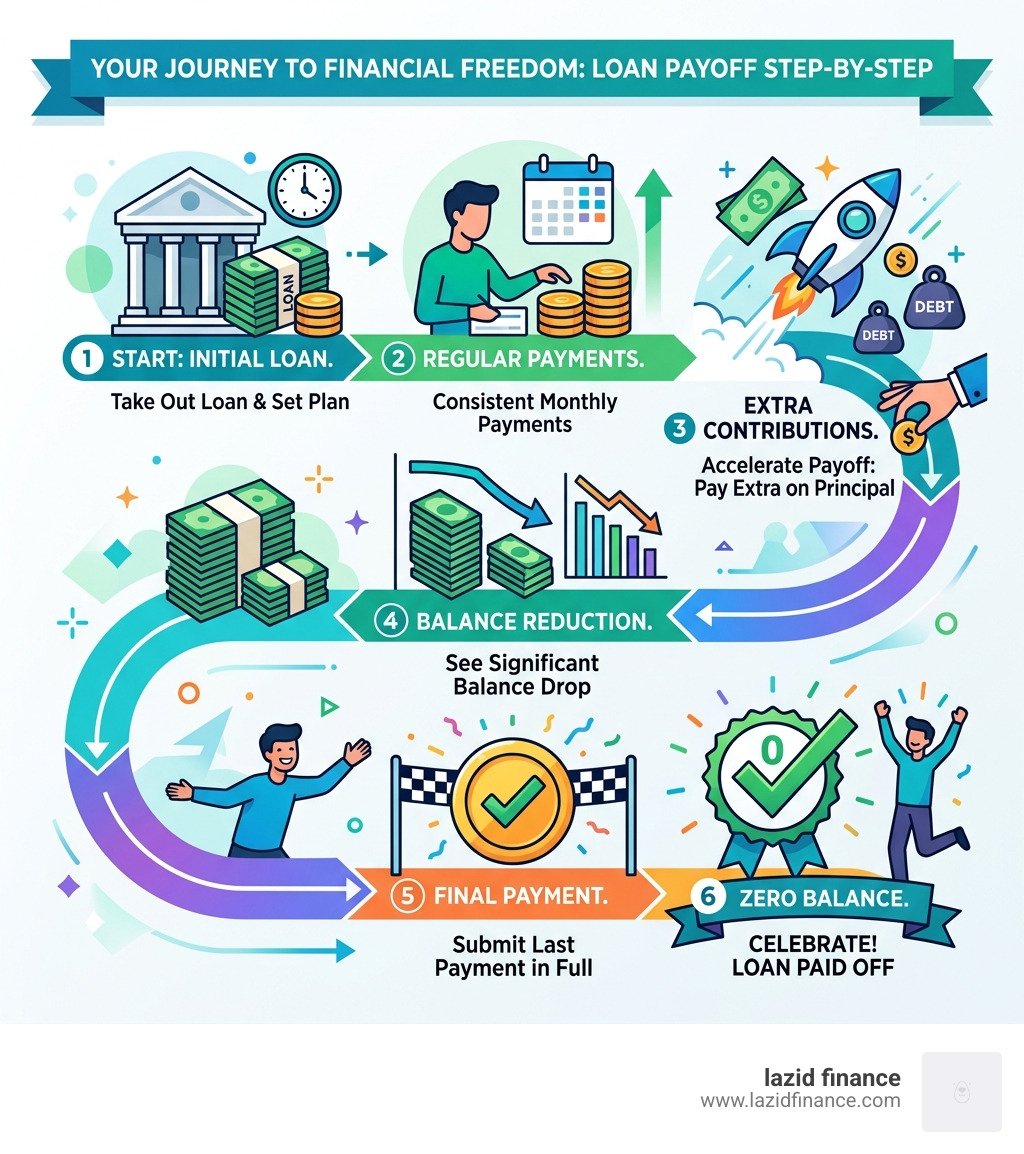
If you want to escape the cycle of monthly interest, you need a plan that goes beyond the minimum requirements. At Lazid Finance, we believe in providing smart finance solutions tailored for mindful choices. To pay off the loan ahead of schedule, you should consider one of several mathematically and psychologically proven methods.
The Debt Avalanche Method
The debt avalanche is the “math person’s” favorite. In this strategy, you list all your debts and focus every extra dollar on the loan with the highest interest rate first. While you continue making minimum payments on everything else, crushing the high-interest debt saves you the most money in the long run.
The Debt Snowball Method
If you need psychological wins to stay motivated, the debt snowball is for you. Here, you focus on the smallest balance first. Once that tiny loan is gone, you “roll” that payment into the next smallest balance. The quick victory of seeing an account hit zero provides the momentum many people need to keep going.
Bi-Weekly Payments
This is a “hidden” strategy that doesn’t feel like a sacrifice. Instead of one monthly payment, you pay half of your monthly amount every two weeks. Because there are 52 weeks in a year, you end up making 26 half-payments, which equals 13 full monthly payments. That extra payment each year can shave years off a mortgage or months off a car loan.
Rounding Up
Rounding up is the easiest way to start. If your car payment is $427, round it up to $450 or even $500. On a $30,000 car loan at 7% interest, rounding a $427 payment to $500 can save you $450 in interest and get you to the finish line six months early.
For more detailed insights on these methods, check out our Lazid Finance Guide: How to Pay Off Loans Faster.
| Method | Focus | Best For | Main Benefit |
|---|---|---|---|
| Debt Avalanche | Highest Interest Rate | Disciplined savers | Maximum interest savings |
| Debt Snowball | Smallest Balance | Motivation seekers | Fast psychological wins |
| Bi-Weekly | Frequency | Budgeters | One extra payment per year |
| Rounding Up | Small increments | Beginners | Low-effort progress |
How Extra Payments Reduce Interest to Pay Off the Loan
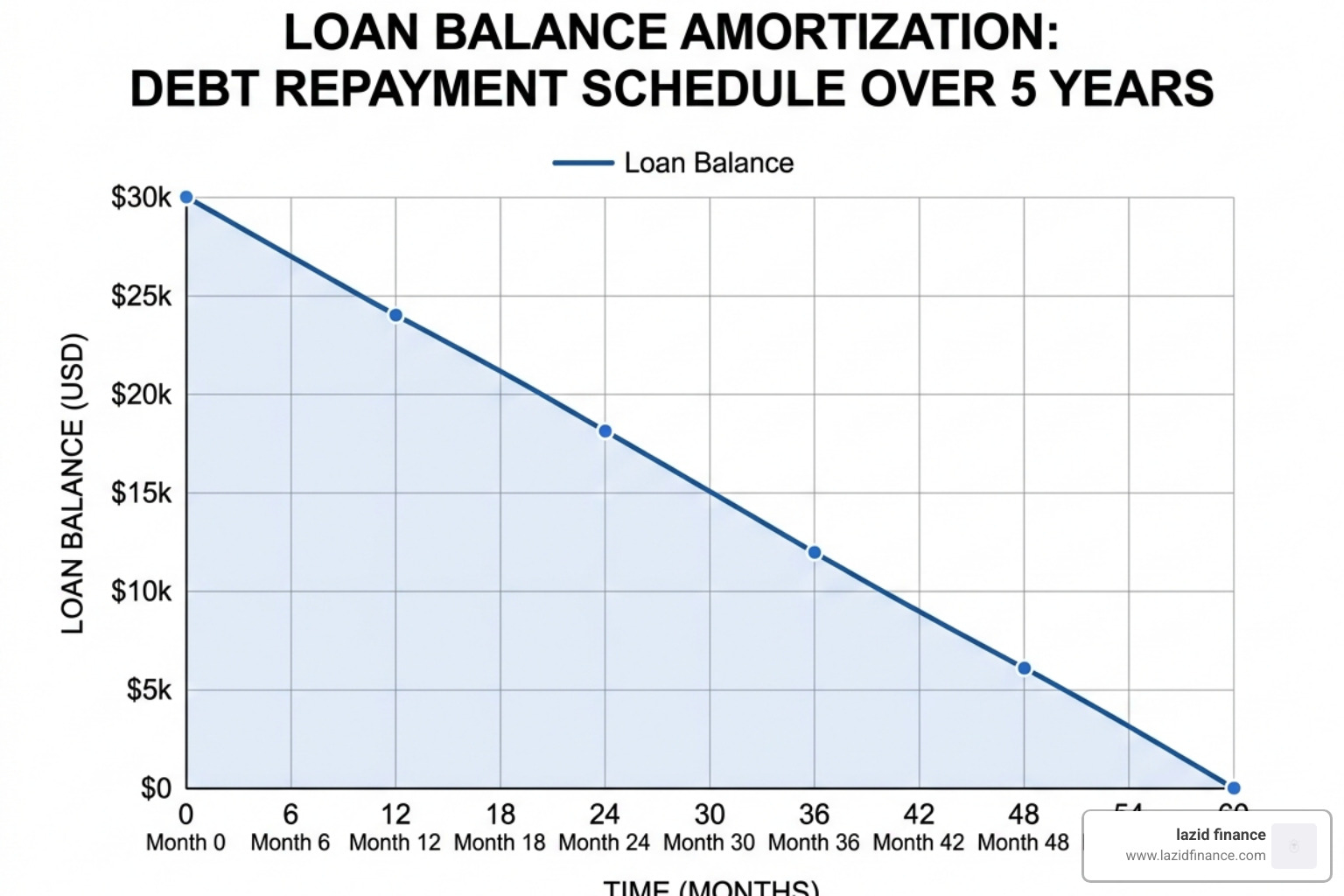
Every time you make an extra payment, you aren’t just reducing your balance; you are “buying back” your future income. Most loans are amortized, meaning interest is calculated based on the current principal balance. When you lower that principal with a lump sum or windfall, there is less balance for interest to accrue on.
Windfalls are a great way to make a dent. The average tax refund is around $3,100. If you apply that directly to a $25,000 loan, you aren’t just lowering the balance by $3,000; you are skipping months of interest that would have compounded over time. To see the exact impact of your extra contributions, you can use a Loan Payoff Calculator. Whether it’s a bonus at work or a gift, applying it to the principal is one of the smartest moves you can make on our Página Inicial.
Using Refinancing to Pay Off the Loan Early
Refinancing involves taking out a new loan with better terms to pay off the old one. This is particularly effective if your credit score has improved since you first borrowed the money. A higher credit score often unlocks a lower APR (Annual Percentage Rate).
Consider the true cost of ownership. For instance, a new $28,000 car loses about $17,000 of its value in just the first four years. When you combine that depreciation with the fact that the average vehicle owner spends over $9,000 per year to operate their car, you can see why high-interest auto debt is so damaging. Refinancing to a lower rate or a shorter term can help you build equity faster.
If you have multiple high-interest credit cards, you might find that people spend significantly more when using credit — 56% more at fast-food restaurants and 100% more at vending machines. Consolidating these into a single personal loan with a lower fixed rate can simplify your life and speed up your journey. Explore our Refinancing Options for Debt Consolidation to see if you can lower your costs.
The Mechanics of Extra Payments and Interest Savings
To understand why we emphasize principal reduction, you have to understand “amortization.” In the early years of a loan, your monthly payments are heavily “front-loaded” with interest. For example, on a $200,000 mortgage at 7%, your very first payment of roughly $1,331 might only put $164 toward the principal, while $1,167 goes straight to the bank as interest.
When you make an extra payment toward the principal early in the loan, you are effectively “canceling” the interest that would have been charged on that money for the next 20 or 30 years. This is why a small extra payment of $100 a month can save tens of thousands of dollars over the life of a mortgage.
We also suggest looking at your spending habits. Canadian households, for example, could save over $3,000 per year simply by using cash instead of credit cards. That $3,000, if applied to a loan principal, could drastically change your payoff timeline. For more information on how we handle your data and financial journey, please see our Política de Privacidade.
Navigating the Final Payment Process
You’ve done the hard work. Your balance is low, and you are ready to pay off the loan for good. But wait! You can’t just send a check for the amount you see on your last statement.
Request a Payoff Quote
Interest on most loans accrues daily. The balance you see on your mobile app today will be different tomorrow. You must request an official “payoff quote” from your lender. This quote will provide a specific amount that is valid for a set number of days (usually 10 to 30), accounting for the daily interest that will accumulate until your payment is processed.
Check for Prepayment Penalties
Before you send that final chunk of cash, double-check your loan agreement. While rare in modern personal and auto loans, some older mortgages or specific private loans charge a “prepayment penalty.” This is a fee lenders charge because they are losing out on the interest you would have paid if you stayed on the original schedule.
The Zero-Balance Statement
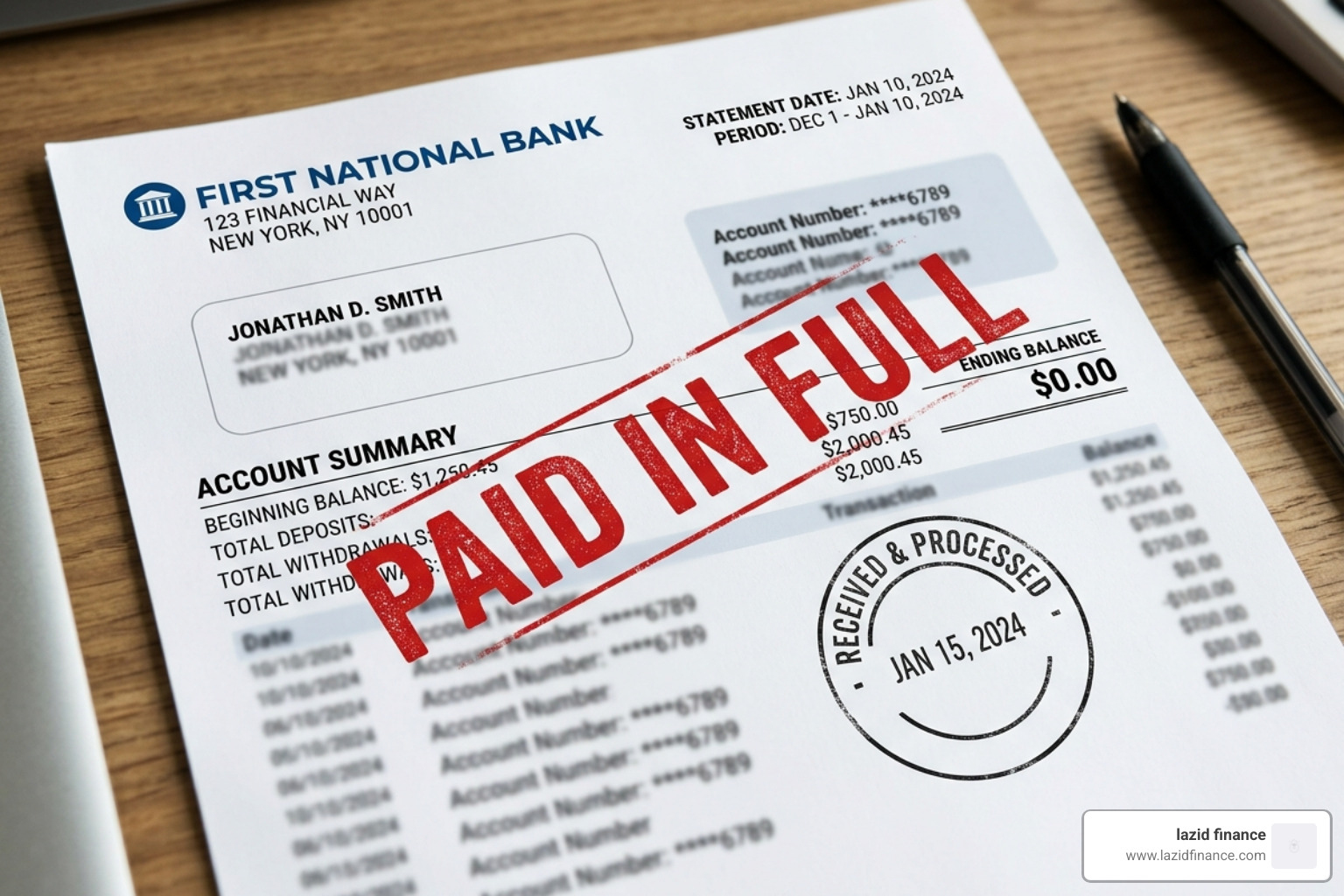
Once the payment is made, your job isn’t quite done. You should receive a “zero-balance statement” or a “Release of Lien” (for car loans or mortgages) within 30 to 45 days. This is your legal proof that the debt is gone. If you want to learn more about our mission to help you reach this stage, visit our Sobre Nós page.
Frequently Asked Questions about Loan Payoff
Will paying off my loan early hurt my credit score?
It might seem counterintuitive, but your credit score might take a small, temporary dip after you pay off the loan. This happens for two reasons:
- Credit Mix: FICO scores like to see a mix of revolving credit (cards) and installment loans. When you close a loan, that “mix” changes.
- History Length: If the loan was one of your oldest accounts, closing it can slightly shorten your average credit history.
However, don’t let this stop you. The financial benefit of saving on interest and reducing your debt-to-income ratio is far more valuable than a temporary 10-point swing in your credit score.
How do I ensure my extra payment goes to the principal?
Lenders love interest. If you just send extra money, some lenders will apply it to your next month’s payment (essentially just paying early) instead of reducing the principal. To avoid this:
- Use the “Principal Only” option in your online banking portal.
- If paying by mail, write “Apply to Principal” on the check and include a note.
- Contact your lender directly to confirm their specific process for principal-only payments.
Are there penalties for paying off a loan before the term ends?
As mentioned earlier, these are called prepayment penalties. They are becoming less common, especially for federal student loans which never have them. However, for some personal loans or mortgages, the penalty could be a flat fee, a percentage of the remaining balance, or six months’ worth of interest. Always read the fine print of your original contract before making a large lump-sum payment.
Conclusion

To pay off the loan is to reclaim your financial freedom. It requires a combination of smart strategies — like the debt avalanche or bi-weekly payments — and a clear understanding of the final steps involved in closing an account.
At Lazid Finance, we are committed to helping you make these mindful choices. Whether you are stockpiling groceries to save $2,300 a year or skipping that $5,000 TV that would actually cost you $5,980 after interest, every small decision adds up.
Financial stability isn’t about how much you make; it’s about how much you keep. By accelerating your loan payoff, you are keeping more of your hard-earned money for yourself and your future.
If you have questions about your specific situation or want to learn more about our tools, Contate Nos.
Ready to see that zero balance? Start your journey to debt freedom today with Lazid Finance.
Termos de Uso | Política de Privacidade | Página Inicial

