
Why You Need a Free Savings Planner to Rescue Your Bank Account
Your Bank Account Needs a Plan — Here’s Where to Start
A free savings planner is one of the most practical tools you can use to stop guessing about money and start making real progress toward your financial goals.
Quick answer — best free savings planners to evaluate:
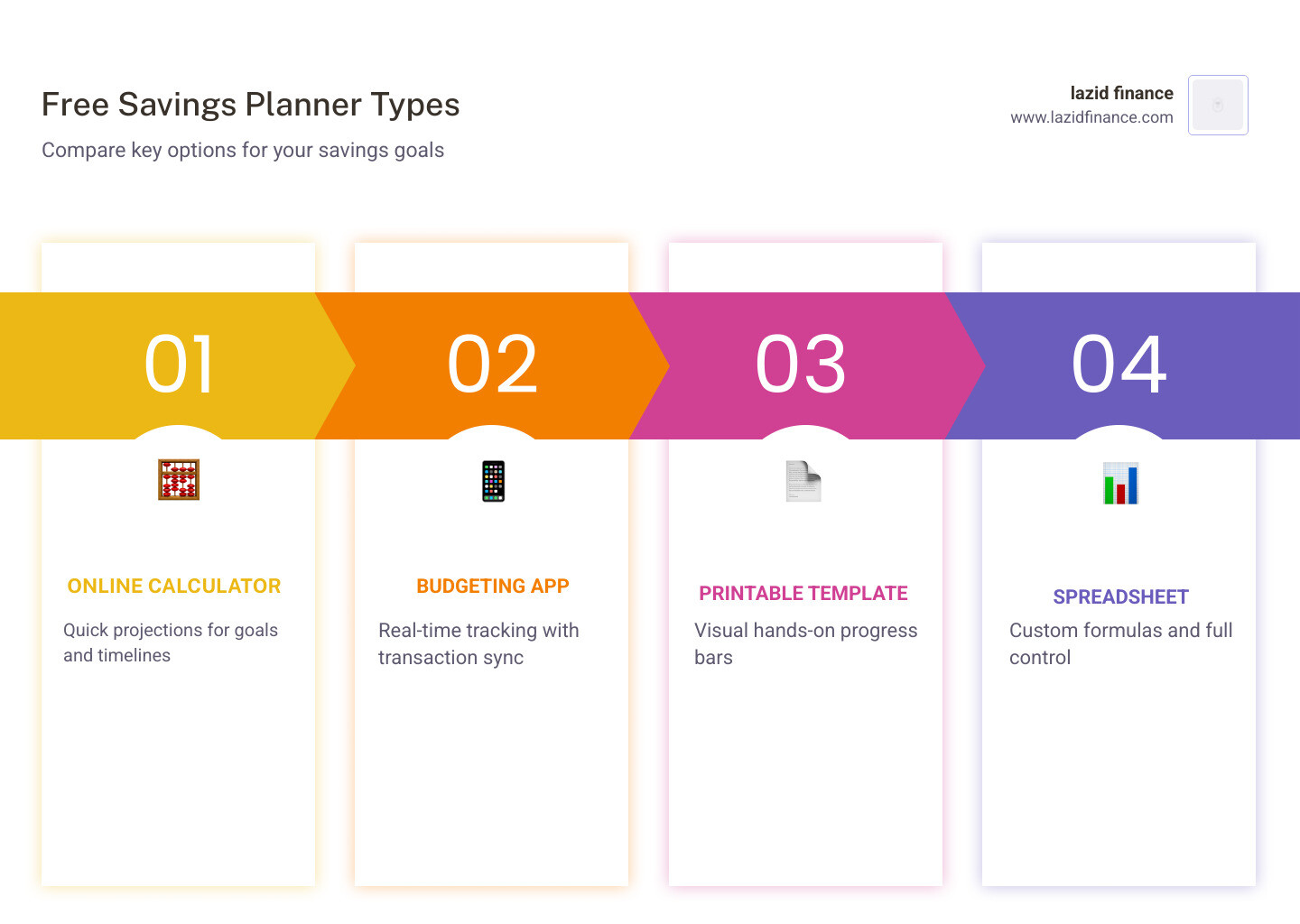
| Type | Best For | Examples |
|---|---|---|
| Online calculator | Quick goal projections | Online financial calculators |
| Budgeting app | Real-time tracking | Mobile budgeting apps |
| Printable template | Visual, hands-on planners | Canva (15,979+ free templates) |
| Spreadsheet | Custom formulas and control | Microsoft Excel templates |
| Browser-based tool | Privacy-first planning | Paycheck planner tools |
The US personal savings rate sits at just 4.6% as of 2026 — down from 5.2% the year before. Most people know they should be saving more. The problem is not motivation. It is not having a clear, simple system that shows exactly what to do next.
That is what a good savings planner solves.
It takes a vague goal — “I want to save more money” — and turns it into a concrete number. How much per month. How long it will take. What interest rate helps you get there faster.
Below, we compare the best free options so you can find the right fit for your situation.
What is a Free Savings Planner and Why Does It Matter?
At its core, a free savings planner is a roadmap for your money. While a budget tells your money where to go today, a savings planner tells your money where to grow for tomorrow. It bridges the gap between your current bank balance and your future financial stability.
In April 2026, the economic landscape makes these tools more vital than ever. With the US personal savings rate hovering at 4.6%, many households are one unexpected car repair away from a crisis. Using a planner helps you implement the 50/30/20 rule—a gold standard in personal finance where 50% of your income goes to needs, 30% to wants, and 20% to savings and debt repayment.
Whether you are using free and customizable budget templates from Canva or a sophisticated digital app, these tools provide the “why” behind your sacrifices. They allow you to visualize common financial goals:
- Emergency Fund: The average target is $10,000–$25,000, covering 3–6 months of living expenses.
- Down Payment: Planning for a $50,000 house deposit becomes less daunting when broken into a 60-month timeline.
- Vacation Planning: Seeing that $200 a month will get you to the beach by next summer keeps you from overspending on takeout today.
By using a free savings planner, you stop treating savings as “whatever is left over” and start treating it as a non-negotiable bill you pay to your future self.
Essential Features of a High-Quality Free Savings Planner
Not all planners are created equal. If you are looking for a tool to truly rescue your bank account, it needs to do more than just add and subtract. Here are the features we believe are essential for success:
Compound Interest and APY Calculations
In 2026, high-yield savings accounts (HYSAs) are offering between 4% and 5% APY. A quality free savings planner must account for this. The difference between a traditional bank (earning 0.01%) and an HYSA is staggering.
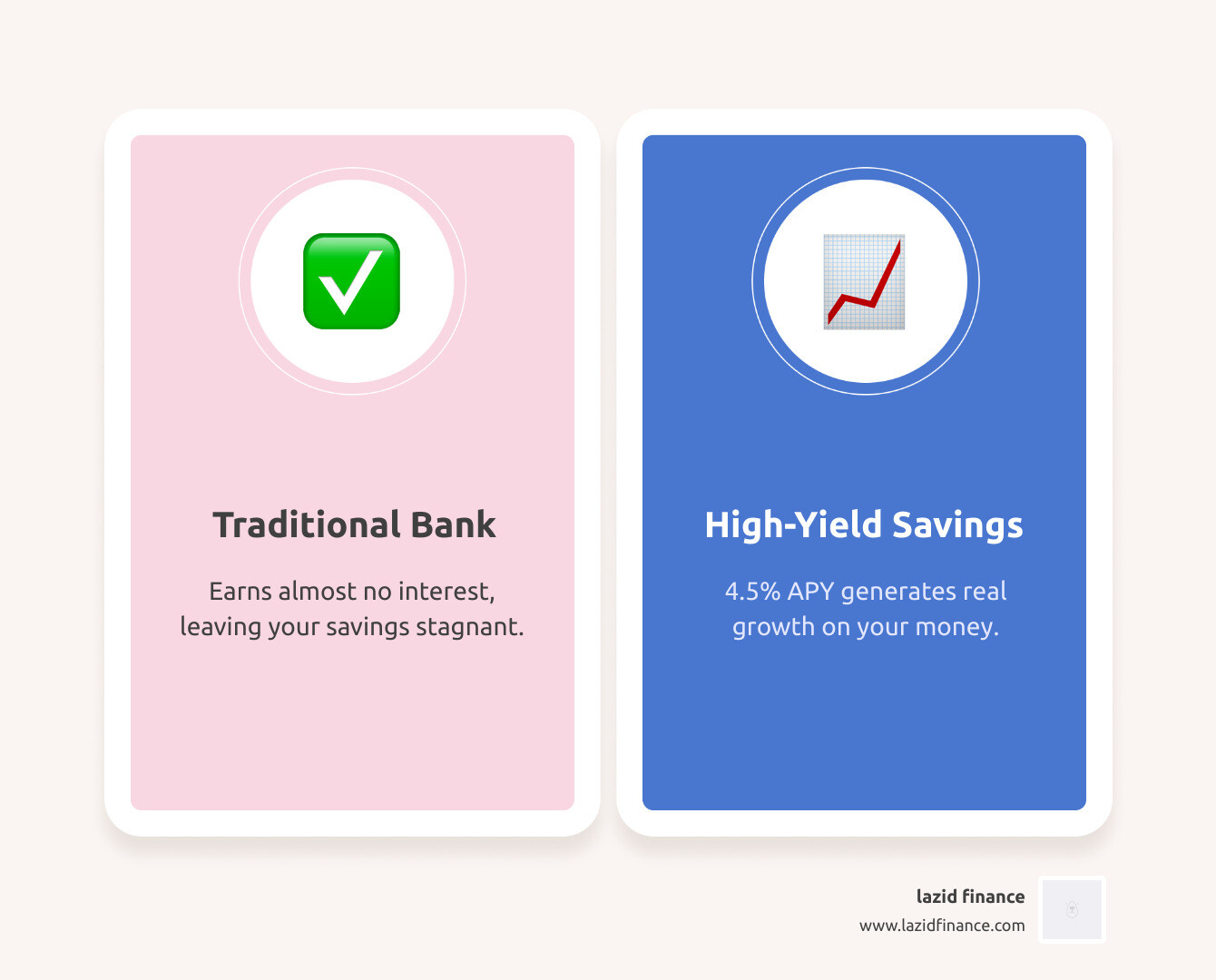
| Account Type | APY | Annual Interest on $10,000 |
|---|---|---|
| Traditional Bank | 0.05% | $5 |
| High-Yield Savings | 4.50% | $450 |
Data Privacy and Security
Your financial data is sensitive. Many modern free tools now prioritize “privacy by design.” Look for planners that use IndexedDB or local browser storage. This means your data never leaves your computer and isn’t stored on a company’s server. You get the convenience of a digital tool without the risk of a data breach.
“What-If” Scenarios and Milestone Tracking
Life isn’t linear. A great planner allows you to run scenarios: “What if I increase my monthly contribution by $50?” or “What if I find an account with a 0.5% higher APY?” Seeing how these small changes shave months off your timeline is a massive psychological boost.
Choosing the Right Type of Free Savings Planner for Your Lifestyle
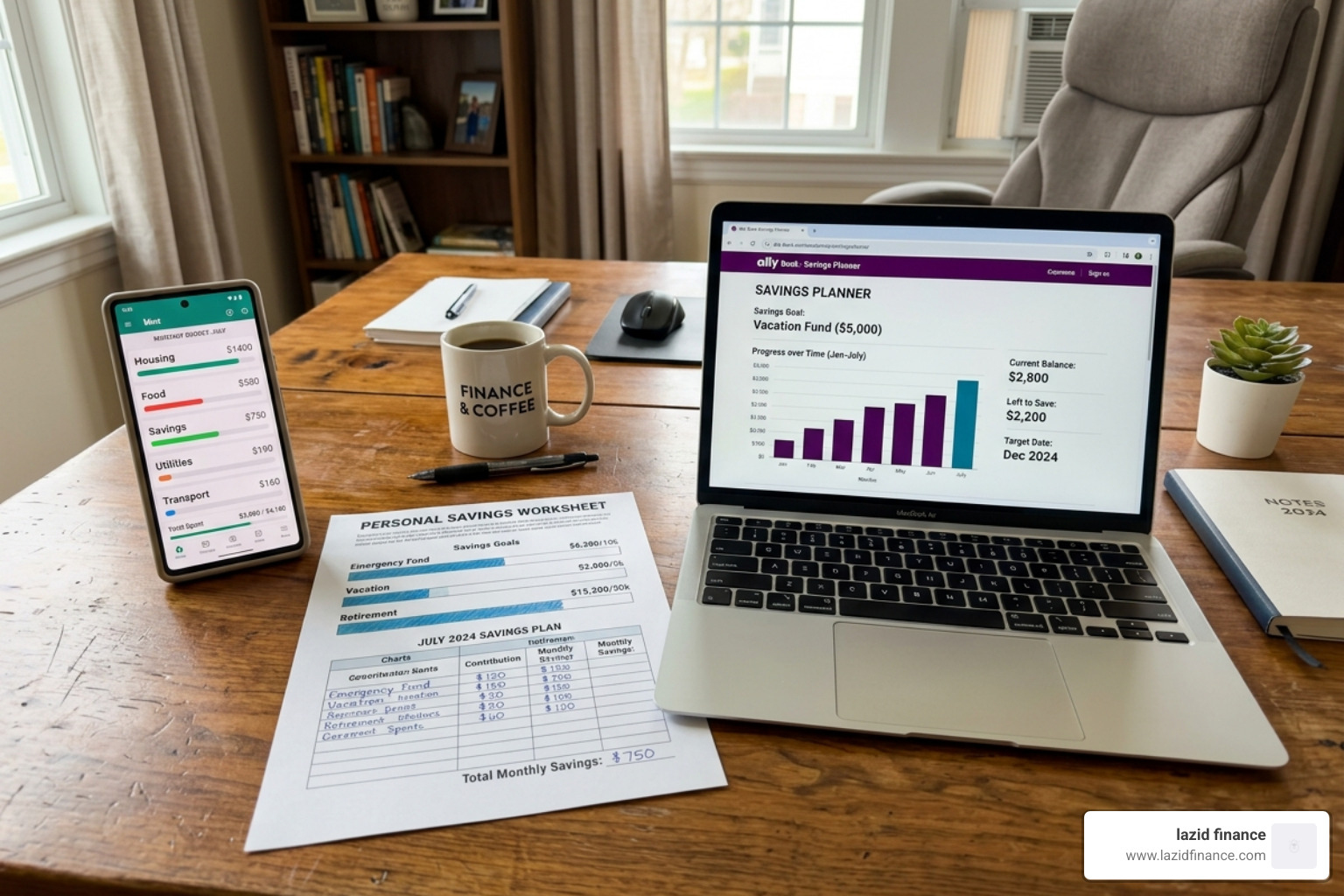
We all process information differently. The “best” tool is the one you will actually use consistently.
Digital Apps for Real-Time Tracking
For those who want their data synced across devices, digital apps are the way to go. Many modern platforms utilize the time-tested envelope method, allowing you to digitize your “cash” piles for different goals. Some modern platforms allow you to link accounts from more than 17,000 financial institutions, providing a unified view of your net worth and spending patterns. This real-time monitoring is perfect for those who struggle with “hidden” subscriptions or impulse buys.
Printable Templates for Visual Motivation
If you find screens draining, a physical, aesthetic design might be your secret weapon. Free and customizable budget templates from Canva offer over 15,000 designs. These are excellent for visual learners who want to color in a “progress bar” as they get closer to a vacation or a new car. Naming your goal (e.g., “The Freedom Fund” instead of “Savings”) and seeing it on your fridge every day creates a powerful psychological commitment.
Spreadsheet-Based Free Savings Planner for Customization
For the “data nerds” among us, free budget template spreadsheets from Microsoft Excel are the gold standard. Spreadsheets allow for:
- Advanced Formulas: Calculate the exact “Future Value” of your investments.
- Custom Categories: Tailor your sinking funds to your specific lifestyle.
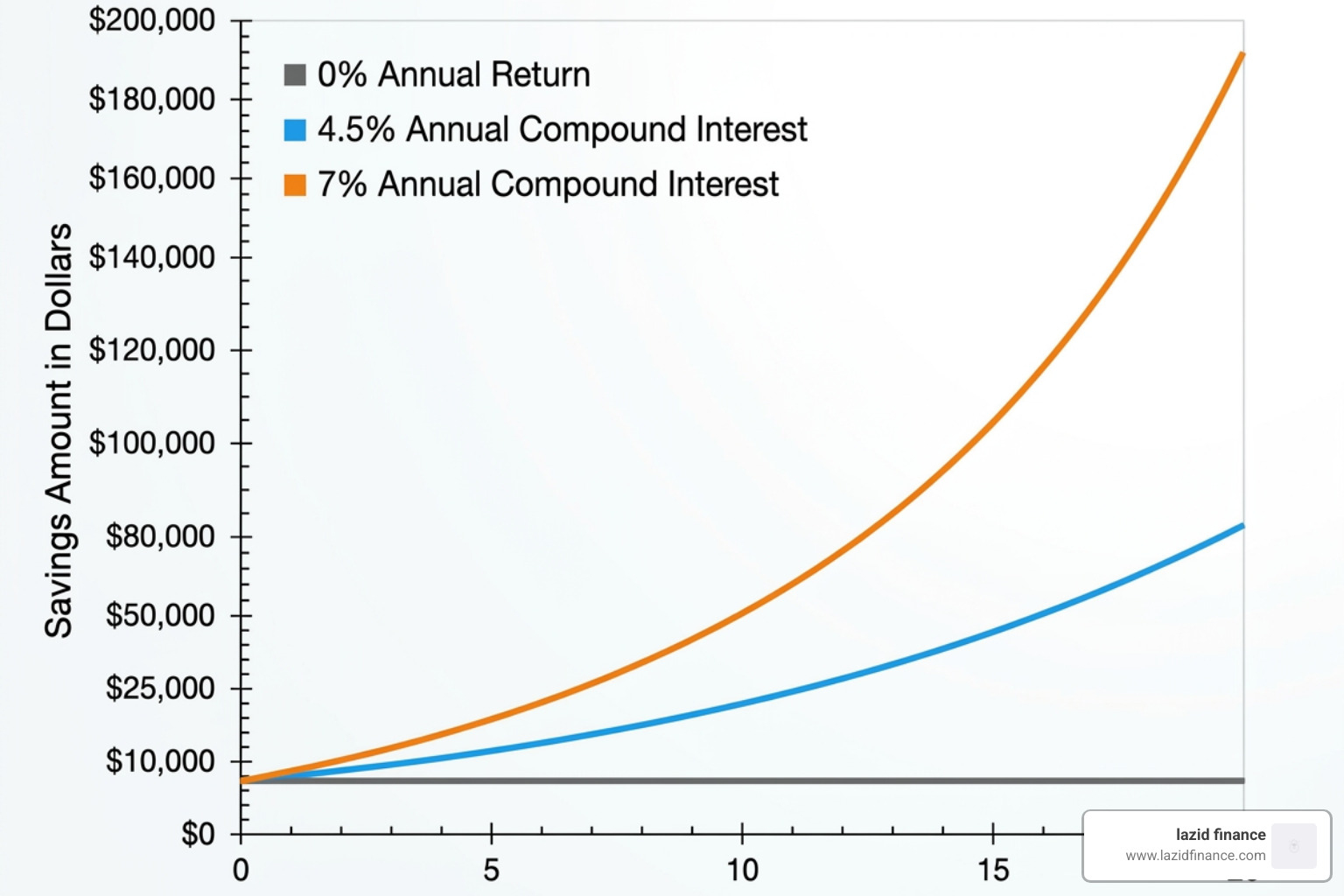
- Long-Term Projections: Project your wealth 20 years into the future, assuming a 7% annual return (the historical inflation-adjusted average of the S&P 500).
Strategies to Maximize Your Savings Using Free Tools
Having a free savings planner is the first step; using it effectively is the second. Here is how we recommend maximizing your results:
- Automate Your Payday Transfers: This is the single most effective strategy. If the money moves to savings before you can spend it, you won’t miss it.
- Leverage Round-Ups: If you average 2–3 card swipes per day with a $0.35 round-up, you can painlessly add $20–$30 to your savings every month.
- The 52-Week Challenge: Start by saving $1 in week one, $2 in week two, and so on. By week 52, you will have saved $1,378. It’s a great way to build the “saving muscle.”
- Use Sinking Funds: Don’t let annual expenses like car insurance or holiday gifts “surprise” you. Divide the annual cost by 12 and save that amount monthly in your planner.
- Tier Your Emergency Fund: Start with a “Starter Fund” of $1,000. Once reached, aim for 3 months of essentials, then finally 6 months.
Integrating Your Planner with Advanced Budgeting Methods
A free savings planner works best when it’s integrated into a broader system.
- Zero-Based Budgeting: Every dollar you earn is assigned a job—including your savings. Your income minus your expenses/savings should equal zero.
- Pay-Yourself-First: Instead of saving what is left after spending, you set aside your 20% savings goal immediately upon receiving your paycheck.
- Buffer Categories: Especially for those with irregular income, keeping a small “buffer” in your planner helps smooth out leaner months without dipping into your long-term goals.
Frequently Asked Questions about Savings Planning
How do I calculate my monthly savings goal?
To find your monthly target, use this simple formula: (Goal Amount – Current Balance) / Number of Months to Deadline = Monthly Contribution. However, a high-quality free savings planner will adjust this for you by including expected interest. For example, to save $20,000 in 3 years at 4% interest, you only need to contribute $515/month, rather than the $556/month you would need with zero interest.
Are free savings planners secure?
If you use browser-based tools that offer “privacy-by-design,” they are incredibly secure. These tools process your data locally on your device (client-side) rather than sending it to a remote server. Always check if a tool requires a login; no-login tools are often the most private options for basic planning.
Can a free savings planner handle compound interest?
Yes, most advanced planners use the “Future Value of an Annuity” formula. This accounts for monthly compounding, where your interest earns interest. Over long periods, this creates a “tailwind” for your money. Saving $300/month at a 7% return for 20 years results in approximately $156,000—and $84,000 of that total is pure interest, not your own deposits!
Conclusion
Rescuing your bank account doesn’t require a six-figure salary; it requires a plan and the discipline to follow it. By utilizing a free savings planner, you can turn the “eighth wonder of the world”—compound interest—into your personal financial engine.
At Lazid Finance, we believe in providing intelligent financial tools for conscious decisions. Our goal is to help you move beyond the stress of living paycheck to paycheck and toward a life of mindful choices and financial independence. Whether you choose a spreadsheet, an app, or a printable template, the best time to start was yesterday. The second best time is today.
Start planning your future today and watch how consistent habits compound into a life of freedom.

