
Stop Guessing Where Your Money Goes with These Budget Planner Apps
You’re Probably Losing Money Without Realizing It
Budget planner apps are smartphone and web tools that help you track income, spending, and savings — all in one place. These tools offer various approaches to financial management, from automated bank syncing to manual tracking.
Most people have a rough idea of what they earn. But ask them where it all goes? Silence.
It’s not a discipline problem. It’s a visibility problem.
Without a clear system, money slips through the cracks — a forgotten subscription here, an overspent grocery week there. It adds up fast.
The average budgeter who actively tracks their finances discovers around $3,015 in potential savings they didn’t know they had. That’s not a small number.
The good news: you don’t need a finance degree or a complicated spreadsheet to fix this. A well-chosen budget planner app puts your full financial picture in front of you — automatically, in real time, on your phone.
This guide breaks down the best features to look for so you can find the tool that actually fits how you manage money.
How Modern Tools Simplify Financial Management
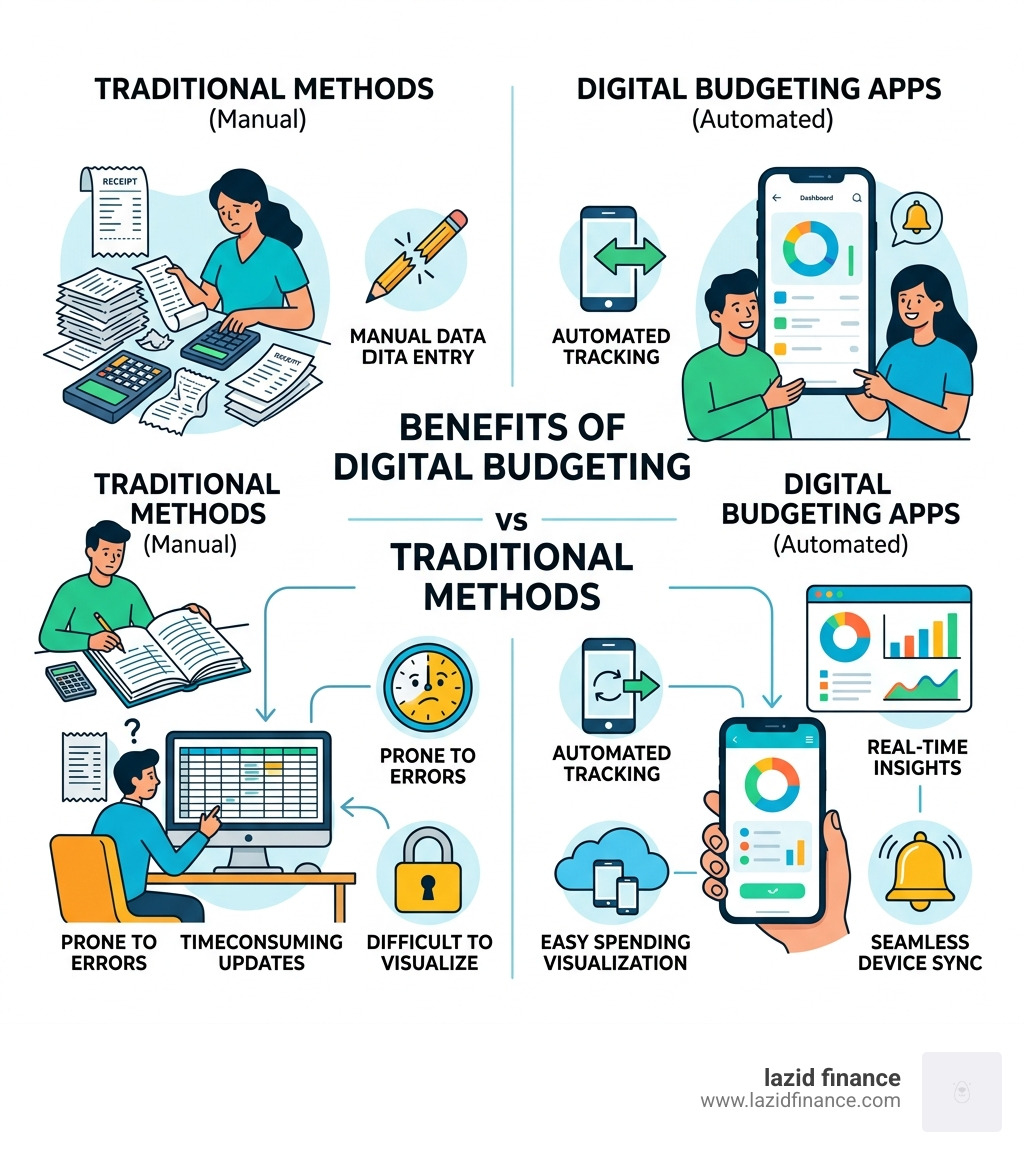
In the past, managing a household budget meant sitting at a kitchen table with a pile of crumpled receipts and a calculator. It was tedious, prone to error, and frankly, a bit depressing. Today, the landscape has shifted entirely. Modern budget planner apps serve as a digital “home base” for your financial life, offering real-time monitoring that traditional methods simply cannot match.
By connecting directly to your bank accounts, these tools provide an instant view of your net worth, spending habits, and progress toward goals. We no longer have to wait until the end of the month to realize we overspent on dining out; the data is available the moment the transaction clears. This high-performance financial tracking allows for “mindful spending”-the ability to make decisions based on what is actually in your account rather than a vague guess.
Instead of maintaining separate notes for bills, savings goals, and daily spending, a good app brings everything into one dashboard. You can usually categorize transactions automatically, rename merchants, split purchases into multiple categories, and review trends over time. That means less friction and more consistency, which is often the missing ingredient in successful budgeting. Even people who dislike “doing budgets” tend to stick with systems that reduce manual work.
For many households, the real benefit is not perfection but speed of feedback. If your grocery spending spikes this week, you can adjust before the month gets away from you. If an annual bill is coming up, you can prepare instead of reacting. This kind of visibility helps turn budgeting from a backward-looking chore into a practical tool for daily decision-making.
For readers who want a broader overview of how digital money management has evolved, the concept is closely related to personal finance software, which covers budgeting, expense tracking, forecasting, and financial reporting in one ecosystem.
Why Millions are Switching to Budget Planner Apps in 2026
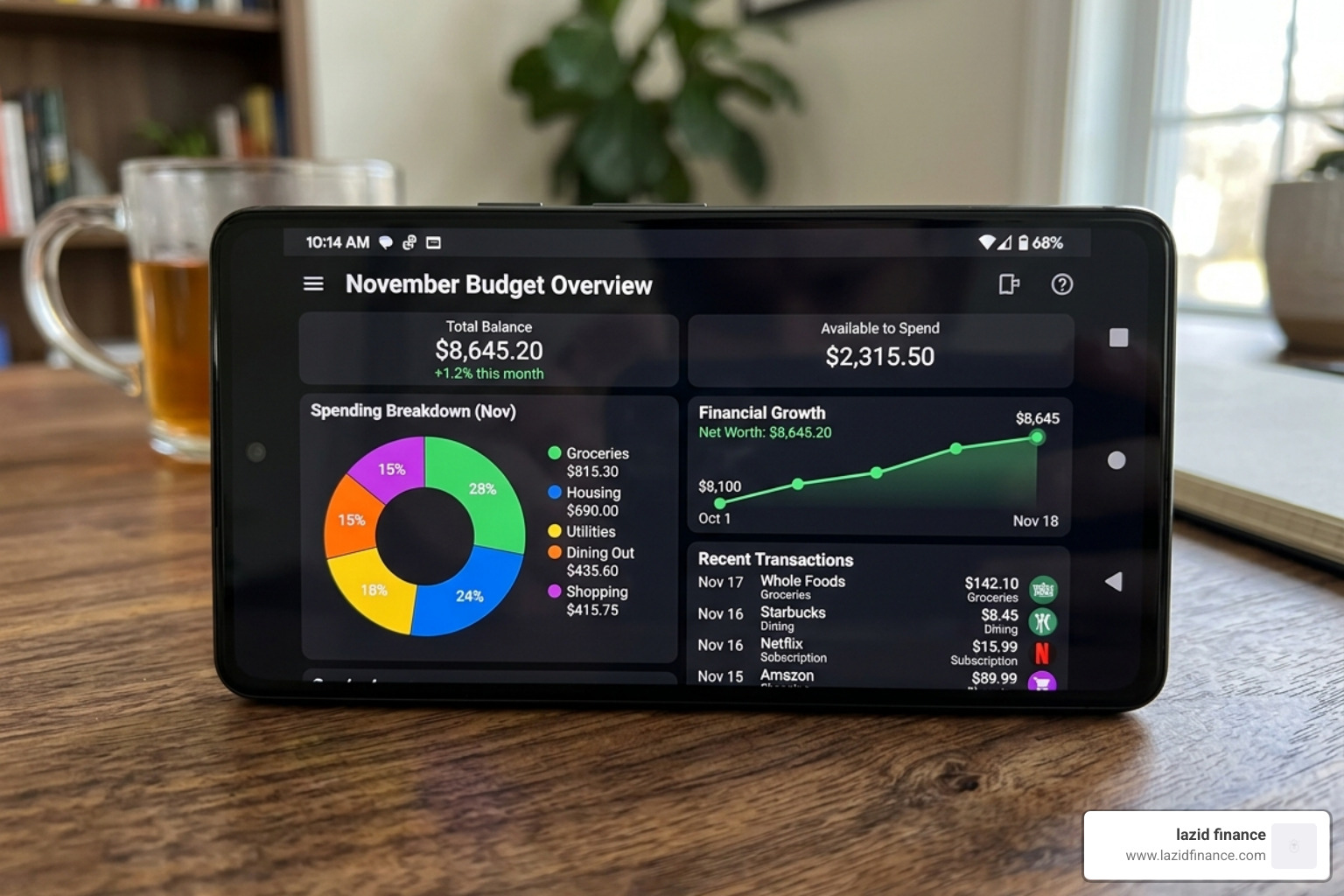
As of April 2026, the global adoption of digital finance tools has reached an all-time high. Why the sudden surge? It comes down to accuracy and psychology. Manual entry is often the first thing people drop when they get busy. In contrast, automated bookkeeping does the heavy lifting for you.
Statistics show that 94% of users who utilize modern budgeting tools report improved finances after just two weeks of use. Furthermore, leading financial tracking platforms have surpassed millions of downloads, proving that people are hungry for simplification. When an app can process over 4 million transactions for its customers with near-perfect accuracy, it removes the “human error” that often leads to failed budgets. These apps don’t just track numbers; they build financial awareness by sending alerts for upcoming bills and providing graphical views of spending tendencies.
Another reason for the shift is usability. Older financial software often felt built for accountants. Newer apps are designed for ordinary people who want a quick snapshot of what they can safely spend, what bills are approaching, and whether they are still on track for savings goals. Clean mobile interfaces, simple onboarding, and smart alerts make it easier to keep checking in, which is exactly what helps financial habits improve over time.
Essential Features to Look for in Budget Planner Apps
When we evaluate budget planner apps, we look for specific “power features” that separate a basic tracker from a comprehensive financial assistant. The most critical choice you will make is between manual entry and automated bank syncing.
| Feature | Manual Entry Apps | Automated Sync Apps |
|---|---|---|
| Effort Level | High (User enters every cent) | Low (Transactions import daily) |
| Privacy | High (No bank links required) | Moderate (Uses secure aggregators) |
| Accuracy | Prone to missed entries | High (Direct from source) |
| Best For | Extreme privacy seekers | Busy professionals |
Beyond syncing, look for these essentials:
- Financial Reporting: Look for apps that provide “Instant Statistics.” You should be able to see a pie chart of your spending by category or a line graph of your net worth over the last six months.
- Multi-currency Support: Essential for travelers or those managing international assets. Advanced tools excel here, allowing you to track e-wallets and crypto-wallets alongside traditional cash.
- Bill Reminders and Subscription Management: Many apps now include AI-powered tools to identify recurring charges. These features help you find and cancel unwanted subscriptions, while some use AI to predict potential overdrafts before payday.
- Cash Flow Forecasting: Some tools allow you to look into the future. By entering your settlement dates for credit cards and recurring insurance payments, you can see if your balance will be healthy three weeks from now.
Customizing Budget Planner Apps for Specific Financial Goals
Not everyone budgets for the same reason. Your choice of app should reflect your primary objective.
Debt Repayment If your goal is to get out of the red, look for apps with dedicated debt payoff modules. Many are designed around the “zero-based budgeting” philosophy, where every dollar is given a “job.” This method is incredibly effective for debt reduction because it prevents “lazy money” from being spent on non-essentials.
Savings Milestones For those focused on building an emergency fund or saving for a house, look for “Funds” or “Envelopes.” Digital envelope methods allow you to set aside money for big expenses so you aren’t surprised when the car insurance bill arrives. Users of these systems, on average, find $3,015 in savings by simply gaining clarity on their spending.
Weekly vs. Monthly Cycles Traditional budgeting is monthly, but many people find that too long a period to manage. Some apps focus on a “Safe-to-Spend” amount for the current seven days. This prevents the “rich on payday, broke by the 20th” cycle that plagues many households.
Security and Privacy: Protecting Your Financial Data
One of the most common questions we hear is: “Is it safe to link my bank account to an app?” In 2026, the answer is generally yes, provided you choose reputable platforms.
Most budget planner apps use “bank-grade security.” This typically includes AES 256-bit encryption—the same standard used by major financial institutions. Furthermore, these apps are “read-only.” This means that while the app can see your transactions to categorize them, it cannot move your money or authorize payments.

To connect your accounts, apps use third-party aggregators like Plaid, Yodlee, or Finicity. These services act as a secure bridge. Leading platforms support over 18,000 financial institutions through these secure links. For an extra layer of protection, ensure the app you choose supports Multi-Factor Authentication (MFA), requiring a code from your phone or an app to log in.
If you are still uncomfortable linking your accounts, several privacy-focused tools allow for completely manual entry, giving you total control without ever sharing your bank credentials.
Frequently Asked Questions about Budgeting Software
Are free budget planner apps as secure as paid versions?
Yes, reputable free apps generally use the same encryption standards as paid ones. However, the “cost” of a free app is often different. Some free apps may show you ads for financial products (like credit cards or loans), while premium subscription-based apps operate on a model to ensure they never have to sell your data or show you ads.
That said, security is only one part of the decision. Paid tools may also offer better support, fewer connection issues, more detailed reports, and stronger customization. If you choose a free app, it is worth reviewing its privacy policy, permissions, and business model so you understand exactly how the company sustains the product.
How do these apps connect to my bank account?
They use secure APIs provided by companies like Plaid. When you “link” an account, you are usually redirected to your bank’s own login page. You give the bank permission to share a “read-only” data feed with the app. The app never actually sees or stores your bank password.
In practice, this usually means transactions sync automatically once or several times per day, depending on the institution. If a connection temporarily breaks, you may simply need to re-authenticate. This is common across the industry and does not necessarily indicate that anything is wrong with the app itself.
Can I manage shared finances with a partner?
Absolutely. This is one of the biggest growth areas for budget planner apps. Several modern tools are specifically built for collaboration. You can invite a partner to view shared “envelopes” or categories while still maintaining separate accounts if you wish. This transparency is often cited on community forums as a “game changer” for relationship harmony.
A practical setup is to create shared categories for rent, groceries, utilities, and travel, while keeping personal spending categories separate. That approach gives both people visibility into household priorities without forcing every dollar into a single combined system. For couples trying to reduce money stress, that balance can make budgeting feel far more sustainable.
Conclusion: Achieving Financial Clarity
Stop guessing where your money goes. Whether you choose a high-automation tool that does the work for you or a manual tracker that keeps you disciplined, the goal is the same: clarity.
At Lazid Finance, we believe in providing intelligent financial tools for conscious decisions. Our focus is on smart finance solutions tailored for mindful choices, helping you align your spending with your actual values. By picking one of these budget planner apps, you aren’t just tracking expenses; you’re taking the first step toward a future where you control your money, rather than it controlling you.
Start your journey to financial clarity

