
Detailed Guide to Financial Planning
Why Financial Planning Is the Foundation of Every Money Decision
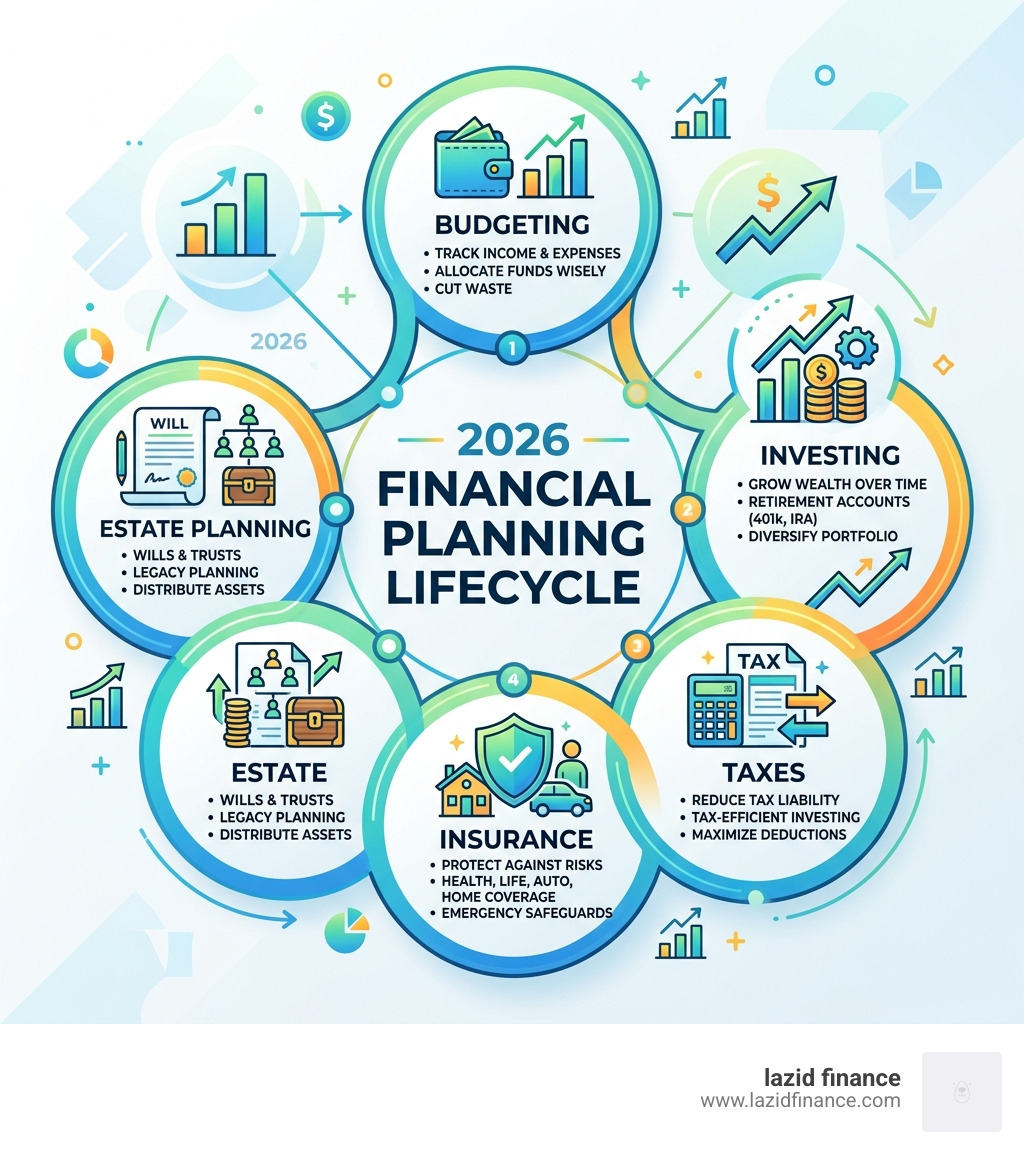
Financial planning is the process of setting financial goals and building a clear strategy to reach them — covering everything from day-to-day budgeting to retirement, taxes, insurance, and estate planning.
Here’s a quick overview of what it involves:
| Area | What It Covers |
|---|---|
| Budgeting | Tracking income and expenses, cutting waste |
| Emergency Fund | 3-6 months of essential living expenses saved |
| Debt Management | Paying down high-interest debt strategically |
| Investing | Growing wealth through retirement accounts and other vehicles |
| Tax Planning | Reducing your tax bill legally and efficiently |
| Insurance | Protecting against major financial risks |
| Estate Planning | Wills, trusts, and leaving a legacy |
Think of a financial plan like a GPS for your money. It tells you where you are, where you want to go, and the best route to get there — and it recalculates when life throws a detour at you.
Despite how valuable this is, roughly half of Americans still don’t have a written financial plan. That’s a lot of people navigating major money decisions without a map.
The good news? Financial planning isn’t just for the wealthy. It works at every income level and life stage — whether you’re paying off student loans, saving for a home, or thinking about retirement decades from now. The earlier you start, the more compounding works in your favor.
This guide walks you through everything you need to know — from the core components of a solid financial plan to the exact steps to build one, the tools available in 2026, and when it makes sense to bring in a professional.
What is Financial Planning and Why Does It Matter?
At its heart, financial planning is a holistic assessment of your entire financial life. It isn’t just about picking the right stocks or finding a high-yield savings account; it is about looking at the big picture. According to Northwestern Mutual, it involves advising individuals on how to achieve both short-term goals—like a summer vacation or a new car—and long-term objectives, such as a comfortable retirement or a child’s college education.
Why is this so critical in April 2026? We are currently witnessing what experts call the “Great Wealth Transfer.” An estimated $30 trillion (some estimates suggest up to $70 trillion) is expected to pass from baby boomers to their heirs over the coming decades. Without a strategic roadmap, much of that wealth could be lost to taxes, poor investment choices, or lack of preparation.
Furthermore, finance is becoming more complex. While Investopedia notes that a financial plan serves as a comprehensive picture of your current finances and your strategy to achieve your goals, the demand for guidance is skyrocketing. The U.S. Bureau of Labor Statistics expects the demand for personal financial advisors to grow by 13% through 2032—much faster than the average for all occupations.
For us at Lazid Finance, financial planning matters because it reduces stress. When you have a plan, you aren’t just reacting to bills; you are making proactive, conscious decisions. It provides the confidence to know that even if the market dips or an appliance breaks, you have the structural integrity in your finances to weather the storm.
The Core Components of a Comprehensive Strategy
A truly comprehensive financial plan is like a puzzle; if one piece is missing, the picture is incomplete. To build a plan that lasts, we must look at several key areas:
1. Net Worth and Cash Flow
You cannot plan a route if you don’t know your starting point. Calculating your net worth is the first step. This is a simple equation: Total Assets – Total Liabilities = Net Worth.
| Assets (What You Own) | Liabilities (What You Owe) |
|---|---|
| Cash and Bank Accounts | Credit Card Balances |
| Retirement Accounts (401k, IRA) | Student Loans |
| Real Estate/Home Value | Mortgage Balance |
| Investment Portfolios | Auto Loans |
| Personal Property (Vehicles, Jewelry) | Personal Loans/Medical Debt |
Next, we analyze cash flow. This is the “money in vs. money out” exercise. By reviewing bank statements and credit card bills, you can see exactly where your income goes each month and identify “leaks” where money is being spent on things that don’t align with your goals.
2. Risk Management (Insurance)
Life happens. Investopedia emphasizes that risk management is a pillar of any plan. This includes health, auto, homeowners, disability, and life insurance. The goal is to ensure that a single catastrophic event doesn’t wipe out years of savings.
3. Tax Strategy
Tax planning isn’t just for April. It is a year-round effort to minimize what you owe. This involves maximizing contributions to tax-advantaged accounts like 401(k)s and IRAs, utilizing tax-loss harvesting in your brokerage accounts, and understanding how different types of income (like capital gains vs. ordinary income) are taxed.
4. Estate Planning
It’s a common myth that estate planning is only for the “mansion-and-yacht” crowd. In reality, it’s about making your wishes known. This includes creating a will, setting up trusts if necessary, and designating powers of attorney. It ensures your assets go to the people or causes you care about with minimal legal headaches for your heirs.
Investment Strategies within Financial Planning
Once the foundation is set, we look at how to grow your wealth. Investment planning is the engine of your financial plan.
- Compound Interest: This is the “eighth wonder of the world.” By reinvesting your earnings, you earn interest on your interest. In 2026, with the tools available at Investor.gov, you can use compound interest calculators to see how even small monthly contributions can grow into a significant nest egg over 20 or 30 years.
- Risk Tolerance: Your investment strategy must match your stomach for risk. If market volatility keeps you awake at night, a 100% stock portfolio isn’t right for you, regardless of the potential returns.
- Asset Allocation and Diversification: Don’t put all your eggs in one basket. A mix of stocks, bonds, real estate, and perhaps alternative assets helps protect you.
- 2026 Market Trends: We are seeing a shift toward after-tax strategies and more personalized “direct indexing” for those with larger portfolios. Additionally, the rise of private credit has offered new avenues for income, though these require careful disclosure of illiquidity risks.
6 Essential Steps to Create Your Roadmap
Creating a plan can feel overwhelming, but we like to break it down into manageable steps.

Step 1: Set Specific Goals
Vague goals like “I want to be rich” rarely succeed. Instead, use the SMART criteria: Specific, Measurable, Achievable, Relevant, and Time-bound. “I want to save $50,000 for a home down payment by June 2029” is a goal you can actually plan for.
Step 2: Track Your Money
You need to know your cash flow. Use an app or a spreadsheet to track every dollar for at least thirty days. This reveals the truth about your spending habits versus your perceived spending.
Step 3: Build an Emergency Fund
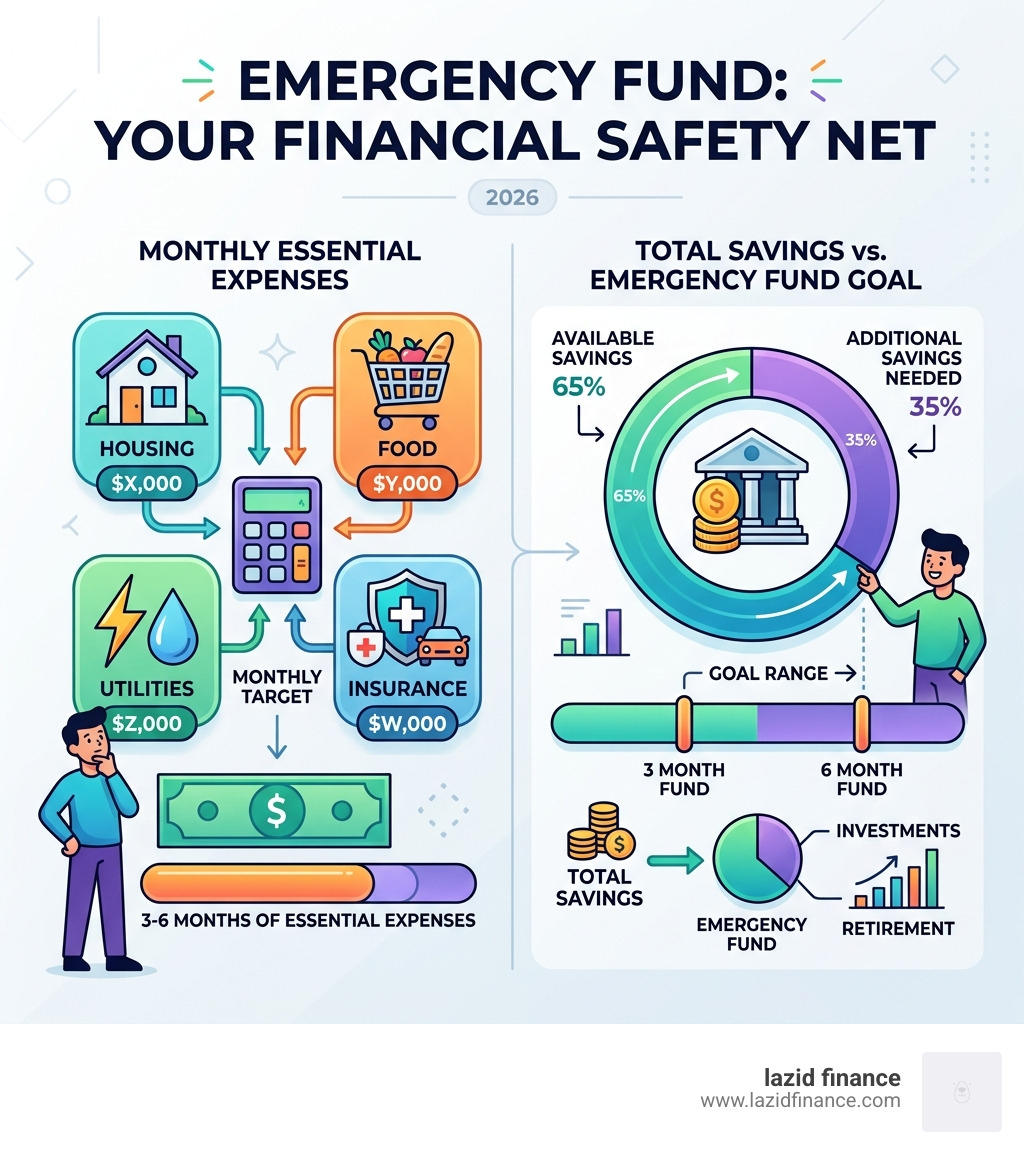
Before you invest a single dollar in the stock market, you need a safety net. The standard advice is to save three to six months of essential living expenses. In the gig economy of 2026, many experts now suggest aiming for closer to nine months if your income is variable.
Step 4: Manage Debt
Not all debt is created equal. High-interest debt (like credit cards with 20%+ APR) is a financial emergency. Use strategies like the “Debt Avalanche” (paying off the highest interest rate first) to free up your cash flow. Bankrate provides excellent foundational guides on balancing debt repayment with saving.
Step 5: Invest for the Future
Take advantage of employer matches first—it’s essentially a 100% return on your money. From there, look at IRAs and taxable brokerage accounts. For 2026, the 401(k) contribution limit has risen to $24,500, providing an even greater opportunity for tax-deferred growth.
Step 6: Monitor and Adjust
A financial plan is not a “set it and forget it” document. It’s a living thing. You should review it at least once a year or whenever a major life event occurs—like a marriage, a new job, or the birth of a child.
Budgeting for Successful Financial Planning
Budgeting is the “blocking and tackling” of the financial world. It’s the daily habit that makes the long-term plan possible. At Lazid Finance, we believe in mindful choices rather than restrictive deprivation.
- The 50/30/20 Rule: A popular and simple framework. Allocate 50% of your income to Needs (rent, groceries, utilities), 30% to Wants (dining out, hobbies), and 20% to Savings and Debt Repayment.
- Zero-Based Budgeting: This method gives every dollar a “job.” At the end of the month, your income minus your expenses should equal zero. If you have $500 left over, that $500 is assigned to a specific goal, like an extra mortgage payment or an investment account.
- Automation: The best way to save is to make it invisible. Set up automatic transfers from your paycheck to your savings and investment accounts. If you never see the money in your checking account, you won’t miss it.
The Evolution of Finance: AI and FP&A
The way we handle financial planning has changed drastically with the integration of technology. In the corporate world, Financial Planning and Analysis (FP&A) teams are moving away from static annual budgets toward “rolling forecasts.”

In 2026, Artificial Intelligence (AI) is no longer a buzzword; it’s a standard tool. Here’s how it’s changing the game for both businesses and individuals:
- Predictive Modeling: AI can analyze your spending patterns and predict when you might run low on cash or when you’ll have extra funds to invest.
- Anomaly Detection: Smart tools can now flag unusual spending or hidden subscription fees that you might have missed, acting as a digital watchdog for your budget.
- Reporting Automation: Platforms like Planful have shown that automating manual data collection can reduce reporting time by up to 90%. This means you spend less time “crunching numbers” and more time making decisions.
- Real-Time Data: Instead of waiting for a monthly bank statement, AI-driven tools provide a real-time view of your net worth and progress toward goals.
While technology provides the data, the “human” element of financial planning—deciding what kind of life you want to live—remains the most important part.
Frequently Asked Questions about Financial Planning
How often should I review my financial plan?
We recommend a deep-dive review at least once a year. However, you should also “recalculate” your plan after major life milestones: a new job, a significant raise (to avoid “lifestyle creep”), a marriage or divorce, or a health crisis. Regular check-ins allow you to rebalance your investment portfolio back to your target asset allocation.
Should I hire a CFP® or do it myself?
This depends on the complexity of your situation. If you are just starting out, DIY tools and robo-advisors can be very effective and low-cost. However, if you have a complex estate, own a business, or are navigating the “Great Wealth Transfer,” hiring a Certified Financial Planner™ (CFP®) is often worth the cost. A CFP® has a fiduciary duty, meaning they are legally required to act in your best interest, unlike commission-based salespeople.
How much do I need for an emergency fund?
The baseline is three to six months of essential expenses. If you spend $4,000 a month on “must-haves” (housing, food, insurance), your fund should be between $12,000 and $24,000. Keep this money in a liquid, high-yield savings account so it is accessible but still earning a bit of interest.
Conclusion
Financial planning is not about restricting your life; it’s about expanding your possibilities. It is the difference between hoping you’ll have enough to retire and knowing you will. By assessing your current situation, setting clear goals, and utilizing the smart tools available today, you take the driver’s seat in your financial journey.
At Lazid Finance, we are dedicated to providing the intelligent tools you need to make conscious, mindful decisions. Whether you are just beginning to track your cash flow or are looking to optimize a multi-generational estate, the best time to start was yesterday—the second best time is today.
Ready to take control? Start your journey to financial clarity with us and build the future you’ve always envisioned.

