
5 Simple Steps to Money Tips for Saving
Why Smart Money Tips Can Change Your Financial Life
Money tips are practical strategies that help you spend less, save more, and build lasting financial security.
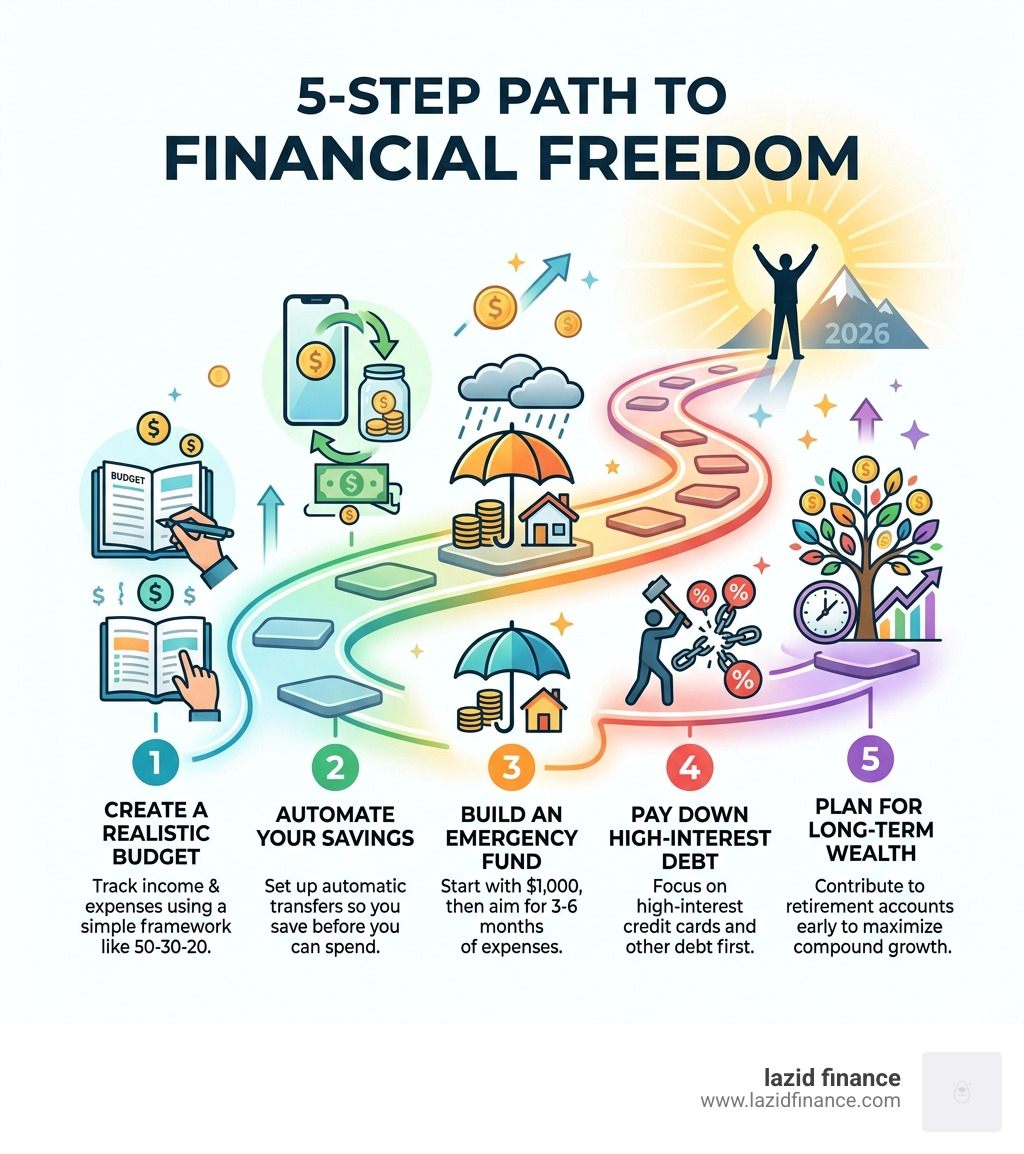
Here are the five most effective money tips to get started right now:
- Create a realistic budget – Track your income and expenses using a simple framework like the 50-30-20 rule
- Automate your savings – Set up automatic transfers so you save before you can spend
- Build an emergency fund – Start with $1,000, then work toward 3-6 months of expenses
- Pay down high-interest debt first – Credit card rates average above 25%, making this urgent
- Plan for long-term wealth – Contribute to retirement accounts early to maximize compound growth
Managing money can feel overwhelming. Less than half of Americans couldn’t cover a surprise $1,000 expense from savings. And Americans collectively carry over $1.2 trillion in credit card debt.
The good news? You don’t need to overhaul your entire financial life overnight.
Small, consistent habits compound over time. A single dollar saved today earns interest, which earns more interest — like a snowball rolling downhill. The earlier you start, the bigger it grows.
This guide breaks saving down into five simple, actionable steps anyone can follow, regardless of income or background.
1. Master Your Cash Flow with a Realistic Budget
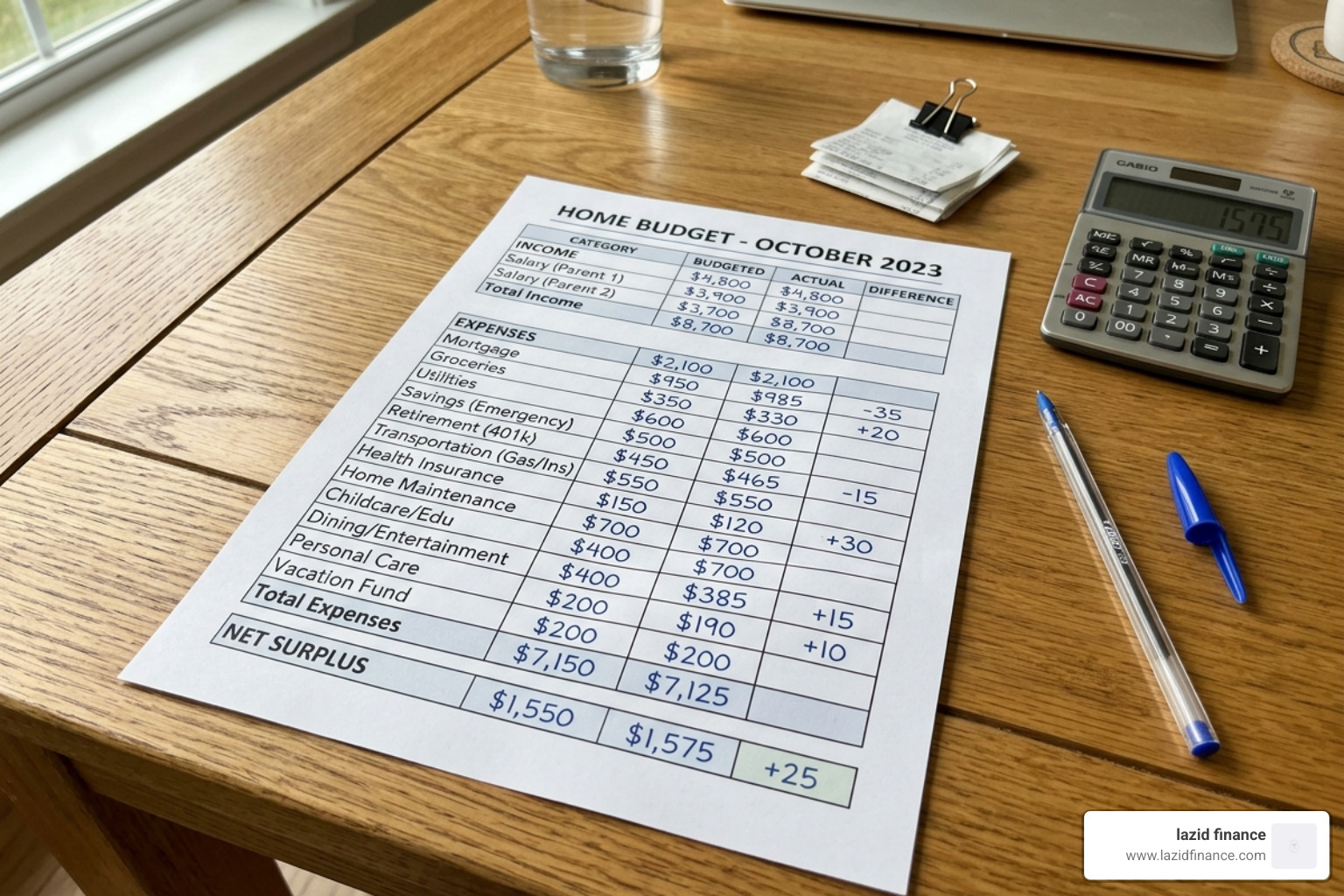
At Lazid Finance, we believe that a budget isn’t a “money jail sentence”—it’s a GPS for your financial journey. Without a plan, it is incredibly easy to reach the end of the month and wonder where your hard-earned cash went. A budget is simply a written plan that helps us decide how to spend our money before the month even begins.
To build a budget that actually sticks, we need to distinguish between our fixed expenses (the bills that stay the same, like rent or insurance) and variable costs (the ones that fluctuate, like groceries and entertainment).
There are two popular frameworks we often recommend depending on your lifestyle and location. The first is the 50-30-20 rule, which is a fantastic starting point for most people. However, if you live in a high-cost-of-living area, you might find the 60/30/10+15 guideline more realistic.
Comparing Budgeting Frameworks
| Category | 50-30-20 Rule | 60/30/10+15 Guideline |
|---|---|---|
| Essentials (Needs) | 50% | 60% |
| Lifestyle (Wants) | 30% | 30% |
| Savings/Debt Repayment | 20% | 10% (Near-term) + 15% (Retirement) |
The 60/30/10+15 model is slightly more aggressive regarding retirement but offers more breathing room for essential costs like housing, which has become more expensive as we move through 2026.
Money Tips for Tracking Every Dime
You cannot manage what you do not measure. We suggest using a spending tracker for at least thirty days to identify “leaks” in your wallet. Did you know that if you save just $2 per day by bringing your lunch to work instead of buying it, you’ll have $520 in savings by this time next year?
Another pro tip: write your bill due dates on a calendar. Mapping out when money leaves your account helps you manage cash flow—the timing of when money comes in versus when it goes out. If your bills all hit on the 1st but you get paid on the 15th, you can often call your creditors to request a due date change to better align with your paychecks. For more in-depth strategies on navigating these nuances, check out How to Manage Your Money in 2026 | ConsumerAffairs®.
2. Automate Savings and Build an Emergency Fund
The secret to successful saving isn’t willpower; it’s automation. We are big fans of the “pay yourself first” philosophy. This means that as soon as your paycheck hits your account, a portion is moved to savings before you have the chance to spend it on a flash sale or a late-night grocery run.
Your first priority should be a $1,000 starter fund. Why $1,000? Because life happens. Whether it’s an unexpected urgent care visit or a flat tire, having this cushion prevents you from reaching for a high-interest credit card. Once that starter fund is set, your next goal is to build a “fully funded” emergency fund covering 3-6 months of essential expenses.
Setting up automated transfers makes this habit invisible and effortless. Even if you can only spare $20 a week, you’ll have over $1,000 saved in a year. Consistency beats speed every single time. For more ways to improve your financial well-being, visit Get money smart. 25 tips to improve your financial well-being | Consumer Financial Protection Bureau.
Money Tips for Using High-Yield Accounts
Don’t let your emergency fund sit in a standard checking account earning 0.01% interest. In April 2026, high-yield online savings accounts are offering interest rates as high as 5%.
These accounts are FDIC-insured, meaning your money is safe up to $250,000 per institution. The APY (Annual Percentage Yield) in these online banks is typically 10 to 15 times higher than the national average at traditional “brick-and-mortar” banks. By using these accounts, you harness the power of compound interest, where your interest earns interest, effectively letting your money do the heavy lifting for you.
3. Crush High-Interest Debt and Optimize Spending
High-interest debt is the biggest obstacle to wealth. With typical credit card APRs now hovering above 25%, carrying a balance is like trying to swim with an anchor tied to your ankle.
To get free, we recommend one of two proven methods:
- The Debt Snowball: Pay off your smallest balance first. This gives you a quick psychological win and builds momentum.
- The Debt Avalanche: Pay off the debt with the highest interest rate first. This is mathematically the fastest way to save money on interest charges.
While you crush debt, you also need to guard against lifestyle inflation. This happens when your income increases (like getting a raise) and your spending rises to match it. Instead of upgrading your car immediately, try maintaining your current lifestyle for six months and redirecting that extra income toward your goals.
Practical Spending Hacks
- The 7-Day Rule: Before making a non-essential purchase over $50, wait seven days. Usually, the “must-have” feeling fades, and you’ll realize you didn’t need it.
- Safe Driver Programs: Many insurance companies in 2026 offer up to a 30% discount if you use a safe-driving app or take a defensive driving course.
- Insurance Review: Auto insurance premiums have finally plateaued in 2025-2026, rising only 0.6%. Now is the perfect time to shop around for a better rate.
- Energy Efficiency: Every degree you raise your AC in the summer saves 6% to 8% on energy usage. A simple ceiling fan can make a room feel 4 degrees cooler for a fraction of the cost.
4. Essential Money Tips for Long-Term Wealth and Taxes
Building wealth is a marathon, not a sprint. The most powerful tool you have is time. For example, contributing $500 a month starting at age 25 versus age 35 can result in a six-figure difference by the time you retire.
In 2026, the government has increased the amounts we can squirrel away for the future:
- 401(k) Limits: You can now contribute up to $24,500 annually.
- IRA Limits: The limit is $7,500, or $8,600 if you are age 50 or older.
- Catch-up Contributions: If you’re between 60 and 63, you may be eligible to contribute even more (up to $11,250) to help bolster your nest egg.
Don’t forget about HSAs (Health Savings Accounts) and FSAs (Flexible Spending Accounts). These allow you to use pre-tax dollars for medical expenses. An HSA is particularly powerful because it isn’t “use-it-or-lose-it”—the money stays with you forever and can even be invested for retirement.
Tax Optimization Tips
As we head into the tax season for 2026, keep these facts in mind:
- IRS Direct File: This free service is now available in all 50 states for those with simple returns and an adjusted gross income (AGI) of $84,000 or less.
- Withholding Check: If you got a massive refund or owed a lot of money last year, use the IRS withholding calculator to adjust your paycheck. This ensures you have more money in your pocket every month rather than giving the government an interest-free loan.
Frequently Asked Questions about Money Management
What is a budget and why is it essential?
A budget is a written plan for your money. It is essential because it ensures you have enough for your “needs” while still allowing you to save for “wants” and future goals. Without one, most people tend to overspend on small, daily luxuries and fall behind on big-picture security.
How can I save money on a very tight budget?
Focus on the “Big Three”: Housing, Transportation, and Food. You can save on food by using grocery lists to avoid impulse buys and taking advantage of digital coupons. For transportation, look into safe driver discounts. If your budget is extremely tight, even saving $2 a day creates a $520 cushion over a year. Small amounts matter!
What are the benefits of using money-saving apps and tools?
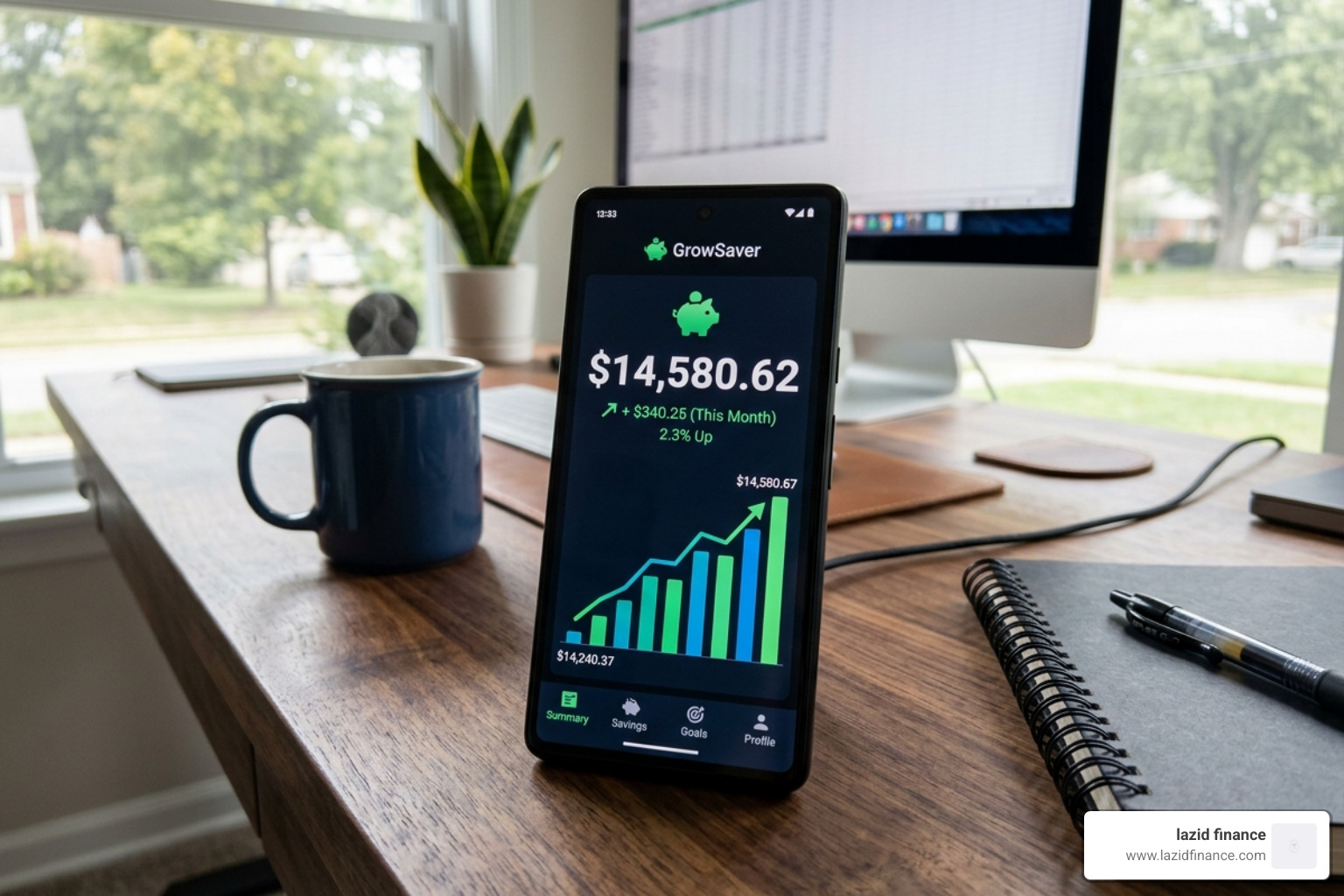
Modern tools can automate the boring parts of finance. Cashback apps give you rebates on things you were already going to buy, while budgeting apps can link to your bank account to categorize your spending automatically. These tools provide a “snack-sized” view of your finances, making complex data easy to understand.
Conclusion
Taking control of your finances doesn’t require a degree in economics; it requires a few mindful choices and the right set of money tips. Whether you are starting with a weekly $1 savings challenge or maximizing your 401(k) contributions, the most important step is the one you take today.
At Lazid Finance, we are dedicated to providing smart finance solutions tailored for mindful choices. We believe that everyone deserves to feel secure about their financial future, regardless of their starting point. By mastering your cash flow, automating your savings, and planning for the long term, you are building a foundation that will support your dreams for years to come.
Ready to take the next step toward financial clarity? Start your journey with Lazid Finance and let us help you make your financial life make “cents.”

