
Which Budget Planner Actually Works?
Which Budget Planner Actually Works in 2026?
The best planner for budgeting depends on your habits — but here are the top categories to start with:
| Planner Type | Best For | Cost |
|---|---|---|
| Zero-Based Digital App | Debt payoff, strict control | ~$80-$110/year |
| Comprehensive Financial App | Couples, full financial picture | ~$100/year |
| Envelope System App | Shared expenses, visual tracking | Free / ~$80/year |
| Simple Tracking App | Beginners, manual entry | Free / ~$80/year |
| Premium Physical Planner | Tactile accountability, privacy | ~$30-$50 one-time |
| Customizable Physical Planner | Portability, creative layouts | ~$15-$35 one-time |
| Visual/Disc-bound Planner | Fun, visual, accessory-friendly | Varies |
You already know the feeling. Payday hits, you feel good — then three weeks later you’re wondering where it all went.
You’re not alone. Most people don’t have a spending problem. They have a visibility problem.
A good budget planner fixes that. But walking into this space is overwhelming. There are slick apps with AI features, beautiful physical notebooks, subscription tools, free tools, envelope systems, zero-based methods — the list goes on.
One thing is clear from research: the best budget is simply the one you’ll actually stick to. A former user of a popular budgeting tool summed it up well after switching — they said it finally felt like they weren’t “winging it financially anymore.”
That feeling of control? That’s what the right planner delivers.
This guide cuts through the noise. We compared the top-rated digital apps and physical planners side by side — their features, costs, who they’re built for, and where they fall short.
Digital vs. Physical: Finding the Best Planner for Budgeting
When we look for the best planner for budgeting, the first crossroads is always: App or Paper? Both have massive fanbases, and the “right” choice depends entirely on your psychological relationship with money.
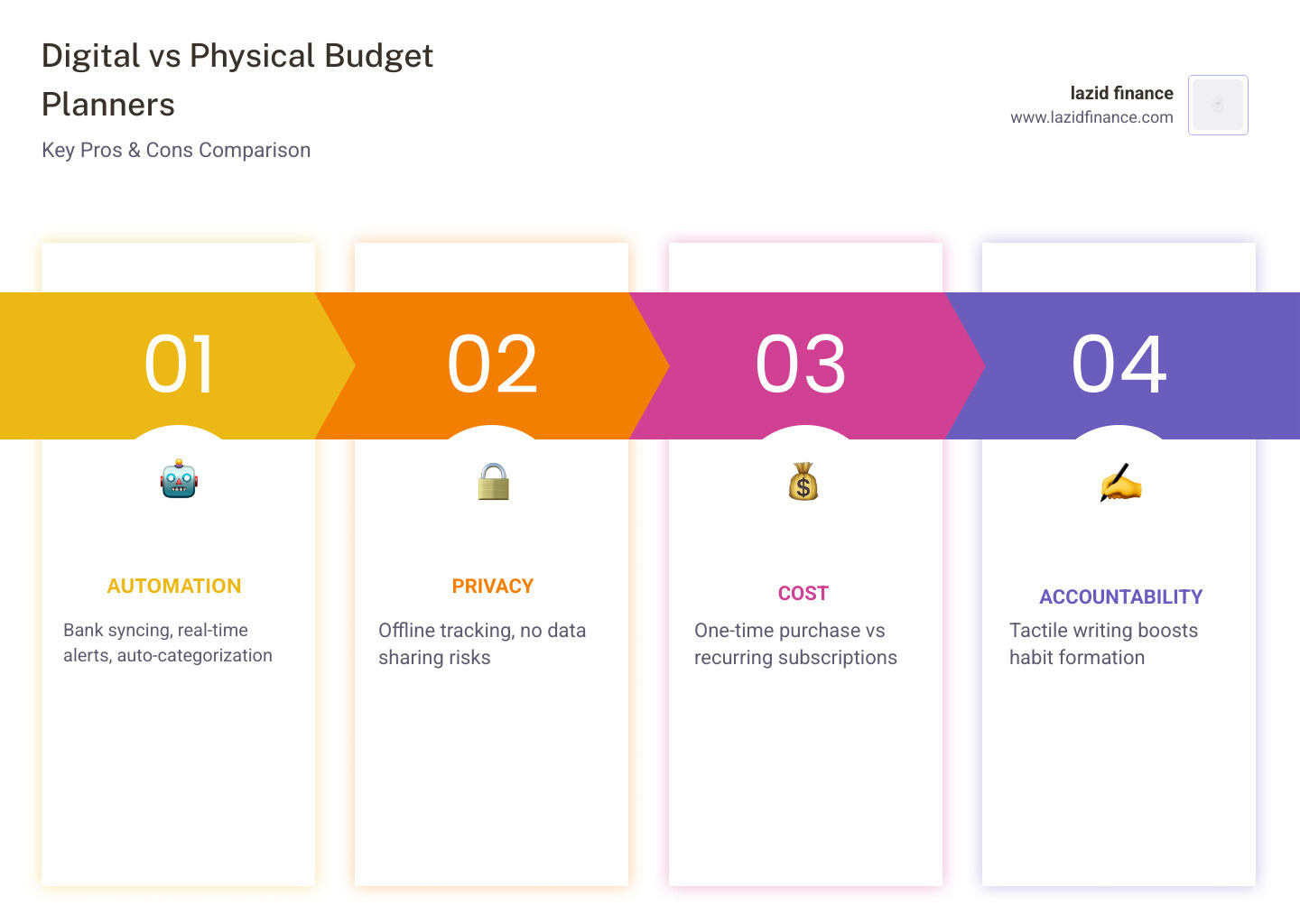
Digital apps excel at speed. They offer bank syncing, real-time alerts when you’re overspending at a restaurant, and beautiful charts that show your net worth over time. On the other hand, physical notebooks offer a tactile experience that apps can’t touch. There is a deep psychological benefit to physically writing down a goal. Research around handwriting and goal recall suggests that writing can strengthen attention and follow-through, making you more mindful of every dollar that leaves your wallet. For broader background on how structured planning supports behavior change, the budget concept itself is a useful starting point.
| Feature | Digital Budgeting Apps | Physical Budget Planners |
|---|---|---|
| Convenience | Automatic transaction imports | Manual entry required |
| Privacy | Data stored on servers (encrypted) | Total privacy; no data sharing |
| Cost | Often subscription-based ($70-$120/yr) | One-time purchase ($15-$50) |
| Accountability | Push notifications and alerts | High (requires active writing time) |
| Customization | Feature-rich but fixed UI | Highly customizable with stickers/pens |
For those who worry about data privacy, physical planners are the ultimate fortress. There are no targeted ads, no security breaches, and no third-party aggregators. However, if you have a complex portfolio or want to track shared finances with a partner in real-time, a high-end digital tool is almost certainly the best planner for budgeting for your needs.
Why Digital is the Best Planner for Budgeting for Tech-Savvy Users
In April 2026, digital planners have moved far beyond simple spreadsheets. We are now seeing AI-driven features that can predict an overdraft before it happens or identify a “zombie” subscription you forgot to cancel months ago.
Modern apps allow for “Flex Budgeting,” where your categories can shift as life happens. For the global citizen, advanced tools now track over $48 billion across 150+ countries and 100+ currencies. Security has also reached a gold standard; top-tier apps use 256-bit encryption and multi-factor authentication (MFA) to ensure your bank data stays between you and the software.
Choosing the Best Planner for Budgeting for Beginners
If you are just starting out, the sheer volume of data in an app can be paralyzing. This is where undated physical planners shine. Specialized brands offer undated layouts, meaning you can start your budget on April 12th without wasting half a notebook of “January to March” pages.
Beginners often benefit from a structured layout that asks specific questions: What are my three financial goals this month? What was my total income? These prompts act as a financial coach, guiding you through the habit-formation stage until budgeting becomes second nature.
Top-Rated Digital Budgeting Methodologies for 2026
The methodology behind an app is more important than the interface. In 2026, three main “schools” of digital budgeting dominate the market:
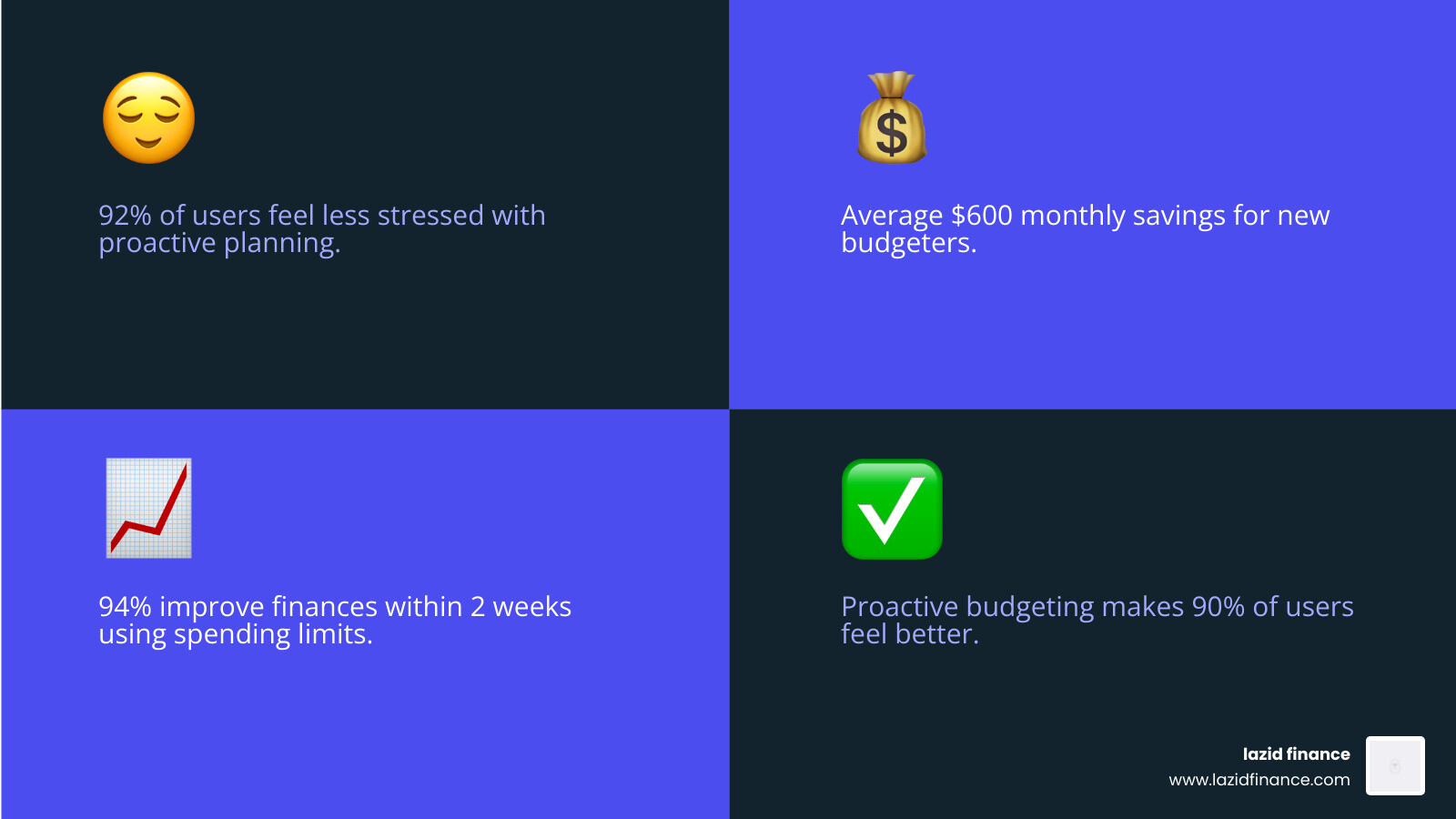
- Zero-Based Budgeting (The Proactive Method): This is the “give every dollar a job” philosophy. You don’t just track what you spent; you decide what every dollar will do before you spend it. It works. Statistics show that 92% of users of this method feel less stressed after starting, and the average user saves $600 in their first month.
- The Weekly Spending Limit (The Weekly Limit Method): This is perfect for people who find monthly budgets too long. This approach calculates a “Safe-to-Spend” number for you every seven days. 94% of users say it improved their finances in just two weeks because it’s much easier to stay disciplined for seven days than for thirty.
- AI-Powered Intelligence (The AI-Driven Method): These tools use AI to categorize transactions and provide “Financial DNA” tests. They look at your spending patterns and tell you exactly where the waste is.
For couples, collaboration is the killer feature. Leading collaborative apps allow partners to sync their separate and joint accounts into one view. This transforms money conversations from “Why did you spend that?” to “How are we doing on our vacation goal?”
The Best Physical Budget Planners and Notebooks
If you prefer the “pen to paper” route, the market in 2026 is filled with high-quality, beautiful options.
- Premium Spiral-Bound Planners: Known for their high-quality 80 LB paper (which prevents ink bleed) and durable designs. Portable versions are great for on-the-go tracking, while larger ring-bound agendas allow you to snap in accessories like bill-tracking dashboards.
- Action-Oriented Savings Planners: This type of planner is highly focused on actionable steps. It’s designed to take a daunting task and break it down into “fun” ways to save. Users frequently mention that the included stickers make the process feel less like a chore.
- Visual Disc-Bound Planners: If you want to “gamify” your savings, this is the one. It uses a disc-bound system, meaning you can take pages out or add new ones (like “Savings Challenges” or “Debt Snowball” trackers) whenever you want.
- Specialized Bi-Weekly Planners: These offer layouts perfect if you want to align your budgeting exactly with your bi-weekly paychecks.
Physical planners also excel at the Cash Envelope System. Many of these planners come with actual physical envelopes or slots to hold cash, forcing a level of discipline that a credit card simply can’t provide.
Specialized Budgeting Methods for Every Goal
The best planner for budgeting for a college student is not the same as the one for a family of five or a freelancer with irregular income.
- For Debt Payoff: Look for planners with “Debt Snowball” or “Debt Avalanche” trackers. Proactive budgeting methods are particularly famous for helping users “break the paycheck-to-paycheck cycle.”
- For Irregular Income: Digital envelope systems are life-savers here. You can fill your “virtual envelopes” when the money comes in and see exactly how long it needs to last.
- For Wealth Building: If you’re past the “survival” stage and want to track investments, leading wealth-tracking platforms are the leaders. They allow you to see your 401(k), crypto, and real estate holdings alongside your grocery budget.
- For Visual Learners: Physical planners with “Savings Jars” stickers or coloring pages (where you color in a brick for every $100 of debt paid) provide a dopamine hit that keeps you motivated.
Frequently Asked Questions about Budget Planning
Are digital budgeting apps secure for bank syncing?
Yes, provided you choose reputable ones. Most top-tier apps don’t actually “see” your login credentials. They use third-party aggregators like Plaid or Finicity to create a secure, read-only “bridge” to your bank. Look for apps that mention AES 256-bit encryption (the same level banks use) and always enable Multi-Factor Authentication (MFA).
How do I choose between weekly and monthly planning?
Monthly planning is great for fixed bills (rent, insurance), but weekly planning is better for variable spending (groceries, entertainment). Many users find success with a “hybrid” approach: use a monthly overview to ensure bills are covered, but use a weekly “Safe-to-Spend” limit to manage daily life.
What are the best free budgeting options available?
If you’re on a tight budget, you don’t need to spend money to save money.
- Envelope-based apps offer robust free versions (often with limited categories).
- Simple tracking apps have free versions if you don’t mind entering transactions manually.
- Collaborative tools are fantastic free options specifically for couples.
- Manual Spreadsheets: Google Sheets and Excel remain powerful, free, and 100% customizable.

Conclusion
Choosing the best planner for budgeting isn’t about finding the one with the most features; it’s about finding the one that fits your lifestyle. If you love the “ding” of a notification and want everything automated, go digital. If you need to slow down and physically feel your progress, go physical.
At Lazid Finance, we believe that financial freedom isn’t about having unlimited money—it’s about making conscious, mindful decisions with what you have. Whether you choose a high-tech AI coach or a floral notebook with stickers, the goal is the same: clarity, peace, and a future where you control your money, rather than your money controlling you.
Ready to take the next step in your financial journey? More info about smart finance solutions can help you turn these budgeting goals into long-term wealth. Stay mindful, stay consistent, and watch your financial world change.

