
Pick the perfect savings planner calculator to boost your bankroll
Why a Savings Planner Calculator Is the Smartest First Step Toward Any Financial Goal
A savings planner calculator is a tool that shows you exactly how much to save each month — and how your money grows over time — based on your goal amount, timeline, interest rate, and starting balance.
Quick answer: Best savings planner calculators at a glance
| Tool | Best For | Key Feature |
|---|---|---|
| Investor.gov | Goal-based planning | Government-backed, compounding options |
| Bankrate | Scenario comparison | Detailed formula breakdown |
| TreasuryDirect | Treasury products | U.S. savings bonds focus |
| Calculator.net | Advanced projections | Tax and inflation inputs |
| WealthCalc | Visual planning | Year-by-year growth charts |
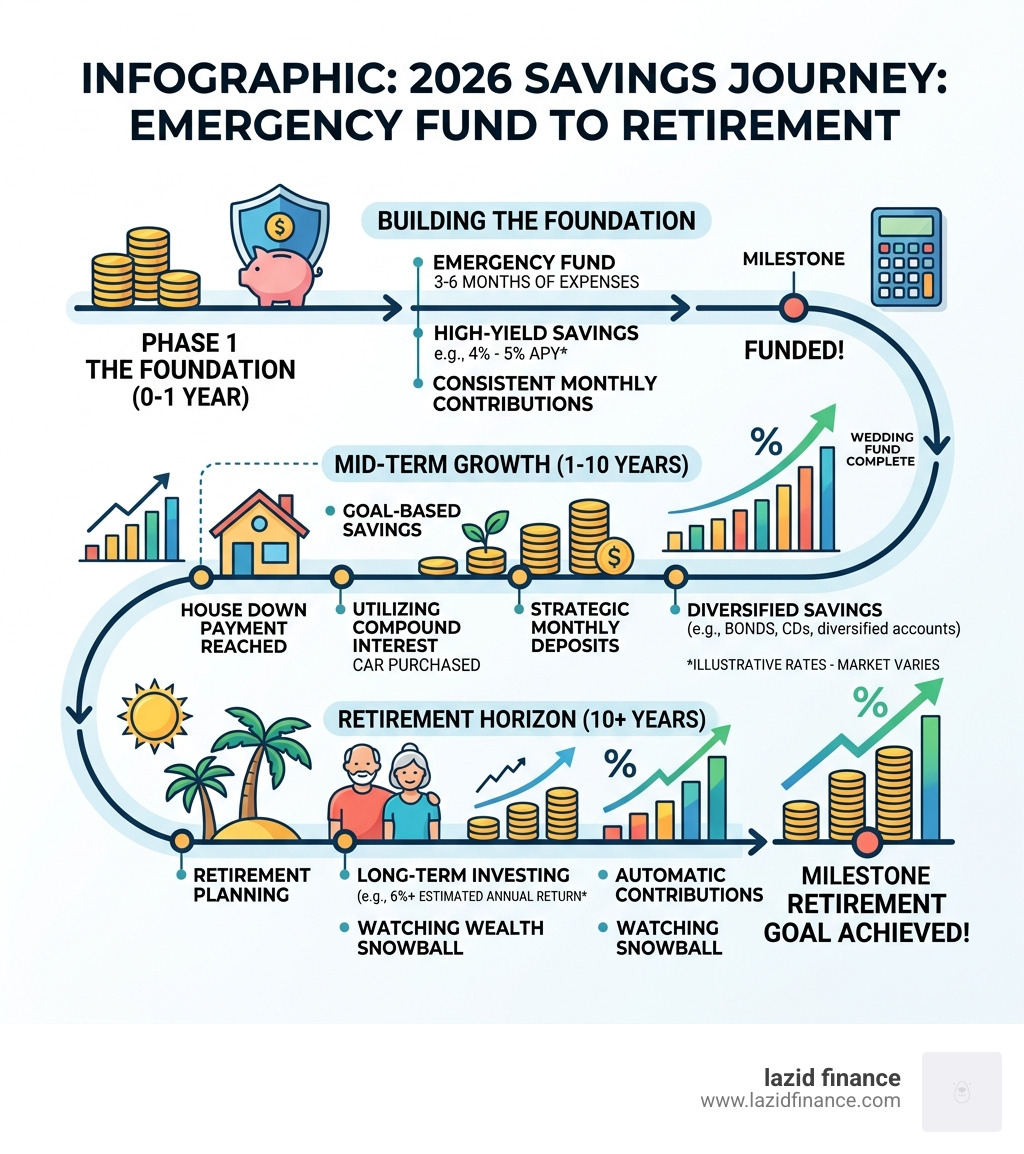
Here’s the reality most people miss: where you save matters just as much as how much you save. A traditional savings account might earn 0.01–0.50% APY. A high-yield savings account can earn 4–5% APY in 2026. That gap adds up to thousands of dollars over time.
And thanks to compound interest — earning interest on your interest — even small monthly contributions snowball into serious wealth. At just 6% annual interest, your money doubles roughly every 12 years.
But not all calculators are built the same. Some handle only short-term goals. Others factor in inflation, taxes, and variable compounding. Picking the right one means getting projections you can actually trust.
This guide breaks down the best options so you can find the tool that fits your goals — whether that’s a starter emergency fund, a house down payment, or long-term retirement savings.
How a Savings Planner Calculator Uses Compound Interest to Project Wealth
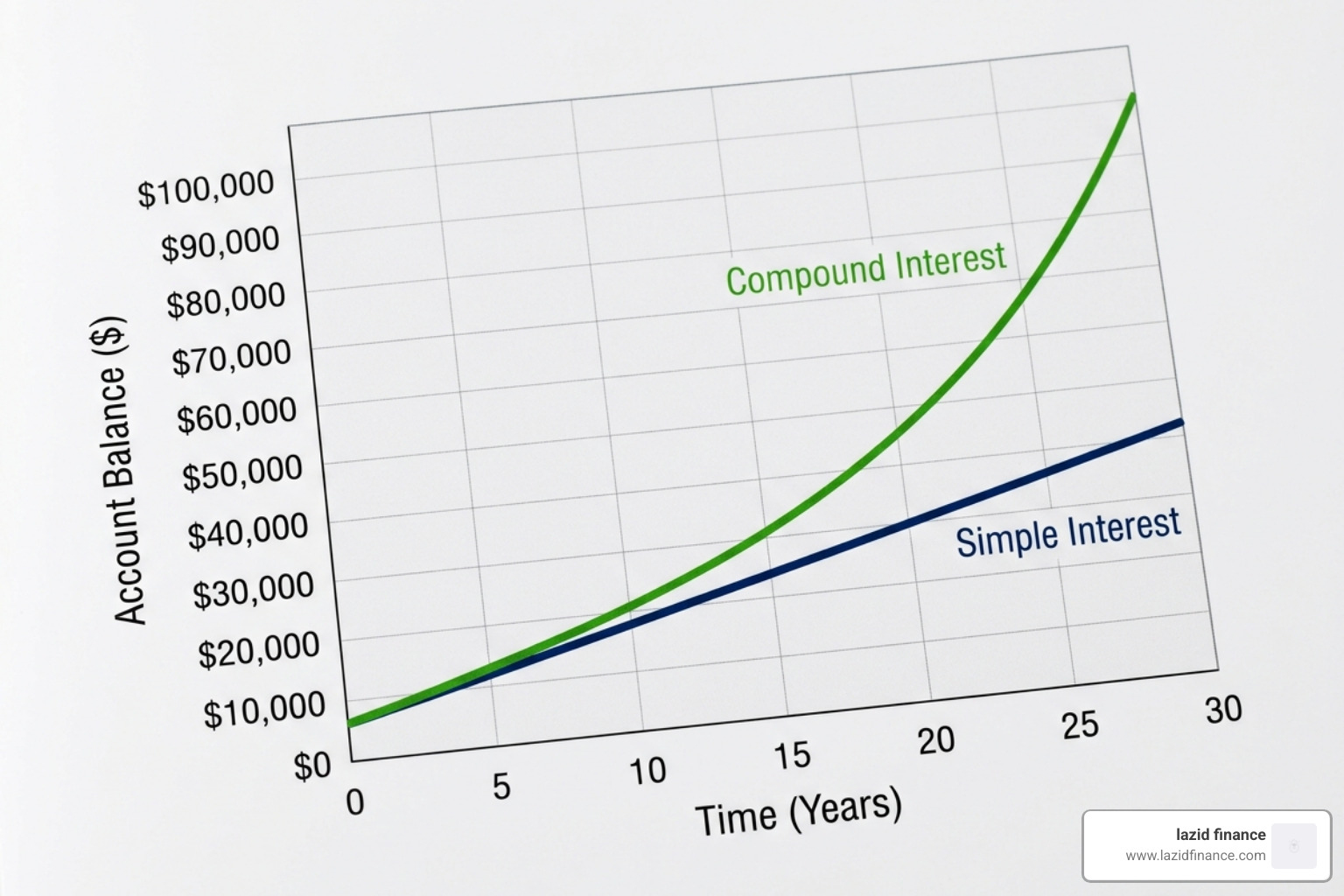
We like to think of compound interest as the “eighth wonder of the world.” Why? Because it’s the engine that turns a modest monthly habit into a mountain of cash. When you use a savings planner calculator, you aren’t just doing simple addition; you’re modeling exponential growth.
Compound interest means you earn interest on your initial principal plus all the interest that has already been added to your balance. Over a long enough timeline, the interest begins to do more heavy lifting than your actual deposits. In fact, research shows that after 30 years of consistent saving at a 7% return, over 70% of your total balance can come from compound interest rather than your out-of-pocket contributions.
Essential Inputs for Your Savings Planner Calculator
To get an accurate projection, you need to feed the calculator the right data. Most high-quality tools, like the Savings Goal Calculator | Investor.gov, require five specific inputs:
- Goal Amount: The total “nut” you want to crack. Whether it’s $5,000 for an emergency fund or $50,000 for a down payment.
- Time Horizon: How many years or months do you have? Short-term tools, such as the Savings Goal Calculator for Short Term Financial Goals, often limit this to five years.
- Initial Deposit: Your “seed money.” Starting with $1,000 instead of $0 can significantly shorten your timeline thanks to—you guessed it—compounding.
- Contribution Frequency: Will you save weekly, bi-weekly, or monthly? Frequent small deposits often lead to better results than one large annual deposit.
- Interest Rate (APY): This is your expected annual return. In April 2026, we’re seeing high-yield accounts offering 4-5%, while conservative investments might target 7%.
The Math of Growth: APR vs APY
One of the most common points of confusion we see is the difference between APR (Annual Percentage Rate) and APY (Annual Percentage Yield).
APR is the “simple” interest rate. APY is the “real” rate because it includes the effect of compounding. If a bank compounds interest daily (which most do), your APY will be slightly higher than your APR. For example, at a 1% APR, daily compounding results in a 1.005% APY. While that seems tiny, it matters when you’re dealing with six-figure balances or multi-decade timelines.
Compounding Frequency Comparison ($10,000 at 5% APR over 10 years)
| Compounding Frequency | Final Balance | Total Interest Earned |
|---|---|---|
| Annually | $16,288.95 | $6,288.95 |
| Quarterly | $16,436.19 | $6,436.19 |
| Monthly | $16,470.09 | $6,470.09 |
| Daily | $16,486.65 | $6,486.65 |
As you can see, daily compounding earns you nearly $200 more than annual compounding on a $10,000 deposit over a decade. Most modern savings planner calculator tools, like the one at miniwebtool.com, allow you to toggle these frequencies to see the impact yourself.
Realistic Planning: Inflation, Taxes, and Asset Choice
If you only look at the “big number” at the end of a 20-year projection, you might be in for a surprise. In finance, we have to talk about “real returns”—that’s your profit after inflation and taxes have taken their cut.

Accounting for Inflation and Taxes
Inflation is the silent thief of purchasing power. If you save $100,000 over 20 years, but inflation averages 3% annually, that $100,000 will only buy about $55,368 worth of goods in today’s terms. This is why we recommend using a savings planner calculator that offers “inflation-adjusted” results. It helps you set a goal that will actually cover your costs when you finally reach it.
Then there’s the “tax-drag.” Unless you are saving in a tax-advantaged account like a Roth IRA, Uncle Sam is going to want a piece of your interest every year. For many savers, taxes can eat 25% or more of their annual interest earnings. If your calculator doesn’t factor in your marginal tax rate, you might find yourself short of your goal.
Choosing the Right Savings Vehicle
Your choice of “bucket” is just as important as the calculator you use. In 2026, the landscape offers several distinct paths:
- High-Yield Savings Accounts (HYSAs): These are the gold standard for emergency funds and short-term goals. They offer 4-5% APY and high liquidity.
- Certificates of Deposit (CDs): If you don’t need the money for 6 months to 5 years, CDs can lock in a high rate. Just be prepared for penalties if you withdraw early.
- Treasury Bills & Bonds: Backed by the U.S. government, these are incredibly safe. The Savings Planner tool is specifically designed for these products.
- Money Market Accounts: These often bridge the gap between checking and savings, sometimes offering debit card access while paying competitive rates.
Regardless of where you save, ensure the institution is FDIC-insured (or NCUA-insured for credit unions). This protects your deposits up to $250,000 per depositor, per institution.
Comparing the Best Savings Planner Calculator Features for 2026
When we evaluate a savings planner calculator, we look for more than just a “Calculate” button. Accuracy is the baseline, but usability is what keeps you motivated.
Key Features to Look For in a Savings Tool
A top-tier tool should offer:
- Graphical Visualization: Seeing a line chart move up and to the right is a powerful psychological boost.
- Mobile Optimization: You should be able to tweak your goals while standing in line for coffee.
- Exportable Reports: Tools like the one at MortgageCalculator.org allow you to print or save a report of your accumulation schedule.
- Customizable Intervals: The ability to switch between daily, monthly, and annual compounding is vital for accuracy.
Avoiding Common Mistakes with a Savings Planner Calculator
We’ve seen many well-intentioned savers get derailed by “calculator optimism.” Avoid these pitfalls:
- Overestimating Rates: Don’t assume 10% returns for a savings account. Stick to 2026 market benchmarks (4-5% for cash).
- Ignoring Fees: Some accounts have monthly maintenance fees that can wipe out your interest if your balance is low.
- Static Contributions: Life happens. Your income will likely grow. A good plan assumes you’ll increase your contributions as you get raises.
- Neglecting Liquidity: Don’t put your “transmission blew up” money into a 5-year CD. Ensure your emergency fund is always accessible.
Strategies to Maximize Your Savings Growth
At Lazid Finance, our mission is to provide smart finance solutions tailored for mindful choices. We believe that a savings planner calculator is most effective when paired with a solid behavioral strategy.
How to Interpret Savings Planner Calculator Projections
Don’t just look at the final number; look at the milestones. Use the Rule of 72 for a quick reality check. Divide 72 by your interest rate to find out how many years it takes for your money to double. At a 6% rate, your money doubles every 12 years. If your calculator says you’ll double $10,000 in 5 years at a 4% rate, you know something is wrong with the math!
We also recommend breaking down large annual goals into smaller, digestible bites. For example, saving $12,000 a year sounds daunting. But a savings planner calculator can show you that it’s really just:
- $1,000 per month
- $231 per week
- $33 per day
Suddenly, skipping that expensive daily takeout delivery feels like a direct contribution to your dream home.
Automating Your Path to Success
The single most effective strategy for consistent growth is automation. “Paying yourself first” means setting up a system where your savings are moved before you have a chance to spend them.
- Direct Deposit: Ask your employer to split your paycheck, sending 10-20% directly to your high-yield savings account.
- Sinking Funds: Create separate “buckets” for known future expenses like car repairs, holiday gifts, or vacations.
- Windfall Strategy: Decide now that 50% of any tax refund, bonus, or cash gift goes straight into your savings.
By taking the decision-making out of the process, you eliminate the “willpower gap.” We are passionate about helping you make these conscious decisions easy. You can learn More about our mindful finance mission to see how we approach wealth building.
Frequently Asked Questions about Savings Planning
What is a realistic interest rate for a savings calculator in 2026?
As of April 2026, a realistic rate for a high-yield savings account is between 4% and 5% APY. Traditional “big bank” savings accounts are still lagging, often offering a dismal 0.01% to 0.50%. If you are looking at longer-term investments like a diversified stock portfolio, a 7% inflation-adjusted return is a common benchmark, but these carry more risk than a savings account.
How much should I save monthly for an emergency fund?
The Federal Reserve has found that the average consumer needs about $2,000 to resolve immediate emergencies. However, the gold standard is to have 3 to 6 months of living expenses tucked away. If your monthly expenses are $4,000, your goal is $12,000 to $24,000.
A great way to start is the 50-30-20 Rule:
- 50% for Needs (Rent, groceries, utilities)
- 30% for Wants (Dining out, hobbies)
- 20% for Savings and Debt Repayment
Does the 6-withdrawal limit still apply to savings accounts?
Historically, U.S. federal regulations (Regulation D) limited savings accounts to no more than six outgoing transactions or withdrawals per month. While the Federal Reserve paused the enforcement of these penalties in recent years, many banks still maintain this limit or charge fees for exceeding it. Always check your bank’s specific policy to ensure your money remains liquid when you need it.
Conclusion
Choosing the right savings planner calculator is about more than just numbers—it’s about clarity. By understanding the power of compound interest, accounting for the reality of inflation, and picking the right savings vehicle, you turn “I wish” into “I will.”
At Lazid Finance, we believe in providing intelligent financial tools for conscious decisions. Whether you are building your first $2,000 emergency fund or planning a sabbatical, the journey starts with a single, calculated step.
Stop guessing and start growing. Use the tools we’ve discussed to map out your 2026 goals and beyond. Your future self will thank you for the compound interest you start earning today.
Ready to take control of your financial journey?

