
Money Advice Survival Guide
Why Good Money Advice Can Change Everything
Money advice is guidance that helps you make smarter decisions with the money you earn, save, spend, and borrow.
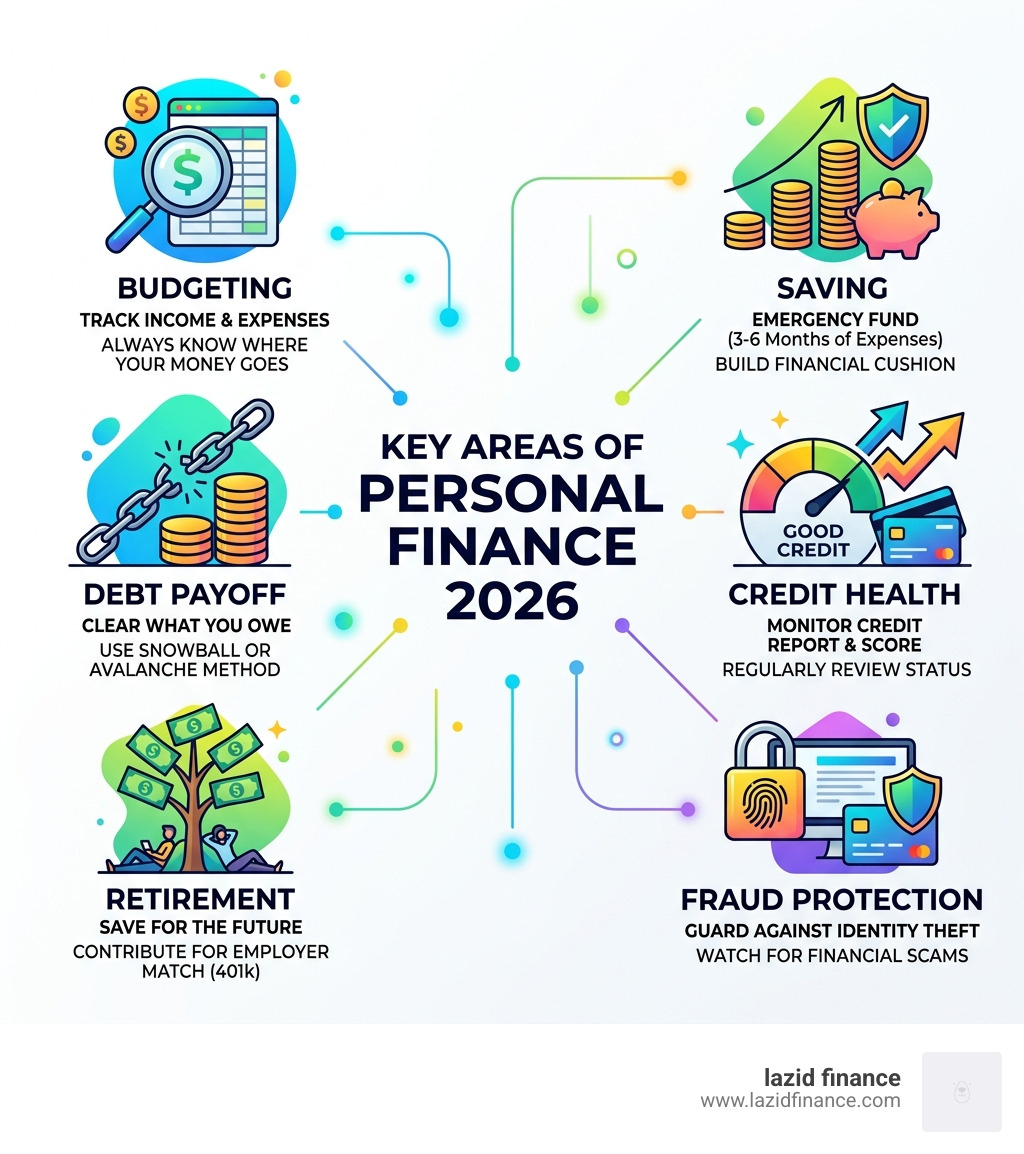
Here is a quick overview of the most important areas to focus on:
- Budgeting – Track income and expenses so you always know where your money goes
- Emergency fund – Save 3-6 months of essential expenses as a financial cushion
- Debt payoff – Use the snowball or avalanche method to clear what you owe
- Credit health – Monitor your credit report and score regularly
- Retirement saving – Contribute enough to capture any employer 401(k) match
- Fraud protection – Guard against identity theft and financial scams
- Free resources – Use government and nonprofit tools for impartial guidance
Money is one of the biggest sources of stress for most people. Whether you are living paycheck to paycheck, drowning in debt, or simply unsure where to start — you are not alone.
The good news? A few simple habits and the right information can make a dramatic difference.
The challenge is that financial advice is everywhere — and a lot of it is confusing, contradictory, or designed to sell you something. This guide cuts through the noise. It pulls together proven, practical strategies from trusted sources so you can take real steps forward, starting today.
From building your first emergency fund to protecting yourself from scams, this guide covers the full picture of personal finance in plain language.
Core Principles of Effective Budgeting and Money Advice
At its heart, budgeting isn’t about restriction; it’s about empowerment. We like to think of a budget as a “spending plan” that gives you permission to spend on the things that actually matter to you. To get started, you need to know exactly what is coming in and what is going out.
One of the most effective frameworks we recommend is the 60/30/10+15 rule. While traditional advice often suggests tighter margins, this modern approach helps balance today’s needs with tomorrow’s security:
- 60% for Essentials: This covers your “must-haves” like housing, groceries, utilities, and transportation.
- 30% for Non-essentials: This is your “fun money” for dining out, hobbies, and streaming services.
- 10% for Short-term Goals: This goes toward your emergency fund or saving for a specific purchase.
- 15% for Retirement: This is pre-tax money invested for your future self.
To make this work, you don’t need a PhD in finance. Simple tools like budget planners or worksheets can do the heavy lifting. By tracking your income and expenses monthly, you ensure that your paycheck isn’t just disappearing into a black hole of “miscellaneous” spending. If you’re looking for a place to start, Your Money | consumer.gov offers straightforward worksheets to help you visualize your cash flow.

Building Your Emergency Fund
Life has a habit of throwing curveballs. Whether it’s a sudden car repair or a medical bill, an emergency fund is the barrier between a “bad day” and a “financial disaster.”
We suggest starting with a starter goal of $1,000 or one month of essential expenses. This small win provides an immediate psychological boost. Once that is in place, your long-term goal should be to save 3 to 6 months of essential expenses.
Where should you keep this money? A high-yield savings account (HYSA) is usually the best bet. Unlike a standard savings account, an HYSA offers a much higher interest rate, allowing your cushion to grow slightly over time while remaining easily accessible. In the current 2026 landscape, many top-tier accounts are offering rates significantly higher than the national average, helping you combat the rising costs of living.
Strategic Debt Payoff and Money Advice
Debt can feel like a heavy weight, but having a strategy turns that weight into a series of manageable steps. There are two primary schools of thought when it comes to money advice for debt:
- The Debt Snowball: You pay off your smallest debts first, regardless of the interest rate. This method focuses on “psychological wins.” When you cross a small debt off your list, you feel a sense of momentum that keeps you going.
- The Debt Avalanche: You focus on the debt with the highest interest rate first. Mathematically, this saves you the most money over time because you are minimizing the amount of interest that accrues.
Which one is better? The one you will actually stick to. If you need quick wins to stay motivated, go with the snowball. If you are driven by the math, go with the avalanche. For those feeling overwhelmed, Free Financial Planning Tools | Investor.gov provides calculators to help you see exactly how long it will take to become debt-free using these methods.
Maximizing Benefits: Credit, Savings, and Retirement
Understanding how credit and retirement accounts work is like learning the rules of a game. Once you know the rules, you can play to win.
Credit reports and scores are essentially your financial GPA. They tell lenders how “trustworthy” you are with borrowed money. Best practices include paying your bills on time (every single time) and keeping your credit utilization—the amount of your limit you’re actually using—below 30%. We recommend checking your credit report at least once a year to ensure there are no errors dragging your score down.

When it comes to saving for the future, don’t leave “free money” on the table. If your employer offers a 401(k) match, contributing enough to get that full match should be your top priority. It is essentially a 100% return on your investment before the money even hits the market.
Beyond retirement, consider tools like Health Savings Accounts (HSAs) and Flexible Spending Accounts (FSAs). These allow you to pay for medical expenses with pre-tax dollars, which can save you a significant amount during tax season.
| Feature | Health Savings Account (HSA) | Flexible Spending Account (FSA) |
|---|---|---|
| Ownership | You own the account; it stays with you if you change jobs. | Usually owned by the employer; often lost if you leave. |
| Roll-over | Funds roll over year to year indefinitely. | “Use it or lose it”—funds typically expire at year-end. |
| Investment | Funds can be invested in stocks/bonds. | Generally cannot be invested. |
| Eligibility | Requires a High Deductible Health Plan (HDHP). | Available through most employer-sponsored plans. |
For a deeper dive into these topics, Money Smart for Adults | FDIC.gov offers excellent modules on banking, borrowing, and asset building.
Security and Policy: Fraud Protection and Government Shifts
As our financial lives move increasingly online, protecting your identity is just as important as growing your balance. Identity theft and scams are becoming more sophisticated, often using AI to mimic trusted institutions.
How to stay safe:
- Enable multi-factor authentication (MFA) on all financial accounts.
- Never give out personal information over the phone or via text unless you initiated the contact.
- Monitor your bank statements weekly for small, unauthorized charges.
If you believe you’ve been targeted, the Consumer Resources | CFPB.gov is a vital resource for submitting complaints and getting help with fraud recovery.
Government Policy Changes in 2026
We are also seeing significant shifts in how the government handles money. One of the biggest changes is the phasing out of federal paper checks. As of September 30, 2025, the federal government began a massive transition to electronic payments. If you still receive federal benefits via mail, it is time to switch to direct deposit or a prepaid debit card to ensure you don’t experience delays.
Additionally, keep an eye on new initiatives like Trump Accounts and updated tax strategies. These policy shifts can impact your take-home pay and how you should structure your savings. Staying informed through official channels like MyMoney.gov ensures you aren’t caught off guard by changing regulations.
Planning for the Future: Life Events and Specialized Resources
Major life events require major planning. Whether you are buying a home, preparing for a disaster, or sending a child to college, the financial stakes are high.
For prospective homeowners, the key is preparation. Beyond the down payment, you need to account for “hidden” costs like property taxes, insurance, and maintenance. We suggest using a mortgage affordability calculator to ensure your monthly payment doesn’t exceed 28% of your gross monthly income.
College financing is another massive hurdle. Our analysis of 2026 high school graduates shows that the average student now leaves with over $43,000 in loans for a Bachelor’s degree. To minimize this burden:
- Exhaust all grants and scholarships first.
- Consider “stackable” credits via community college.
- Understand the difference between federal and private loans (federal loans generally offer better consumer protections).
For those in the military, there are dedicated resources for navigating the unique financial lifecycle of service, including specialized savings plans and housing assistance.
Accessing Free and Impartial Money Advice
You don’t have to pay a “guru” thousands of dollars for quality money advice. There are several trusted, impartial sources available for free:
- Home | MyMoney.gov: The central hub for U.S. government financial literacy resources.
- Free Financial Planning Tools | Investor.gov: Great for investment calculators and checking the background of financial professionals.
- Personal Finance Education & Tips from Better Money Habits: Offers easy-to-digest videos on everyday money topics.
- Money – Financial News and Investment Advice by AARP: Excellent for those planning for or currently in retirement.
Frequently Asked Questions about Money Advice
How much should I save for an emergency fund?
We recommend starting with a $1,000 “starter” fund to cover immediate hiccups. Once your high-interest debt is under control, aim to build a full cushion of 3 to 6 months of essential living expenses. If your income is volatile (like freelance work), aiming for 9 to 12 months may be safer.
What is the difference between the debt snowball and avalanche methods?
The Debt Snowball focuses on behavior; you pay off the smallest balance first to gain momentum. The Debt Avalanche focuses on interest; you pay off the debt with the highest interest rate first to save the most money. Both are effective, but the “best” one is the one you can stick with until the end.
How do I protect myself from identity theft and scams?
Always use strong, unique passwords and enable multi-factor authentication. Be wary of “urgent” requests for money or info. The government will never call you to demand payment via gift cards or wire transfers. Regularly monitor your credit reports for any accounts you didn’t open.
Conclusion
Navigating personal finance doesn’t have to be a solo struggle. By focusing on the core principles—budgeting, saving for emergencies, and managing debt—you can build a foundation that withstands any economic storm.
At Lazid Finance, we believe in providing intelligent financial tools for conscious decisions. Our goal is to empower you with smart finance solutions tailored for mindful choices, helping you move from financial stress to financial peace.
Ready to take the next step in your journey?
- Learn more Sobre Nós and our mission.
- Get started with smart finance solutions to master your money today.
Statistics used in this guide reflect data from 2023-2026, including the analysis of student debt and creditor organization training. Always consult with a qualified professional for personalized financial advice.

