
The Quickest Ways to Pay Off Debt Fast
Why So Many People Struggle to Pay Off Bills Fast (And How to Fix It)
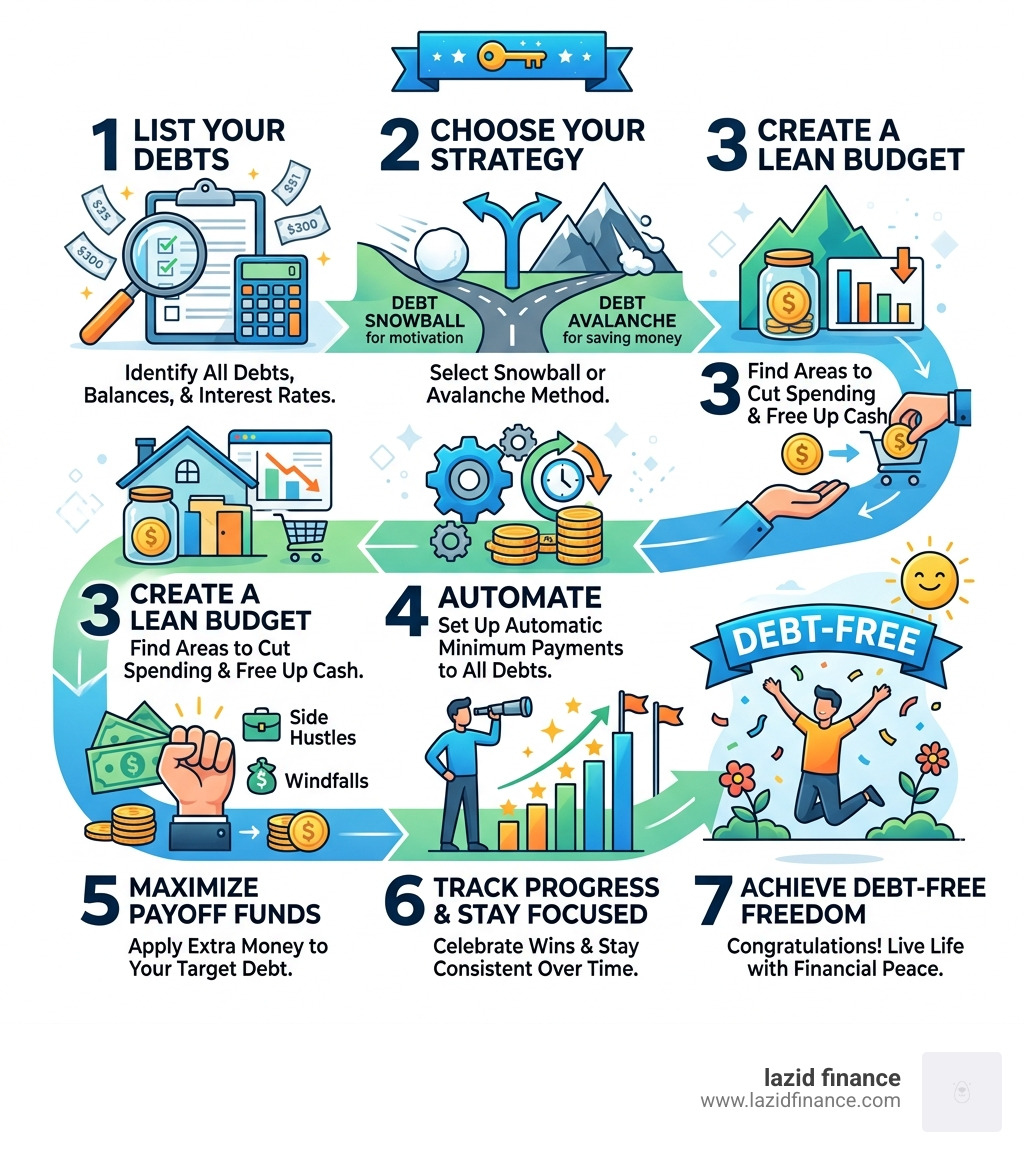
How to pay off bills fast comes down to a few core moves: list all your debts, pick a payoff strategy (snowball or avalanche), cut unnecessary expenses, and throw every extra dollar at your target debt.
Quick answer — the fastest ways to pay off bills:
- Debt avalanche — pay the highest-interest debt first to save the most money
- Debt snowball — pay the smallest balance first for quick motivational wins
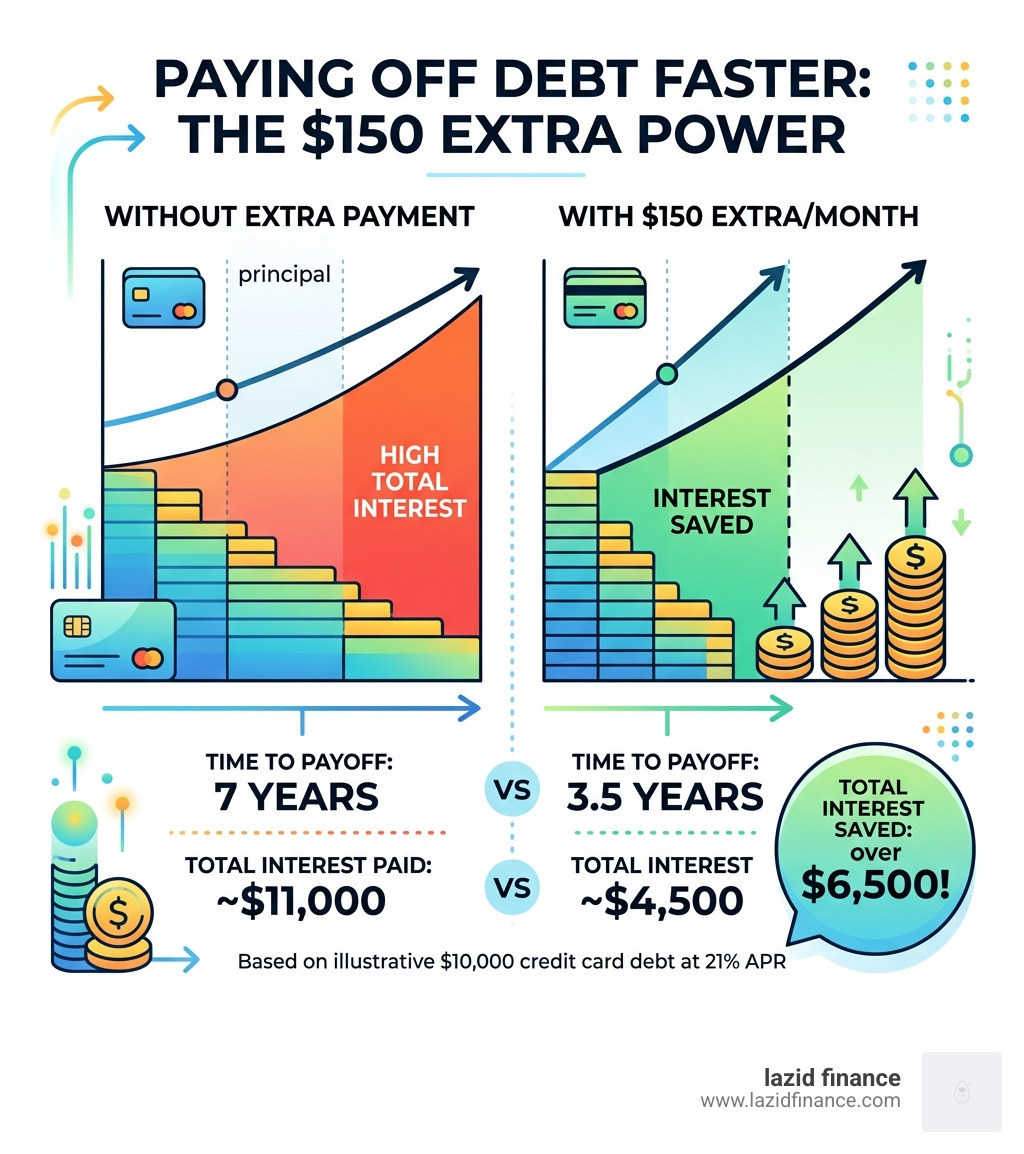
- Pay more than the minimum — even an extra $50-100/month cuts years off your timeline
- Cut expenses — cancel unused subscriptions, cook at home, try a no-spend month
- Boost income — side hustles, selling unused items, or asking for more hours
- Use windfalls — send tax refunds and bonuses straight to debt
- Consolidate high-interest debt — balance transfers or personal loans can lower your rate
If you’re feeling buried under monthly bills, you’re not alone.
U.S. consumer credit card debt has crossed $1 trillion, and the average household carries over $21,000 in credit card debt alone. That’s a heavy weight — and minimum payments are designed to keep you paying for decades.
The good news? You don’t need a finance degree to get out. You need a clear plan and the consistency to follow it.
This guide breaks down every proven strategy — from the psychology of quick wins to the math of interest savings — so you can choose what works for your situation and start making real progress.
Choosing Your Strategy: Debt Snowball vs. Avalanche
When we look at how to pay off bills fast, we generally see two main schools of thought: the Debt Snowball and the Debt Avalanche. Neither is “wrong,” but they appeal to different parts of our brains. At Lazid Finance, we believe the best strategy is the one you will actually stick with for the long haul.
| Feature | Debt Snowball | Debt Avalanche |
|---|---|---|
| Primary Focus | Smallest balance first | Highest interest rate first |
| Main Benefit | Psychological “quick wins” | Maximum interest savings |
| Ideal For | People who need motivation | Analytical, patient savers |
| Total Interest Paid | Generally higher | Lowest possible |
| Payoff Speed | Feels faster initially | Mathematically faster overall |
Choosing between these methods is a bit like choosing a workout routine. The “best” one is the one that gets you off the couch. According to How to Pay Off Debt: Top Strategies for 2026 – NerdWallet, the choice often depends on your debt-to-income ratio. If your debt is less than 36% of your gross income, these DIY methods are incredibly effective.
How to Pay Off Bills Fast Using the Snowball Method
The Debt Snowball method is all about momentum. We start by listing every single debt from the smallest balance to the largest, ignoring the interest rates for a moment. You pay the minimum on everything except that tiny $300 medical bill or $500 credit card balance. You attack that smallest debt with every extra penny you have.
Why does this work? Because personal finance is 80% behavior and only 20% head knowledge. When you see a debt disappear completely in just a month or two, you get a hit of dopamine. You feel like a winner. That “win” gives you the fuel to tackle the next debt. Once the smallest is gone, you take its entire payment and “roll” it into the next smallest debt. Pretty soon, your “snowball” is a giant force of repayment power.
How to Pay Off Bills Fast Using the Avalanche Method
If you are the type of person who hates the idea of a bank getting one extra cent of your money, the Avalanche method is for you. Here, we ignore the balance size and focus strictly on the Annual Percentage Rate (APR).
You list your debts from the highest interest rate to the lowest. Usually, this means attacking those nasty 24% APR credit cards before touching a 6% student loan. Mathematically, this is the most efficient way to pay off debt. You reduce the “total cost of borrowing.” However, it requires patience. If your highest-interest debt is also your largest balance (like a $15,000 credit card), it might take months or years to see that first “zero” on a statement.
Practical Steps to Launch Your Repayment Plan
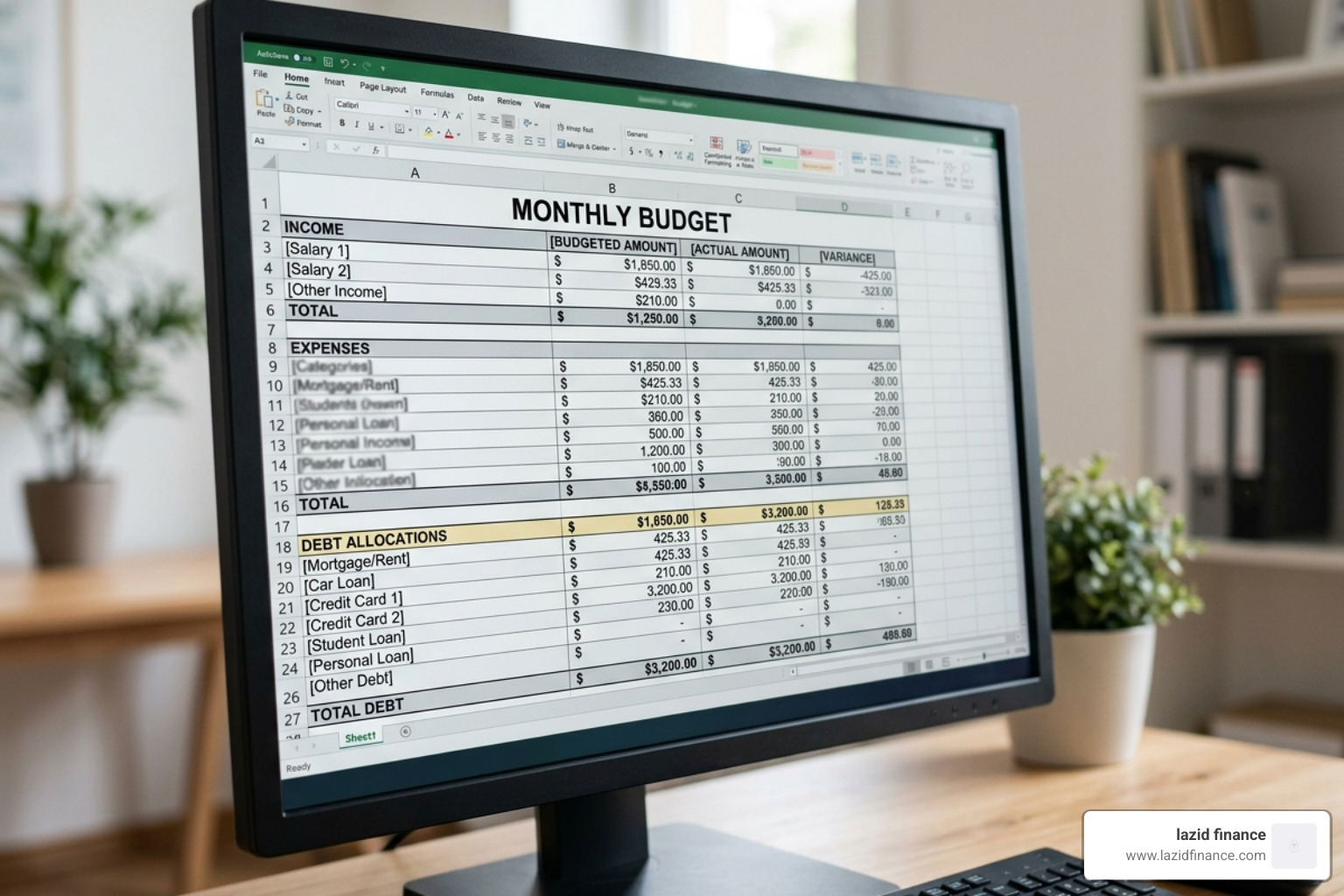
Before you start throwing money at your bills, you need a foundation. We’ve seen too many people start a debt plan, hit one flat tire or unexpected vet bill, and end up right back where they started because they didn’t have a cushion.
1. Create a Debt Inventory You cannot defeat an enemy you haven’t mapped out. Gather your statements and list:
- The name of the lender
- The total balance owed
- The interest rate (APR)
- The minimum monthly payment
- The due date
2. Build a Starter Emergency Fund According to Three Steps to Managing and Getting Out of Debt – DFPI, stopping the cycle of new debt is the first step. We recommend saving a “starter” fund of $1,000 to $2,000. This isn’t your full 3-6 month safety net; it’s just a shield so that a small emergency doesn’t force you to use a credit card again.
3. Use the 50/30/20 Rule A great way to find money for how to pay off bills fast is to structure your budget. Aim for:
- 50% for Needs: Rent, utilities, groceries.
- 30% for Wants: Dining out, hobbies, streaming.
- 20% for Savings and Debt: This is your “war chest.”
If you are serious about speed, you might need to temporarily slash that “Wants” category to 10% and move the rest to debt.
4. Find Extra Cash As noted in the Financial Guide for Paying Off Debt | Military OneSource, small savings add up. Canceling two streaming services and skipping the daily $6 latte can free up $200 a month. That doesn’t sound like much, but over 4 years, that’s nearly $10,000 extra toward your debt.
Other ways to boost your speed include:
- Side Hustles: About 36% of Americans have a side gig, and 20% of them use that money specifically for debt.
- Selling Items: Look around your garage. That old bike or unused furniture could be a $500 “lump sum” payment today.
- Tax Refunds: Instead of a vacation, “gift” that refund to your smallest debt.
Advanced Tactics: How to Pay Off Bills Fast with Consolidation

Sometimes, the interest rates are so high that you feel like you’re running on a treadmill. This is where consolidation comes in. The goal is to move high-interest debt (like 22% credit cards) to a lower-interest vehicle.
Balance Transfer Cards If you have decent credit, you might qualify for a 0% APR balance transfer card. These often offer 12 to 21 months of zero interest. This is a powerful tool because 100% of your payment goes toward the principal. Just be careful: most cards charge a 3% to 5% transfer fee, and if you don’t pay the balance before the promo ends, the interest rate can skyrocket.
Personal Loans A consolidation loan can simplify your life by turning five payments into one. Average personal loan rates are around 12.33%, which is significantly lower than the 21%+ average for credit cards. According to The Fastest Way to Pay Off Your Loans, this can also boost your credit score by moving debt from “revolving” (credit cards) to “installment” (loans).
A Word of Caution Consolidation only works if you stop using the credit cards you just paid off. If you clear your cards with a loan but then max out the cards again, you’ve doubled your debt. Consolidation is a tool, not a cure for overspending.
Frequently Asked Questions about Debt Repayment
How does paying off debt impact my credit score?
Initially, your score might dip slightly if you close old accounts, but in the long run, it’s a huge win. Reducing your “credit utilization ratio” (how much of your limit you’re using) is one of the fastest ways to see your score climb. Aim to keep your utilization under 30%.
When should I consider professional help?
If your unsecured debt is more than 50% of your gross income, or if you can’t see a way to pay it off within five years, it might be time for professional help. Look for nonprofit credit counseling. They can set up a Debt Management Plan (DMP) that lowers your interest rates and combines payments into one monthly bill.
What is the difference between debt settlement and debt management?
Debt settlement involves asking creditors to accept less than what you owe. While it sounds good, it can devastate your credit score and may have tax implications. Debt management plans through a nonprofit usually involve paying the full principal but at a much lower interest rate.
Should I pay off my mortgage or my credit cards first?
Always prioritize high-interest consumer debt (credit cards, personal loans) over low-interest “wealth-building” debt like a mortgage. A mortgage often has tax benefits and a much lower rate, whereas credit card interest is a “financial rake” you don’t want to step on.
Conclusion
At Lazid Finance, we believe that achieving financial freedom isn’t about how much you make; it’s about the mindful choices you make with what you have. Whether you choose the psychological boost of the Snowball method or the mathematical power of the Avalanche, the key is to start today.
How to pay off bills fast isn’t a secret—it’s a system. It requires listing your debts, choosing your path, and staying consistent even when the “newness” of the plan wears off. An extra $100 a month can save you thousands in interest and shave years off your timeline.
You have the tools, the strategies, and the plan. Now, it’s time to take that first step toward the life you want.
Start your journey with intelligent financial tools

