
Stop procrastinating and start hitting these short term financial goals today
Why Short-Term Financial Goals Are the Starting Point for Everything
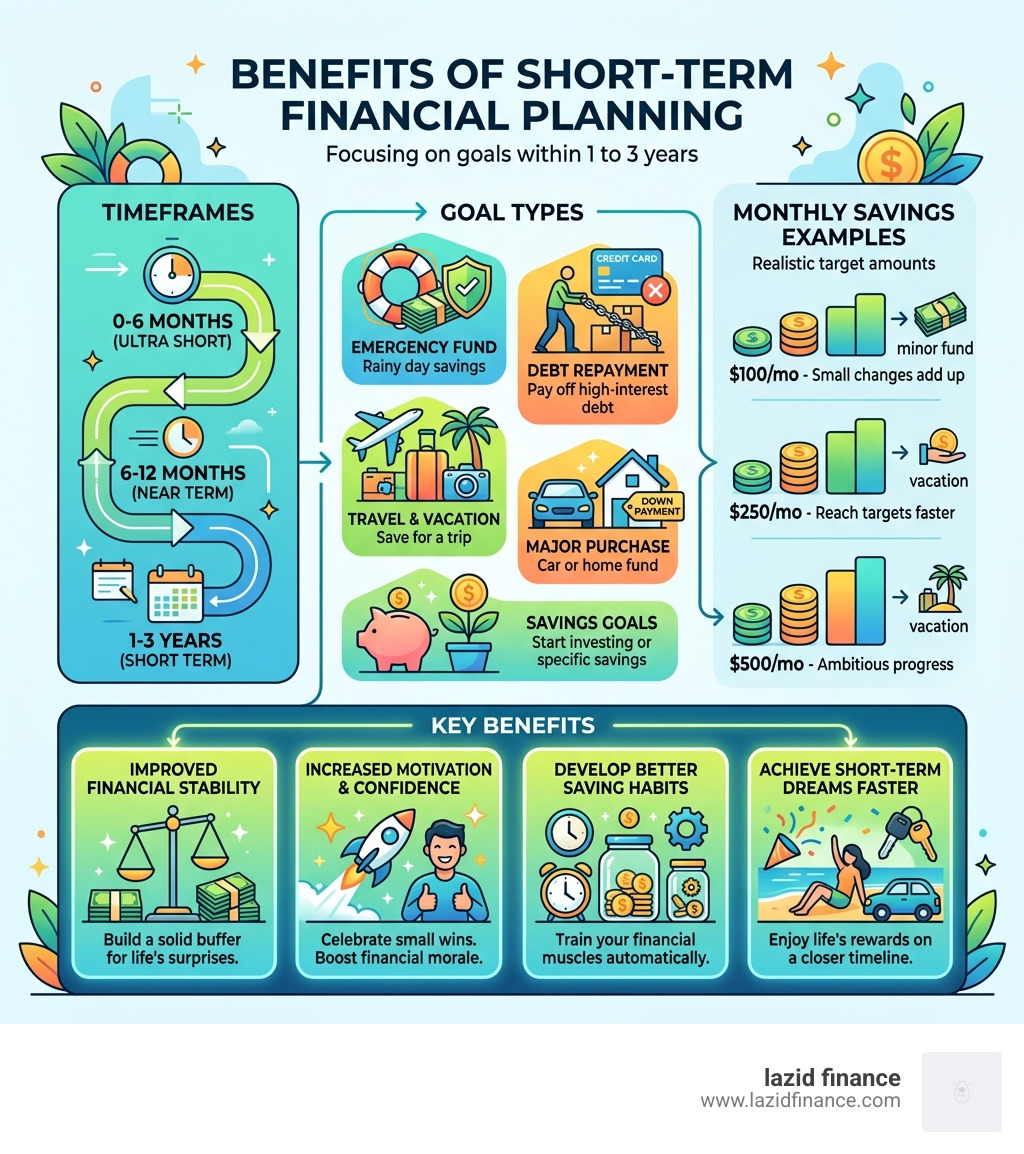
Financial goals short term are specific money targets you plan to hit within the next one to three years — and they are the fastest way to build real financial momentum.
Here is a quick breakdown so you can get oriented right away:
| Short-Term Goal | Timeframe | Example |
|---|---|---|
| Emergency fund | 3-12 months | Save 3-6 months of living expenses |
| Pay off high-interest debt | 6-12 months | Clear a credit card balance |
| Save for a vacation | 4-8 months | Set aside $500/month for a trip |
| Car down payment | 6-12 months | Save 10-20% of vehicle cost |
| Wedding fund | 12-24 months | Contribute $500/month per partner |
| Home repairs | 3-9 months | Budget for specific renovation |
| Start investing | 3-6 months | Open an account and make first deposit |
Most people know they should be saving. But without a clear, near-term target, money quietly disappears into daily spending — and nothing changes.
Short-term goals work because they are close enough to feel real. A goal you can hit in eight months is a goal you will actually work toward. A goal 20 years away? Much easier to ignore until tomorrow.
The good news: you do not need a perfect financial situation to start. You just need a specific target and a plan to reach it.
Why Financial Goals Short Term Build Your Foundation
When we talk about financial goals short term, we are looking at a horizon that typically spans from a few months up to three years. While long-term goals like retirement are essential, they can often feel abstract. Short-term goals are the “boots on the ground” of your financial life. They provide the liquidity and stability you need to survive today while building the staircase to your future.
The Power of Liquidity and Stability
Liquidity refers to how quickly you can access your cash without losing value. Short-term planning prioritizes stability over high-risk returns. By focusing on these targets, we ensure that when a “spending shock”—like a $2,000 car repair—hits, we don’t have to reach for a credit card with a 20% APR. This stability is the bedrock of financial health.
Psychological Wins and Momentum
There is a powerful psychological component to hitting a goal. In personal finance, “quick wins” create a positive feedback loop. When you successfully save $1,000 for a vacation or pay off a small medical bill, your brain registers a win. This builds the confidence and discipline required to tackle much larger, long-term objectives.
| Goal Type | Horizon | Primary Focus |
|---|---|---|
| Short-Term | 0 – 3 Years | Liquidity, Stability, Safety |
| Mid-Term | 3 – 5 Years | Balance of Growth and Safety |
| Long-Term | 5+ Years | Growth, Compounding, Retirement |
By mastering the financial goals short term first, we stop living in a state of financial defense and start playing offense. We are no longer just reacting to bills; we are directing our money toward our deepest desires.
7 Essential Targets to Hit This Year

If you are looking for a place to start, these seven targets represent the most impactful financial goals short term you can set in April 2026.
1. The Starter Emergency Fund
Before you do anything else, you need a safety net. While the ultimate goal is 3 to 6 months of living expenses, a “starter” fund of $2,000 or half a month’s expenses can protect you from most immediate spending shocks. According to research, saving just $200 a month at a 5% return can help you reach a $10,000 milestone in under four years—but it all starts with that first $1,000.
2. High-Interest Debt Elimination
In mid-2024, the average credit card APR was above 20%. In 2026, high-interest debt remains the biggest “leak” in most household budgets. Prioritizing the payoff of these balances is a short-term goal that provides an immediate, guaranteed “return” on your money by eliminating interest charges.
3. The Vacation Fund
Not every goal has to be about “responsibility.” Saving for a dream trip to Japan or a Caribbean cruise is a fantastic motivator. If you want to spend $4,000 on a trip in 8 months, you need to save $500 monthly. This is much more rewarding than putting the trip on a credit card and paying for it for the next three years.
4. Car Down Payment
The average new car currently costs around $48,000. To avoid high monthly payments and “underwater” loans, we recommend a down payment of 10% to 20%. Setting a goal to save $5,000 to $10,000 over the next 12 months can save you thousands in interest over the life of the loan.
5. Wedding or Major Life Event Savings
Whether it’s your own wedding or a milestone anniversary, these events are “budget-busters” if not planned for. Couples saving $24,000 for a wedding over two years can reach that goal by each contributing $500 monthly. This prevents the “wedding hangover” of debt that many couples face.
6. Home Repairs and Improvements
If you own a home, things will break. A short-term goal to save for a new roof, a kitchen refresh, or even just a “maintenance fund” prevents minor issues from becoming major financial disasters.
7. Boosting Financial Literacy
This is a “non-monetary” goal with a massive financial payoff. Make it a goal to read one personal finance book a month or complete a course on investing. Improving your “money IQ” is a short-term action that pays dividends for the rest of your life.
How to Set SMART Objectives
Setting a goal like “I want to save money” is a recipe for failure. It’s too vague. Instead, we use the SMART framework to turn wishes into reality.
Defining Specific Financial Goals Short Term
To make your financial goals short term work, they must be:
- Specific: Don’t just “save for a car.” Say, “I want to save $6,000 for a down payment on a 2024 hybrid SUV.”
- Measurable: Attach a number. “I need $5,673 to clear my Visa debt.”
- Achievable: Look at your budget. If you only have $300 left at the end of the month, a $1,000 monthly savings goal will only lead to frustration. Start where you are.
- Relevant: Does this goal actually matter to you? If you don’t care about a new car, don’t save for one just because your neighbor did. Link your goals to your values.
- Time-bound: Give yourself a deadline. “I will have my emergency fund finished by December 31, 2026.”
Tracking and Measuring Financial Goals Short Term
Once the goal is set, you need to monitor it. We recommend a monthly review. Life in 2026 moves fast; inflation might fluctuate, or your income might change. Regular check-ins allow you to adjust your “by when” dates without feeling like you’ve failed.
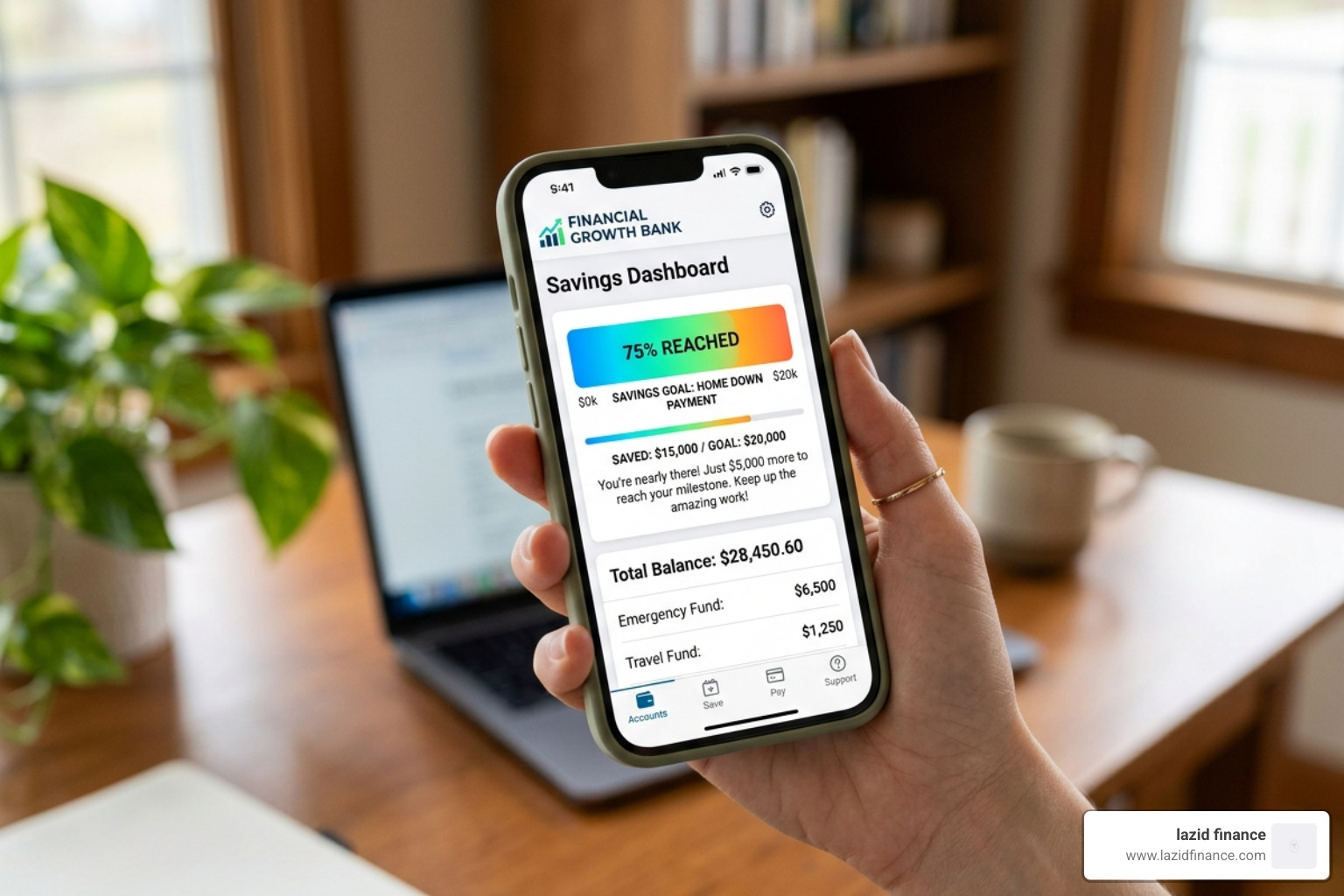
Use automated alerts from your bank to celebrate milestones. When you hit 50% of your goal, take a moment to acknowledge the progress. This behavioral psychology trick keeps you motivated for the second half of the journey.
Strategies and Tools for Success
Achieving financial goals short term is 20% head knowledge and 80% behavior. Here are the strategies we use to make success inevitable.
The 50/30/20 Rule
This is a classic budgeting framework:
- 50% for Needs (Rent, groceries, utilities)
- 30% for Wants (Dining out, hobbies)
- 20% for Savings and Debt Repayment
If you find you aren’t hitting your short-term targets, look at your “Wants.” Cutting back on dining out by $100 a month can be the difference between hitting your vacation goal or staying home.
Debt Snowball vs. Debt Avalanche
When tackling debt as a short-term goal, you have two main paths:
- Debt Snowball: Pay off the smallest balance first. This gives you a quick psychological win and builds momentum.
- Debt Avalanche: Pay off the debt with the highest interest rate first. This is mathematically superior and saves you the most money over time.
Automation: Your Secret Weapon
The most successful savers don’t have more willpower; they have better systems. Set up an automatic transfer from your paycheck directly into a dedicated account. If the money never hits your checking account, you won’t miss it. This “pays yourself first” mentality ensures your goals are funded before you have a chance to spend the money on impulsive purchases.
High-Yield Savings and Low-Risk Investing
For financial goals short term, you want your money to work for you without the risk of the stock market’s volatility. Consider:
- High-Yield Savings Accounts (HYSA): These offer much higher interest rates than traditional big-bank savings accounts.
- Certificates of Deposit (CDs): If you know you won’t need the money for 6 or 12 months, a CD can “lock in” a higher rate.
- Money Market Funds: These invest in high-quality, short-term debt and are very liquid.
Investing for short-term goals isn’t about getting rich quick; it’s about preserving your principal while earning enough to combat inflation.
Frequently Asked Questions about Short-Term Planning
What is a short-term financial goal?
A short-term financial goal is any monetary objective you aim to achieve within a timeframe of a few months to three years. These goals focus on immediate stability, liquidity, and preparing for upcoming expenses without relying on high-interest debt.
How much should I save for an emergency fund?
Most experts recommend saving 3 to 6 months’ worth of essential living expenses. However, if you are self-employed or have an irregular income, aiming for 12 months provides a much-needed buffer against market fluctuations.
Why are short-term goals important for long-term success?
Short-term goals build the habits and the capital required for long-term success. You cannot effectively invest for retirement if you are constantly being derailed by emergency expenses or high-interest credit card debt. Short-term goals clear the path so your long-term investments can grow undisturbed.
Conclusion
Stop waiting for the “perfect time” to get your finances in order. Whether it is building that first $2,000 safety net or finally crushing that credit card balance, the best time to start was yesterday – the second best time is today, April 2026.
At Lazid Finance, we believe in providing intelligent financial tools for conscious decisions. Our mission is to help you navigate these choices with smart finance solutions tailored for mindful choices. By setting clear financial goals short term, you are taking the first step toward a life of financial freedom and peace of mind.
Ready to take control of your roadmap? Learn more about our philosophy on our Sobre Nos page. Your future self will thank you for the mindful choices you make right now.

