
Cash Flow 101
Why Cash Flow Is the Lifeblood of Every Business
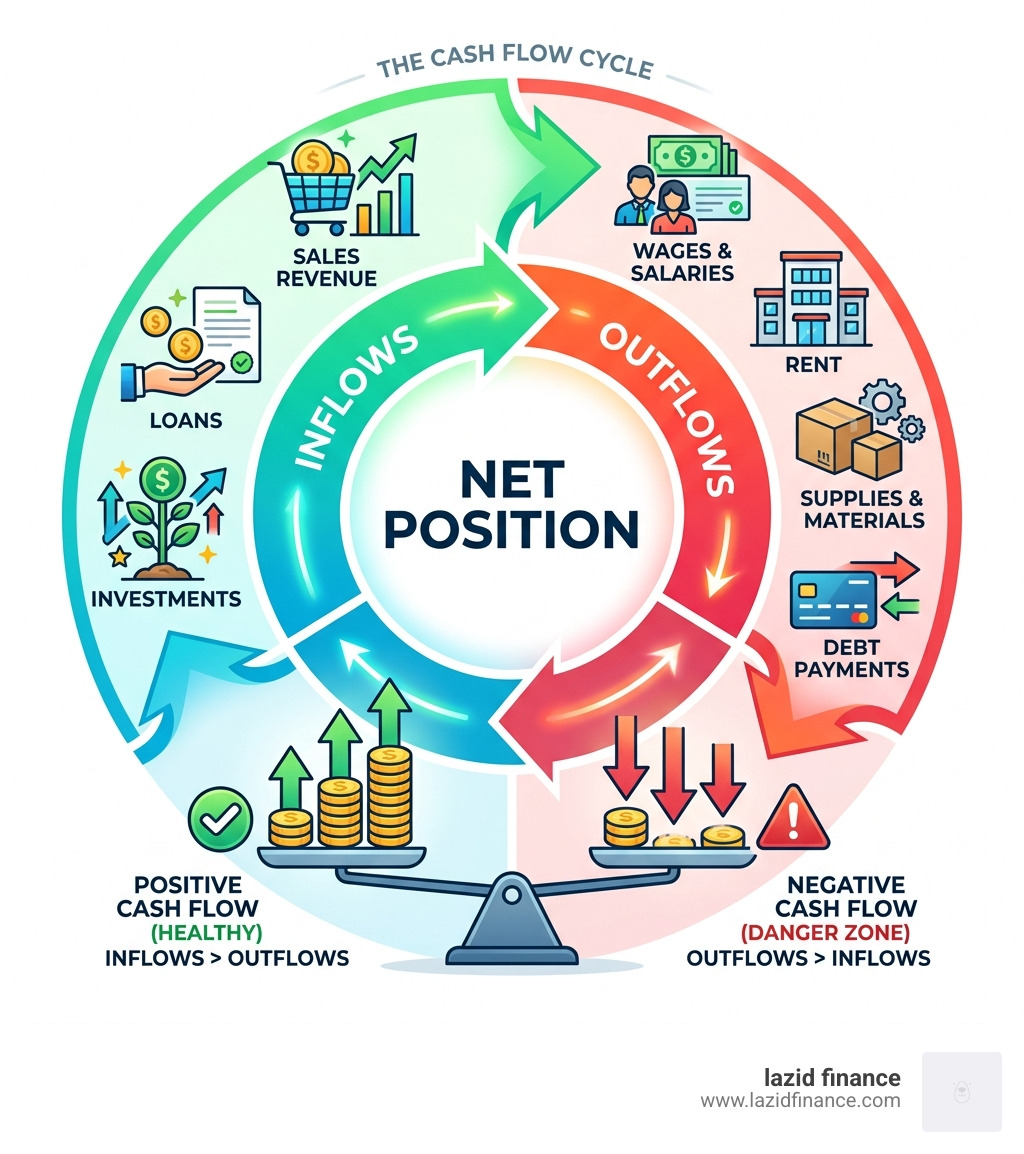
Cash flow is the movement of money into and out of a business over a given period of time.
Here’s a quick breakdown:
| Term | What It Means |
|---|---|
| Inflow | Money coming in — sales, loans, investments |
| Outflow | Money going out — wages, rent, supplies, debt payments |
| Net Cash Flow | Inflows minus outflows (positive = healthy, negative = danger zone) |
| Liquidity | How easily a business can meet its financial obligations right now |
Understanding cash flow is one of the most important things you can do for your business — or for evaluating someone else’s.
A business can look profitable on paper and still run out of money. That’s not a rare edge case. It happens constantly, and it’s one of the leading reasons businesses fail.
In this guide, we’ll break down exactly how cash flow works, how to measure it, and how to keep it healthy — in plain language, no finance degree required.
What is Cash Flow and Why Does It Matter?
At its simplest, cash flow is the “corporate checkbook.” It tracks the literal physical or digital currency moving through your accounts. While the term sounds technical, it is actually the most grounded metric in finance. According to Wikipedia, it refers to the payments made into or out of a business or financial product.
As we move through April 2026, the economic landscape remains complex. We see that cash flow isn’t just a line on a spreadsheet; it’s a survival mechanism. Statistics show that approximately 50% of new businesses fail within their first five years, and the leading cause is almost always a lack of cash. You can have a product and a line of customers out the door, but if the money doesn’t hit your bank account in time to pay your staff or your landlord, the doors close.
Maintaining positive cash flow ensures solvency—the ability of a company to meet its long-term debts and financial obligations. Without it, a business is essentially running on fumes. For a deeper look at managing these basics, the British Business Bank offers excellent perspective on why tracking every penny is vital for sustainability.

The Role of Liquidity in Business Stability
Liquidity is the “here and now” of your finances. It’s the measure of how quickly you can convert assets into cash to pay for immediate needs. We often see businesses focus solely on long-term growth while ignoring their immediate operational funding.
Healthy liquidity allows a business to:
- Meet Debt Obligations: Paying back loans and interest on time to maintain a good credit standing.
- Fund Operations: Covering daily costs like inventory, utilities, and payroll without stress.
- Reinvest for Growth: Taking advantage of sudden market opportunities or purchasing new equipment.
- Build Cash Reserves: Creating a “rainy day fund.” Experts often recommend keeping at least three months of operating expenses in reserve.
Cash Flow vs. Profit: Understanding the Difference
This is the part that trips up many entrepreneurs. We often hear someone say, “But we made a profit this month! Why is the bank account empty?” The answer lies in the difference between accrual accounting and cash accounting.
| Feature | Profit (Income Statement) | Cash Flow (Cash Flow Statement) |
|---|---|---|
| Primary Goal | Measures performance and “earning power” | Measures liquidity and “viability” |
| Timing | Recorded when a sale is made (even if not paid yet) | Recorded only when money actually changes hands |
| Non-Cash Items | Includes things like depreciation and amortization | Ignores non-cash items; focuses on hard currency |
| Debt Payments | Only interest is subtracted from profit | Both principal and interest are subtracted |
Profit is an accounting concept; cash flow is a reality. For example, if we sell $10,000 worth of consulting services in April 2026 but give the client 60 days to pay, our profit goes up by $10,000 immediately. However, our cash flow doesn’t budge until June. If we have to pay $5,000 in wages to deliver that service in April, we are $5,000 “in the hole” regarding cash, even though we are “profitable.”
At Lazid Finance, we believe in making conscious decisions based on the full financial picture, not just the highlights. Understanding that profit doesn’t equal cash is the first step toward mindful financial management.
Why Profitable Companies Can Still Fail
It sounds like a paradox, but it’s a common tragedy. A “liquidity crunch” happens when a company’s assets are tied up in things that aren’t cash—like unpaid invoices (Accounts Receivable) or piles of unsold products (Inventory).
Common traps include:
- Inventory Traps: Buying too much stock that sits on shelves. That’s cash that could have been used elsewhere.
- Over-extension: Growing too fast and hiring too many people before the revenue from new customers actually arrives.
- Payment Delays: Having “lenient” credit terms for customers while “strict” terms from suppliers create a timing gap.
The Three Pillars of a Cash Flow Statement
To truly understand how money moves, we use a Cash Flow Statement. This document is like a bridge between the Income Statement and the Balance Sheet. According to Investopedia, it tracks where cash comes from and where it goes, following standards like FASB (in the US) or IAS 7 (internationally).
Public companies are required to file these, and they provide a transparent look at a company’s health. For instance, in the fiscal year ending January 31, 2025, Walmart showed a net cash flow decrease of $399 million. While that sounds like a lot, a closer look at their statement would reveal if that money went to paying off debt or investing in new stores—context matters!

Operating, Investing, and Financing Activities
A standard statement breaks cash flow into three categories:
- Operating Activities (CFO): This is the most important section. It shows the cash generated from the core business (selling products or services). If this isn’t positive, the business isn’t sustainable in the long run.
- Investing Activities (CFI): This covers the purchase or sale of long-term assets like property, equipment, or securities. A negative number here isn’t always bad—it often means the company is reinvesting in its future growth.
- Financing Activities (CFF): This tracks money moving between the company and its owners or creditors. It includes taking out loans, repaying debt, issuing stock, or paying out dividends.
Analyzing the Quality of Cash Flow
“Earnings quality” refers to how much of a company’s profit is actually backed by cash. Investors generally prefer cash flow from operations over the other two types. Why? Because you can’t survive forever by selling off your equipment (investing) or taking out more loans (financing). You need to make money from your actual business.
A healthy goal is a Cash Flow-to-Net Income Ratio of 1:1. If profit is much higher than operating cash flow, it might suggest that the company is using aggressive accounting or struggling to collect money from its customers.
How to Calculate and Forecast Your Net Cash Flow
Calculating your current position is straightforward, but forecasting the future is where the magic happens. The basic formula for Net Cash Flow (NCF) is:
NCF = Total Cash Inflows – Total Cash Outflows
To look ahead, businesses use cash flow forecasting. This is an estimate of future cash levels based on anticipated payments. For startups, this involves tracking the “burn rate”—the rate at which a new company spends its venture capital before generating positive cash flow from operations.
Creating a Cash Flow Budget
A cash flow budget is a proactive tool. Instead of looking at what happened last month, you look at what will happen over the next 30, 60, or 90 days.
- Estimate Receipts: When will customers actually pay?
- Estimate Payments: When are the big bills due? (Rent, taxes, quarterly insurance).
- Account for Seasonality: If you sell more in December, your cash position in January needs to be strong enough to carry you through the leaner spring months.
The Impact of Inflation on Future Projections
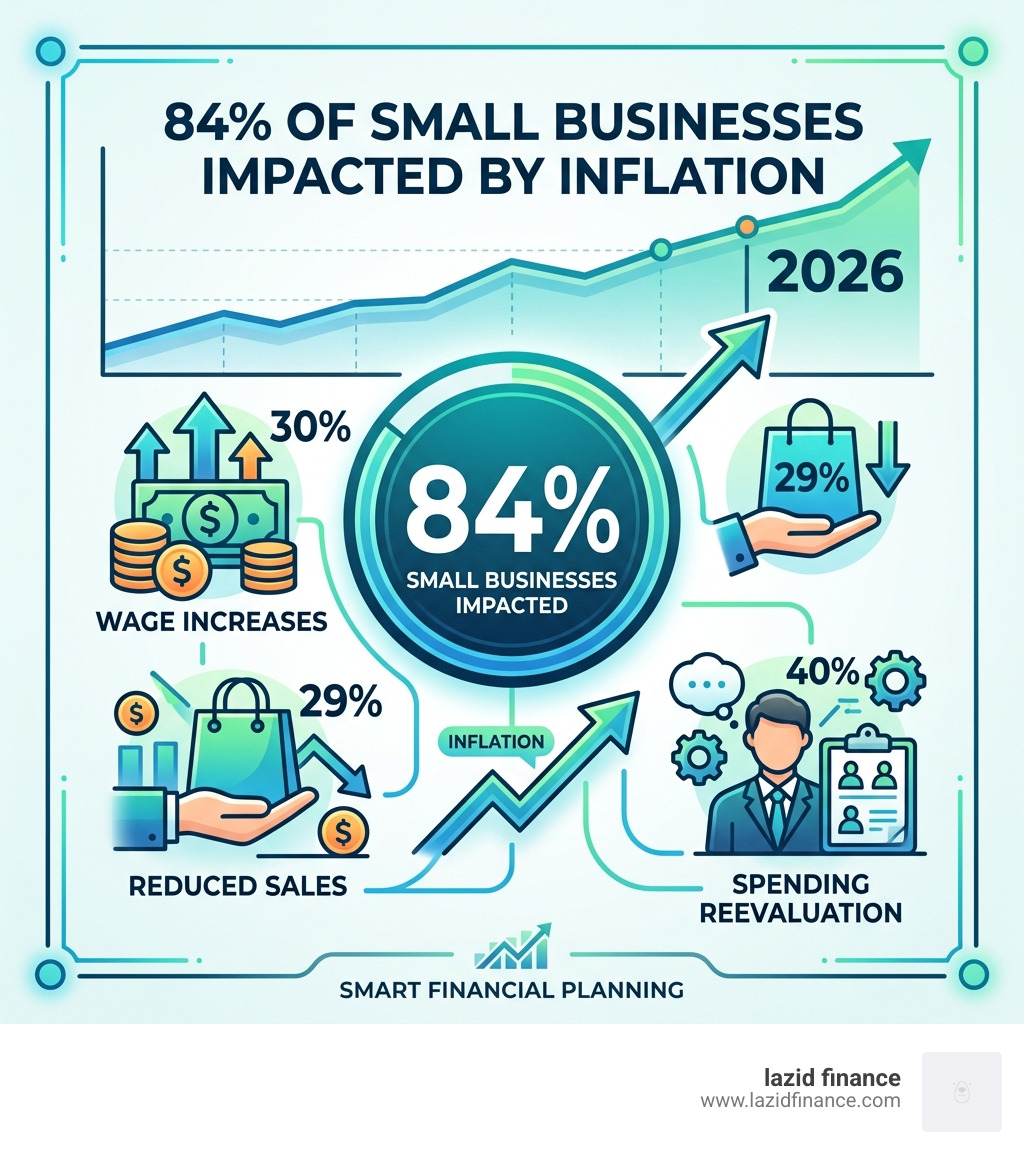
As of 2024 and 2025 data leading into our current 2026 period, inflation has been a major player. Research shows that 84% of small business owners say inflation is affecting their businesses. This has a direct impact on your cash flow projections:
- Wage Increases: 30% of business owners are paying higher wages.
- Reduced Sales: 29% report losing sales as customers tighten their belts.
- Spending Reevaluation: 40% are reevaluating their spending.
When forecasting, you must distinguish between nominal cash flow (the actual dollar amount) and real cash flow (the purchasing power of that money). If your cash flow stays the same while inflation is 5%, you are effectively losing money.
Strategies to Improve and Maintain Positive Cash Flow
If your cash flow is looking a bit thin, don’t panic. There are several levers you can pull to tighten things up. At Lazid Finance, we advocate for smart, mindful adjustments that build long-term stability.
- Accelerate Receivables (AR): Don’t wait to invoice. Invoice the same day the work is done. Offer a small discount (like 2%) for customers who pay within 10 days.
- Optimize Inventory: Use Just-In-Time (JIT) management. Don’t let cash rot in a warehouse. If a product isn’t moving, discount it and turn it back into cash.
- Negotiate Payables (AP): Ask your vendors for longer payment terms. If they want payment in 30 days, see if you can get 45 or 60. This keeps cash in your account longer.
- Lease, Don’t Buy: Instead of spending $50,000 on a new piece of equipment today, lease it for $1,000 a month. This preserves your cash for emergencies.
Managing Working Capital for Long-Term Health
Working capital is the difference between your current assets (cash, inventory, receivables) and your current liabilities (bills due soon). It’s a quick “liquidity check.” Working Capital = Current Assets – Current Liabilities Positive working capital means you can pay your upcoming bills with the assets you have on hand. It provides the financial flexibility needed to navigate economic downturns or sudden market shifts.
Frequently Asked Questions about Cash Flow
Why is cash flow more important than profit for startups?
Profit is a long-term goal, but cash flow is a short-term necessity. Most startups are “pre-revenue” or “pre-profit” for years. During this time, they survive on investor cash. If they run out of that cash before they reach profitability, the company dies. You can’t pay employees with “projected future profits.”
What are the most common factors that negatively impact cash flow?
The “Big Three” are usually:
- Late Customer Payments: High accounts receivable balances.
- Poor Expense Management: Spending on “nice-to-haves” instead of “must-haves.”
- Unexpected Expenses: Equipment breakdowns or sudden legal fees. This is why a 3-month cash reserve is vital.
How do you calculate the cash conversion cycle?
The Cash Conversion Cycle (CCC) measures how long it takes for a dollar spent on inventory to come back into the company as a dollar of cash from a sale. It is calculated as: CCC = Days Inventory Outstanding + Days Sales Outstanding – Days Payables Outstanding The lower the number, the faster your cash is working for you!
Conclusion
Mastering cash flow is the difference between a business that merely survives and one that truly thrives. It requires moving beyond the “profit” myth and looking deeply at the timing and movement of every dollar. By understanding the three pillars of the cash flow statement, creating accurate 90-day forecasts, and managing your working capital mindfully, you empower your business to withstand any economic storm.
At Lazid Finance, we provide intelligent financial tools for conscious decisions. Our mission is to offer smart finance solutions tailored for mindful choices, helping you navigate the complexities of personal and business finance with clarity and confidence.
Start making smarter financial decisions today with Lazid Finance

